Tupone Maria Grazia, D'Aguanno Simona, Di Martile Marta, Valentini Elisabetta, Desideri Marianna, Trisciuoglio Daniela, Donzelli Sara, Sacconi Andrea, Buglioni Simonetta, Ercolani Cristiana, Biagioni Alessio, Fibbi Gabriella, Fattore Luigi, Mancini Rita, Ciliberto Gennaro, Blandino Giovanni, Del Bufalo Donatella
Preclinical Models and New Therapeutic Agents Unit, IRCCS Regina Elena National Cancer Institute, Rome, Italy.
Department of Life, Health and Environmental Sciences, University of L'Aquila, L'Aquila, Italy.
Oncogenesis. 2020 Feb 14;9(2):22. doi: 10.1038/s41389-020-0203-6.
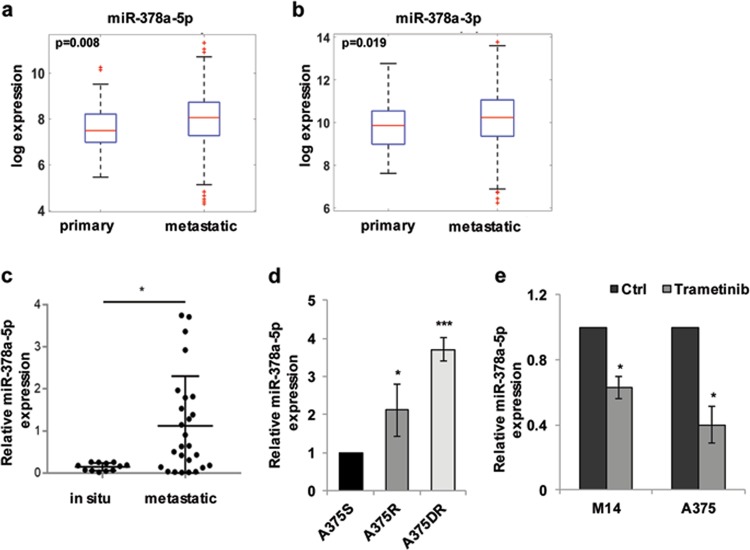
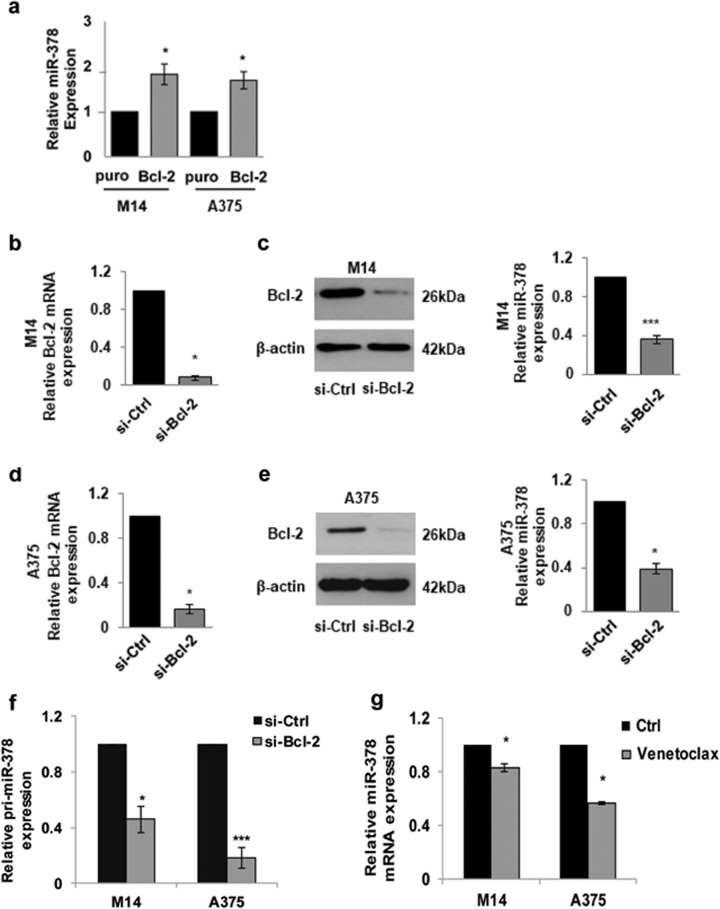
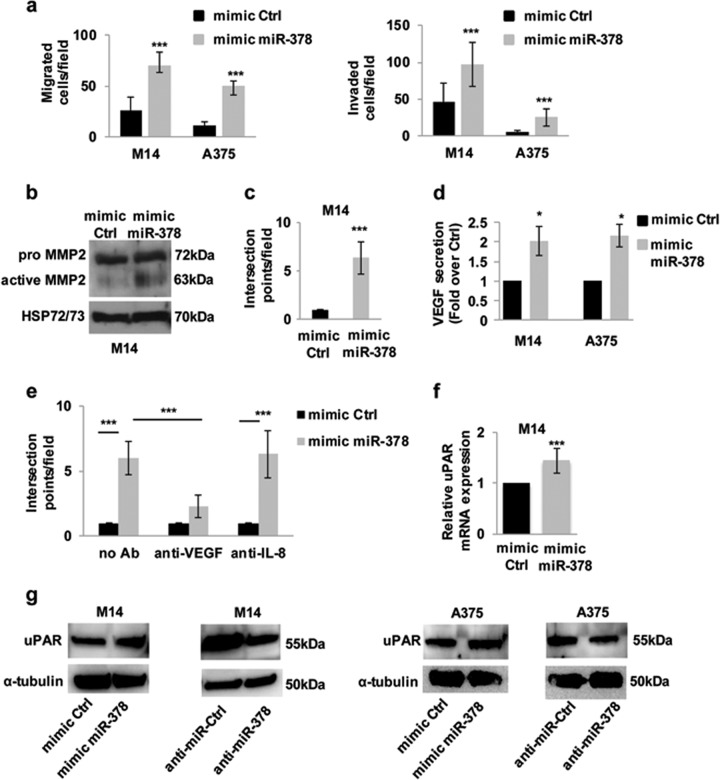
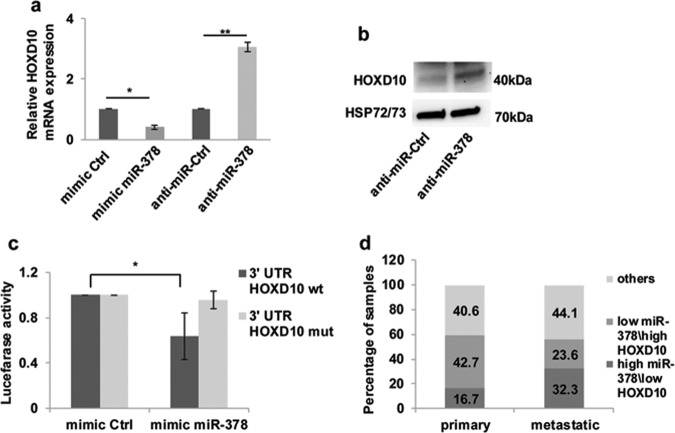
Evaluating the expression levels of miR-378a-5p both in a large melanoma patient cohort from The Cancer Genome Atlas database and in melanoma patients from our Institute, we found that miR-378a-5p is upregulated in metastatic melanoma specimens. miR-378a-5p expression was also increased in melanoma cells resistant to target therapy, and decreased in response to drug treatment. We also demonstrated that overexpression of miR-378a-5p enhances in vitro cell invasion and migration, and facilitates the ability of melanoma cells to form de novo vasculogenic structures. While performing downstream targeting studies, we confirmed the ability of miR-378a-5p to modulate the expression of known target genes, such as SUFU, FUS-1, and KLF9. Luciferase-3'UTR experiments also identified STAMBP and HOXD10 as new miR-378a-5p target genes. MMP2 and uPAR, two HOXD10 target genes, were positively regulated by miR-378a-5p. Genetic and pharmacologic approaches inhibiting uPAR expression and activity evidenced that the in vitro tumor-promoting functions of miR-378a-5p, were in part mediated by uPAR. Of note miR-378a-5p was also able to increase VEGF, as well as in vitro and in vivo angiogenesis. Finally, genetic and pharmacologic modulation of Bcl-2 evidenced Bcl-2 ability to regulate miR-378a-5p expression. In conclusion, to the best of our knowledge, this is the first study demonstrating that miR-378a-5p acts as an oncogenic microRNA in melanoma.
通过评估来自癌症基因组图谱数据库的大量黑色素瘤患者队列以及我们研究所的黑色素瘤患者中miR-378a-5p的表达水平,我们发现miR-378a-5p在转移性黑色素瘤标本中上调。miR-378a-5p在对靶向治疗耐药的黑色素瘤细胞中表达也增加,而在药物治疗后表达降低。我们还证明,miR-378a-5p的过表达增强了体外细胞侵袭和迁移能力,并促进了黑色素瘤细胞形成新生血管生成结构的能力。在进行下游靶向研究时,我们证实了miR-378a-5p调节已知靶基因(如SUFU、FUS-1和KLF9)表达的能力。荧光素酶-3'UTR实验还确定STAMBP和HOXD10为新的miR-378a-5p靶基因。MMP2和uPAR这两个HOXD10靶基因受到miR-378a-5p的正向调节。抑制uPAR表达和活性的基因和药理学方法证明,miR-378a-5p的体外促肿瘤功能部分由uPAR介导。值得注意的是,miR-378a-5p还能够增加VEGF以及体外和体内血管生成。最后,对Bcl-2的基因和药理学调节证明了Bcl-2调节miR-378a-5p表达的能力。总之,据我们所知,这是第一项证明miR-378a-5p在黑色素瘤中作为致癌微小RNA起作用的研究。