Department of Pharmacology, Institute of Biomedical Sciences, University of Sao Paulo, São Paulo, Brazil.
Department of Biological Sciences, University of Calgary, Alberta, Canada.
Antioxid Redox Signal. 2020 Nov 10;33(14):1003-1009. doi: 10.1089/ars.2019.7884. Epub 2020 Mar 13.
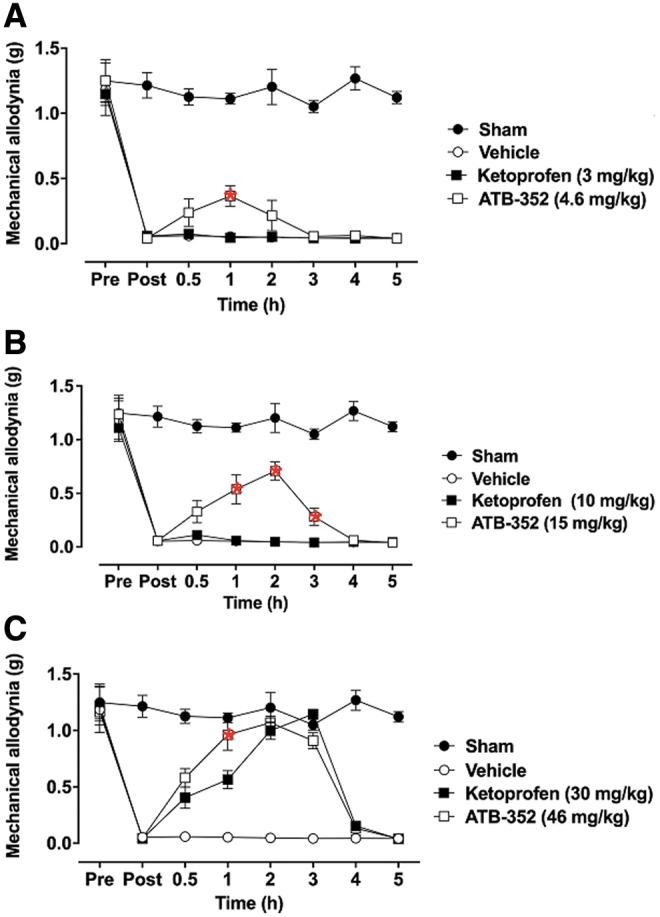
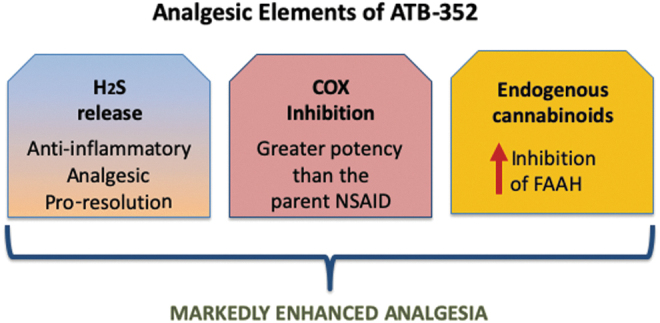
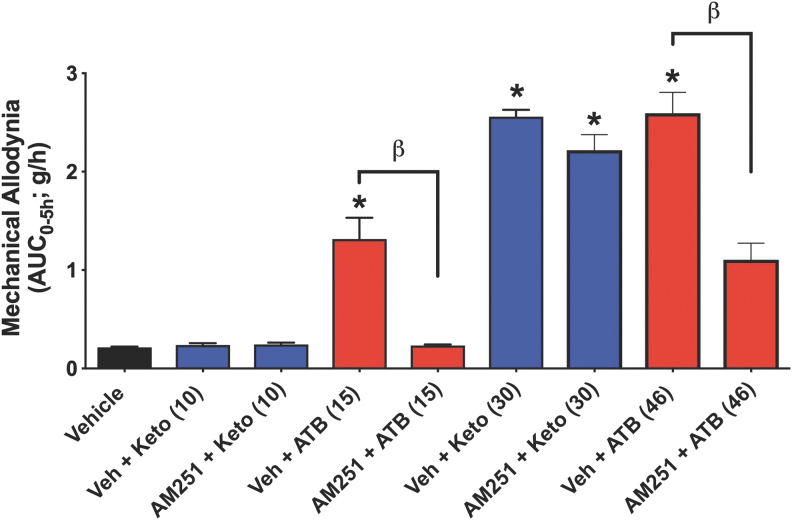
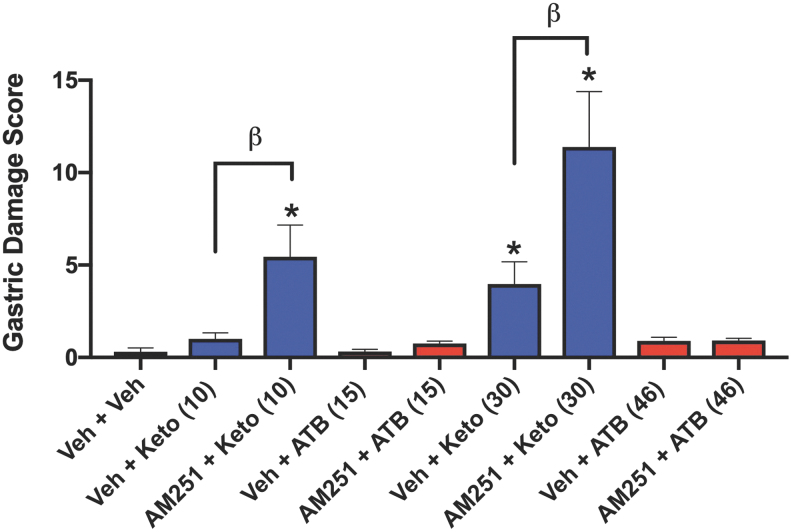
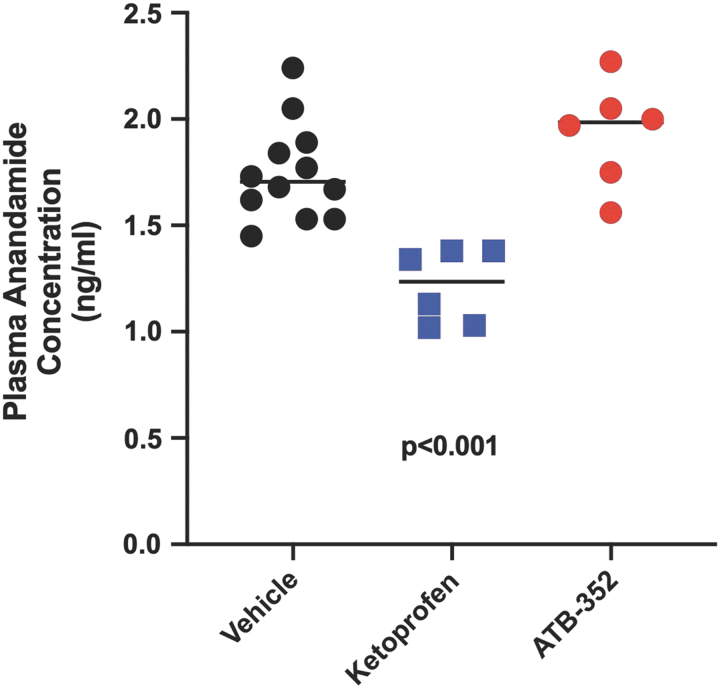
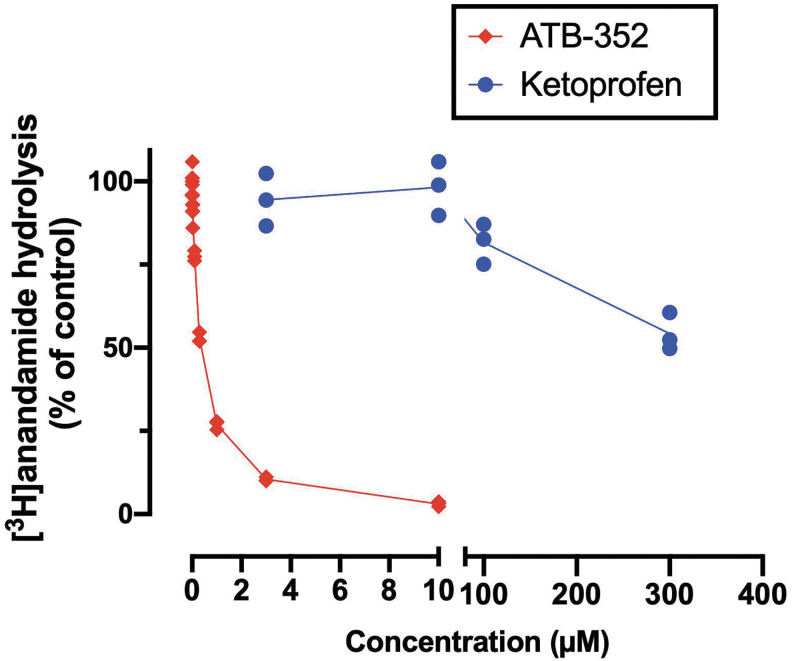
The covalent linking of nonsteroidal anti-inflammatory drugs to a hydrogen sulfide (HS)-releasing moiety has been shown to dramatically reduce gastrointestinal (GI) damage and bleeding, as well as increase anti-inflammatory and analgesic potency. We have tested the hypothesis that an HS-releasing derivative of ketoprofen (ATB-352) would exhibit enhanced efficacy without significant GI damage in a mouse model of allodynia/hyperalgesia. ATB-352 was significantly more potent and effective as an analgesic than ketoprofen and did not elicit GI damage. Pretreatment with an antagonist of the CB1 cannabinoid receptor (AM251) significantly reduced the analgesic effects of ATB-352. The CB1 antagonist exacerbated GI damage when coadministered with ketoprofen, but GI damage was not induced by the combination of ATB-352 and the CB1 antagonist. , ATB-352 was substantially more potent than ketoprofen as an inhibitor of fatty acid amide hydrolase, consistent with a contribution of endogenous cannabinoids to the analgesic effects of this drug. Blood anandamide levels were significantly depressed by ketoprofen, but remained unchanged after treatment with ATB-352. Ketoprofen is a potent analgesic, but its clinical use, even in the short term, is significantly limited by its propensity to cause significant ulceration and bleeding in the GI tract. Covalently linking an HS-releasing moiety to ketoprofen profoundly reduces the GI toxicity of the drug, while boosting analgesic effectiveness. This study demonstrates a marked enhancement of the potency and effectiveness of ATB-352, an HS-releasing derivative of ketoprofen, in part, through the involvement of the endogenous cannabinoid system. This may have significant advantages for the control and management of pain, such as in a postoperative setting.
将非甾体抗炎药物与硫化氢(HS)释放部分共价连接已被证明可显著减少胃肠道(GI)损伤和出血,同时增加抗炎和镇痛效力。我们已经测试了这样一个假设,即酮洛芬(ATB-352)的 HS 释放衍生物在痛觉过敏/痛觉过高的小鼠模型中不会引起明显的 GI 损伤,同时表现出增强的疗效。ATB-352 作为一种镇痛药比酮洛芬更有效,且不会引起 GI 损伤。预先用大麻素 CB1 受体拮抗剂(AM251)处理可显著降低 ATB-352 的镇痛作用。当与酮洛芬联合使用时,CB1 拮抗剂会加剧 GI 损伤,但 ATB-352 与 CB1 拮抗剂的组合不会引起 GI 损伤。此外,ATB-352 作为脂肪酸酰胺水解酶抑制剂的效力比酮洛芬强得多,这与内源性大麻素对该药物的镇痛作用有一定贡献相一致。酮洛芬可显著降低血液中的花生四烯酸酰胺水平,但在用 ATB-352 治疗后保持不变。酮洛芬是一种有效的镇痛药,但由于其在胃肠道中引起明显溃疡和出血的倾向,即使在短期使用,其临床应用也受到严重限制。将 HS 释放部分共价连接到酮洛芬上可显著降低药物的 GI 毒性,同时提高镇痛效果。这项研究表明,通过内源性大麻素系统的参与,酮洛芬的 HS 释放衍生物 ATB-352 的效力和有效性得到了显著增强。这可能对疼痛的控制和管理具有重要意义,例如在术后环境中。