From the Institute of Cardiovascular and Medical Sciences, University of Glasgow, United Kingdom (R.N., E.M., A.N.D.C., D.S., P.M., D.G., T.J.G.).
Department of Medicine, Jagiellonian University Medical College, Krakow, Poland (R.N., M.S., M.N., D.S., G.W., G.O., T.J.G.).
Circ Res. 2020 Apr 10;126(8):988-1003. doi: 10.1161/CIRCRESAHA.119.315428. Epub 2020 Feb 17.
Despite increasing understanding of the prognostic importance of vascular stiffening linked to perivascular fibrosis in hypertension, the molecular and cellular regulation of this process is poorly understood.
To study the functional role of microRNA-214 (miR-214) in the induction of perivascular fibrosis and endothelial dysfunction driving vascular stiffening.
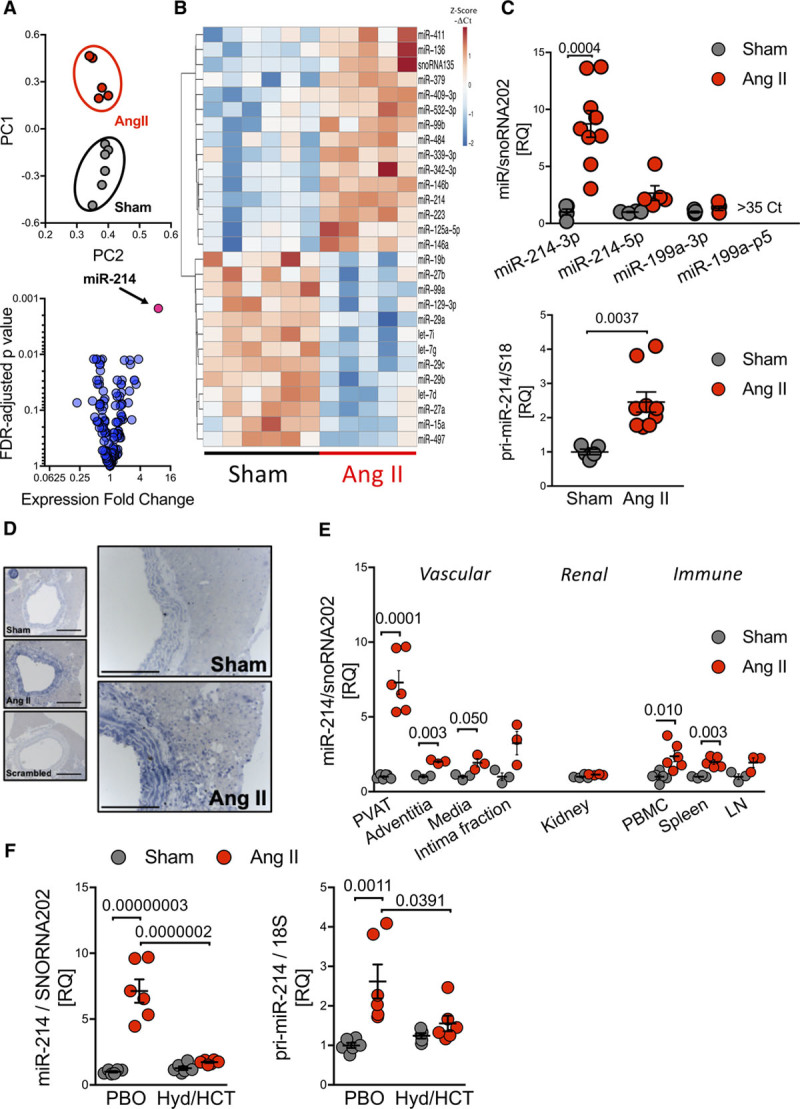
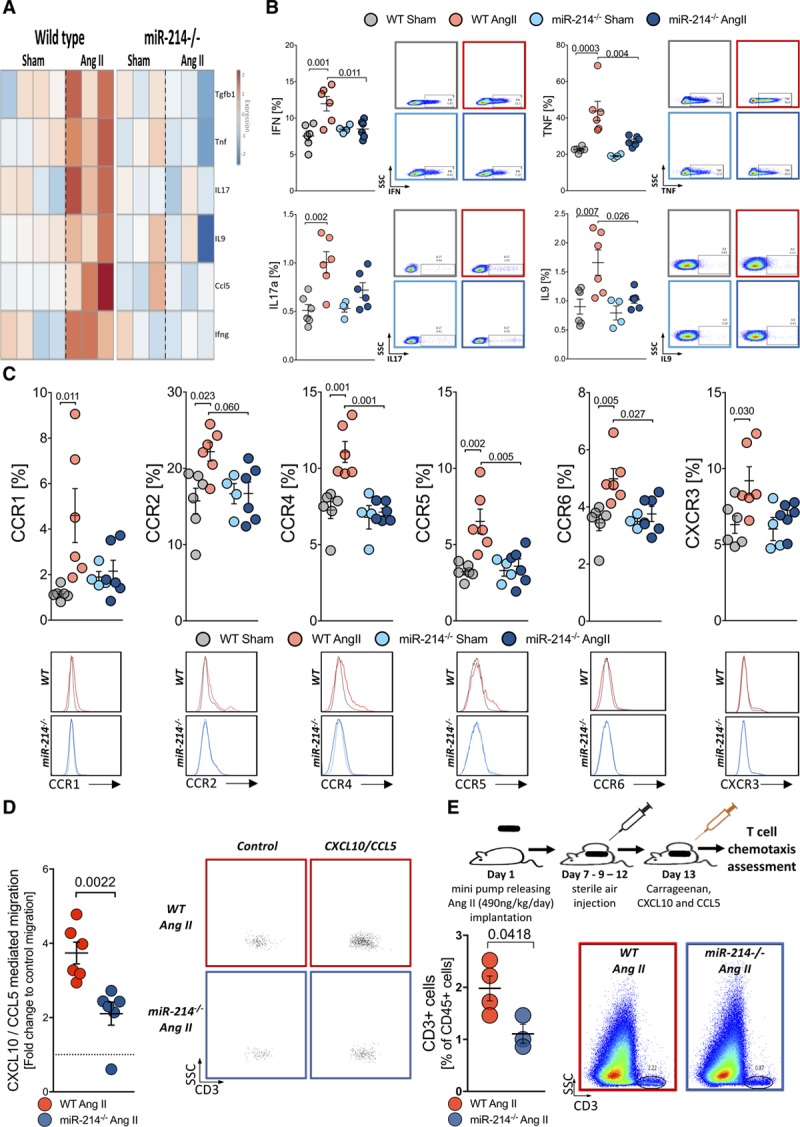
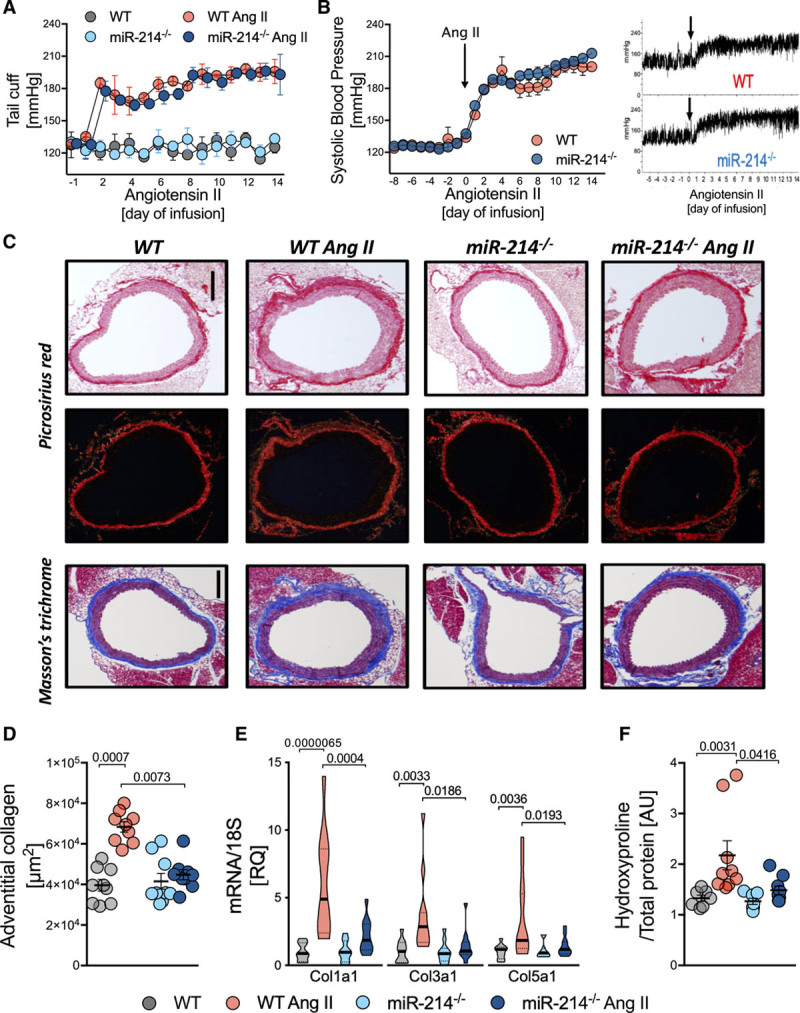
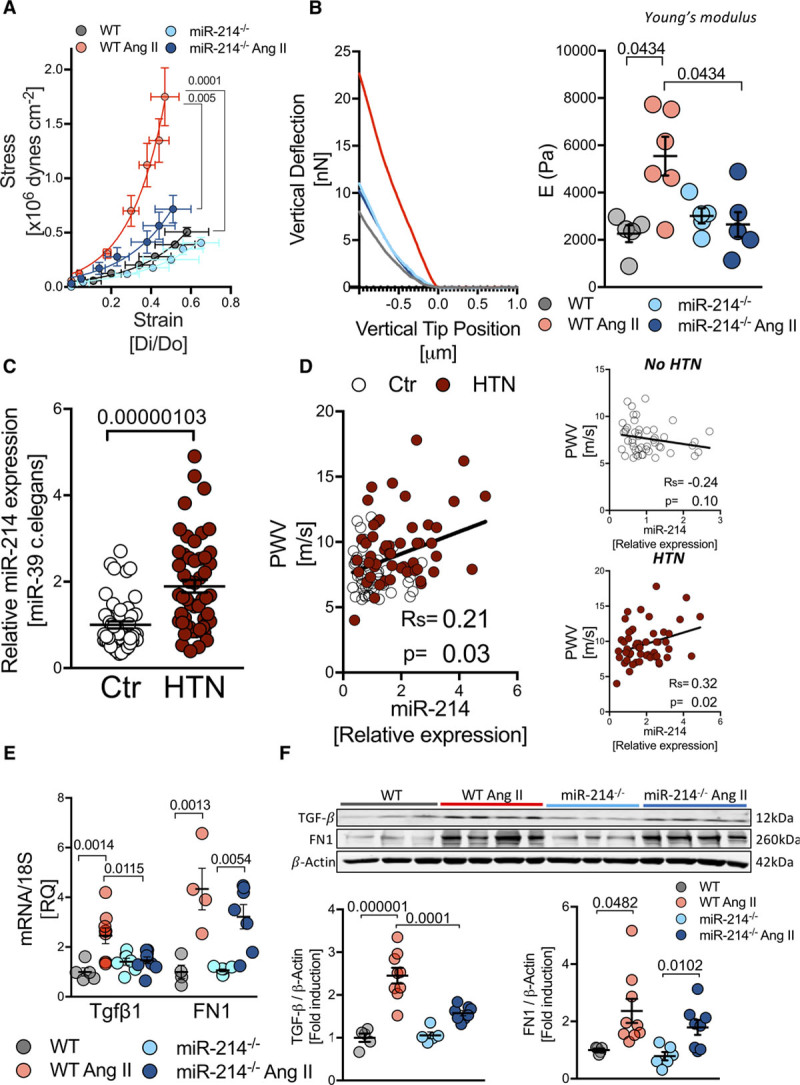
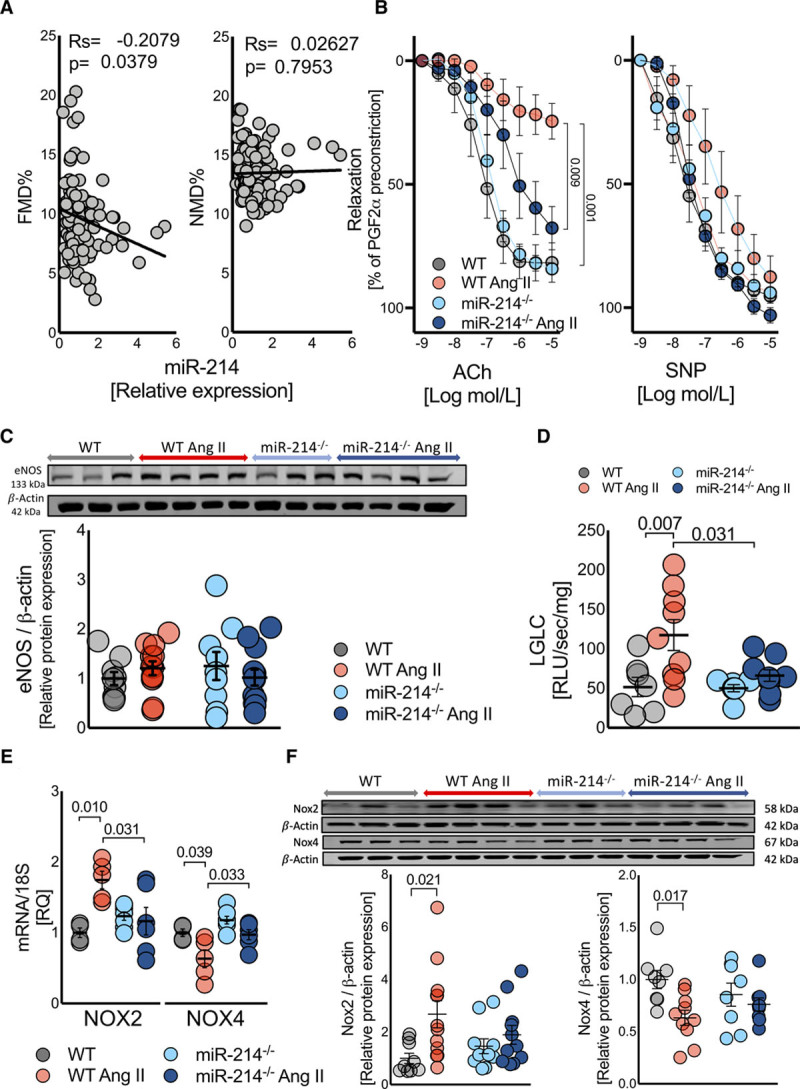
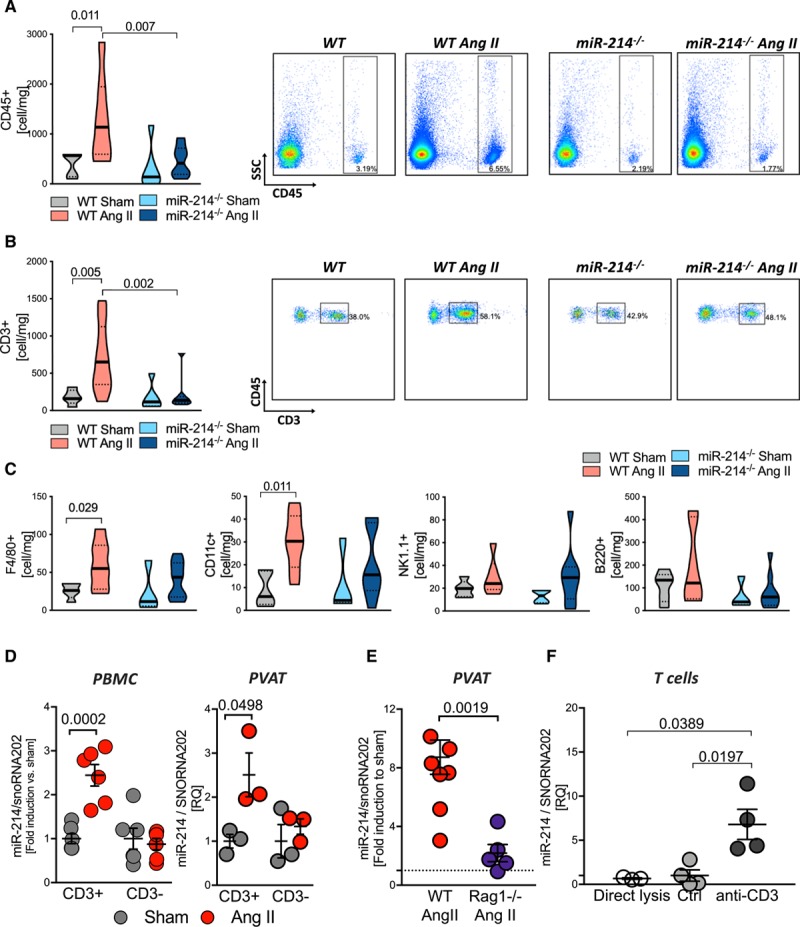
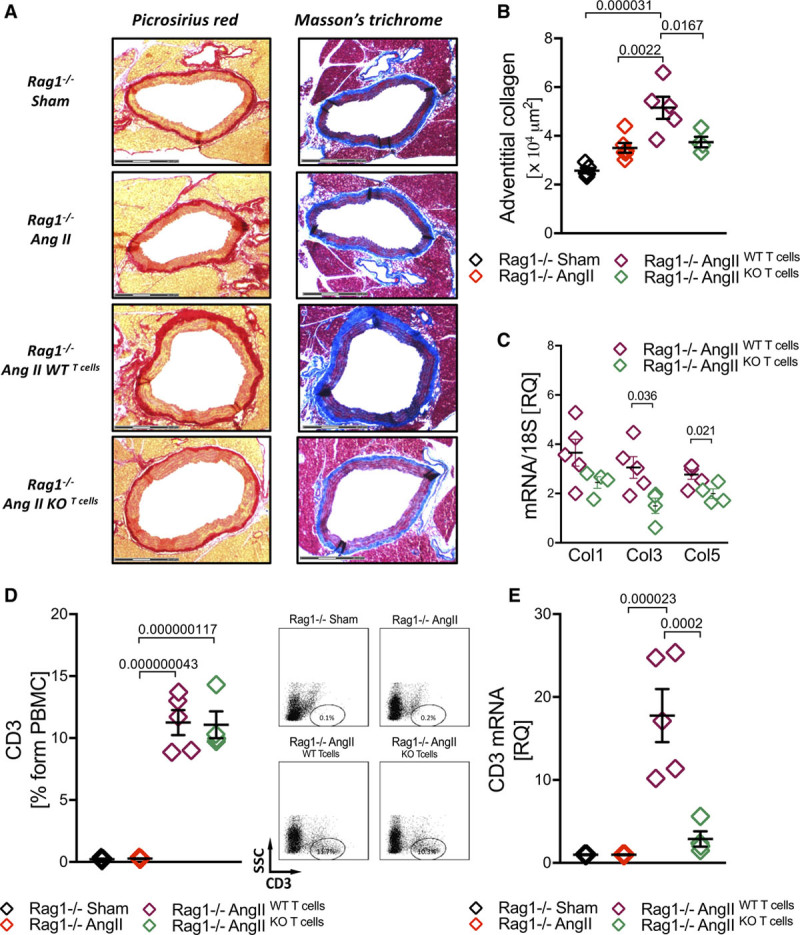
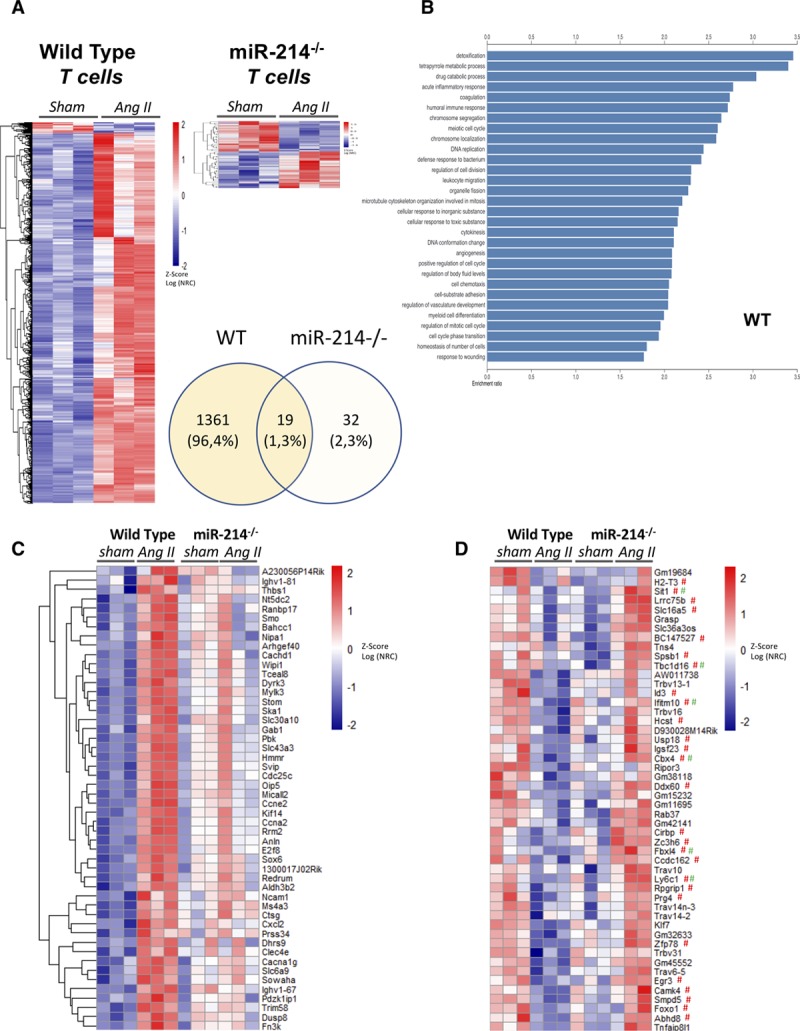
Out of 381 miRs screened in the perivascular tissues in response to Ang II (angiotensin II)-mediated hypertension, miR-214 showed the highest induction (8-fold, =0.0001). MiR-214 induction was pronounced in perivascular and circulating T cells, but not in perivascular adipose tissue adipocytes. Global deletion of miR-214 prevented Ang II-induced periaortic fibrosis, , , and expression, hydroxyproline accumulation, and vascular stiffening, without difference in blood pressure. Mechanistic studies revealed that miR-214 mice were protected against endothelial dysfunction, oxidative stress, and increased Nox2, all of which were induced by Ang II in WT mice. Ang II-induced recruitment of T cells into perivascular adipose tissue was abolished in miR-214 mice. Adoptive transfer of miR-214 T cells into RAG1 mice resulted in reduced perivascular fibrosis compared with the effect of WT T cells. Ang II induced hypertension caused significant change in the expression of 1380 T cell genes in WT, but only 51 in miR-214. T cell activation, proliferation and chemotaxis pathways were differentially affected. MiR-214 prevented Ang II-induction of profibrotic T cell cytokines (, , and ) and chemokine receptors (CCR1, CCR2, CCR4, CCR5, CCR6, and CXCR3). This manifested in reduced in vitro and in vivo T cell chemotaxis resulting in attenuation of profibrotic perivascular inflammation. Translationally, we show that miR-214 is increased in plasma of patients with hypertension and is directly correlated to pulse wave velocity as a measure of vascular stiffness.
T-cell-derived miR-214 controls pathological perivascular fibrosis in hypertension mediated by T cell recruitment and local profibrotic cytokine release.
尽管人们越来越了解与高血压相关的血管僵硬与血管周围纤维化有关的预后重要性,但对这一过程的分子和细胞调节仍知之甚少。
研究 microRNA-214(miR-214)在诱导血管周围纤维化和内皮功能障碍导致血管僵硬中的功能作用。
在血管周围组织中,在 Ang II(血管紧张素 II)介导的高血压反应中筛选了 381 种 miRs,miR-214 的诱导最高(8 倍,=0.0001)。miR-214 的诱导在血管周围和循环 T 细胞中很明显,但在血管周围脂肪组织脂肪细胞中则不然。miR-214 的全局缺失可预防 Ang II 诱导的主动脉旁纤维化、、、和表达、羟脯氨酸积累和血管僵硬,而血压无差异。机制研究表明,miR-214 小鼠对内皮功能障碍、氧化应激和 Nox2 增加具有保护作用,所有这些在 WT 小鼠中均由 Ang II 诱导。miR-214 小鼠中 Ang II 诱导的 T 细胞募集到血管周围脂肪组织中被消除。将 miR-214 T 细胞过继转移到 RAG1 小鼠中可减少与 WT T 细胞相比的血管周围纤维化。Ang II 诱导的高血压导致 WT 中 1380 个 T 细胞基因的表达发生显著变化,但 miR-214 中只有 51 个。T 细胞激活、增殖和趋化途径受到不同影响。miR-214 可预防 Ang II 诱导的致纤维化 T 细胞细胞因子(、、和)和趋化因子受体(CCR1、CCR2、CCR4、CCR5、CCR6 和 CXCR3)。这表现在体外和体内 T 细胞趋化作用降低,导致致纤维化的血管周围炎症减轻。在翻译水平上,我们表明 miR-214 在高血压患者的血浆中增加,并与脉搏波速度直接相关,作为血管僵硬的衡量标准。
T 细胞衍生的 miR-214 通过 T 细胞募集和局部致纤维化细胞因子释放控制高血压中的病理性血管周围纤维化。