Xu Shangqi, Sheng Chunlei, Tian Chunjie
Key Laboratory of Mollisols Agroecology, Northeast Institute of Geography and Agroecology, Chinese Academy of Sciences, 4888 Shengbei Road, Changchun, 130102, China.
Carbon Balance Manag. 2020 Feb 17;15(1):2. doi: 10.1186/s13021-020-0137-5.
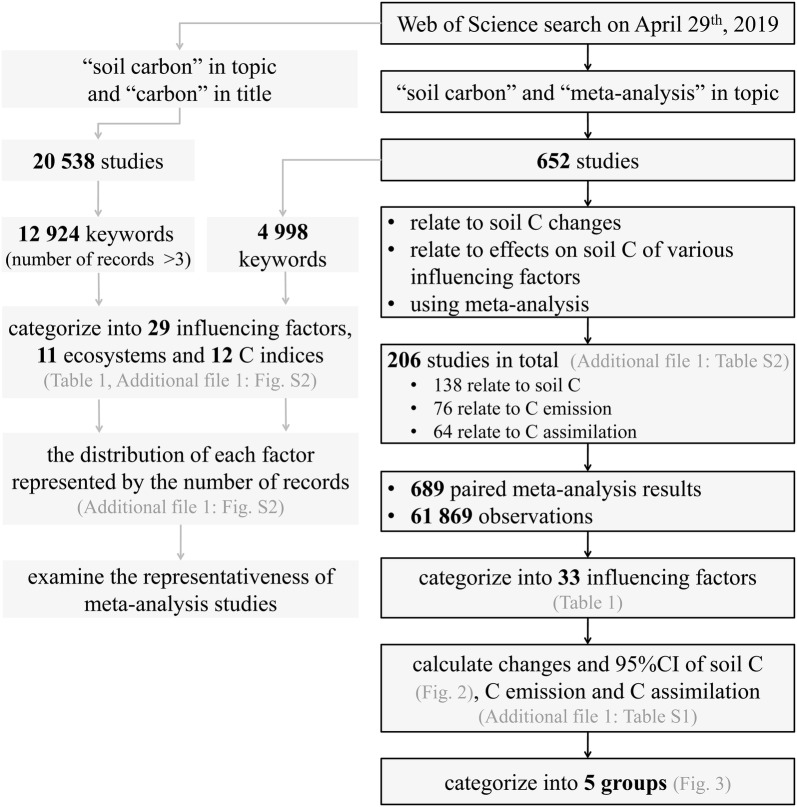
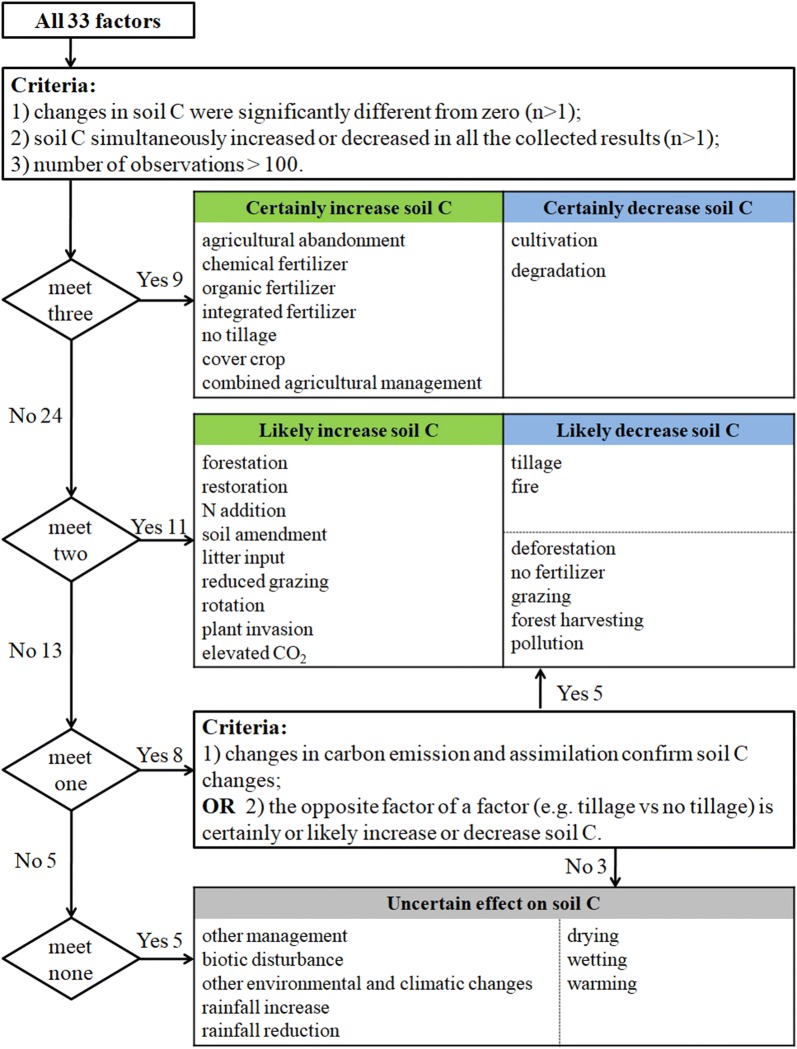
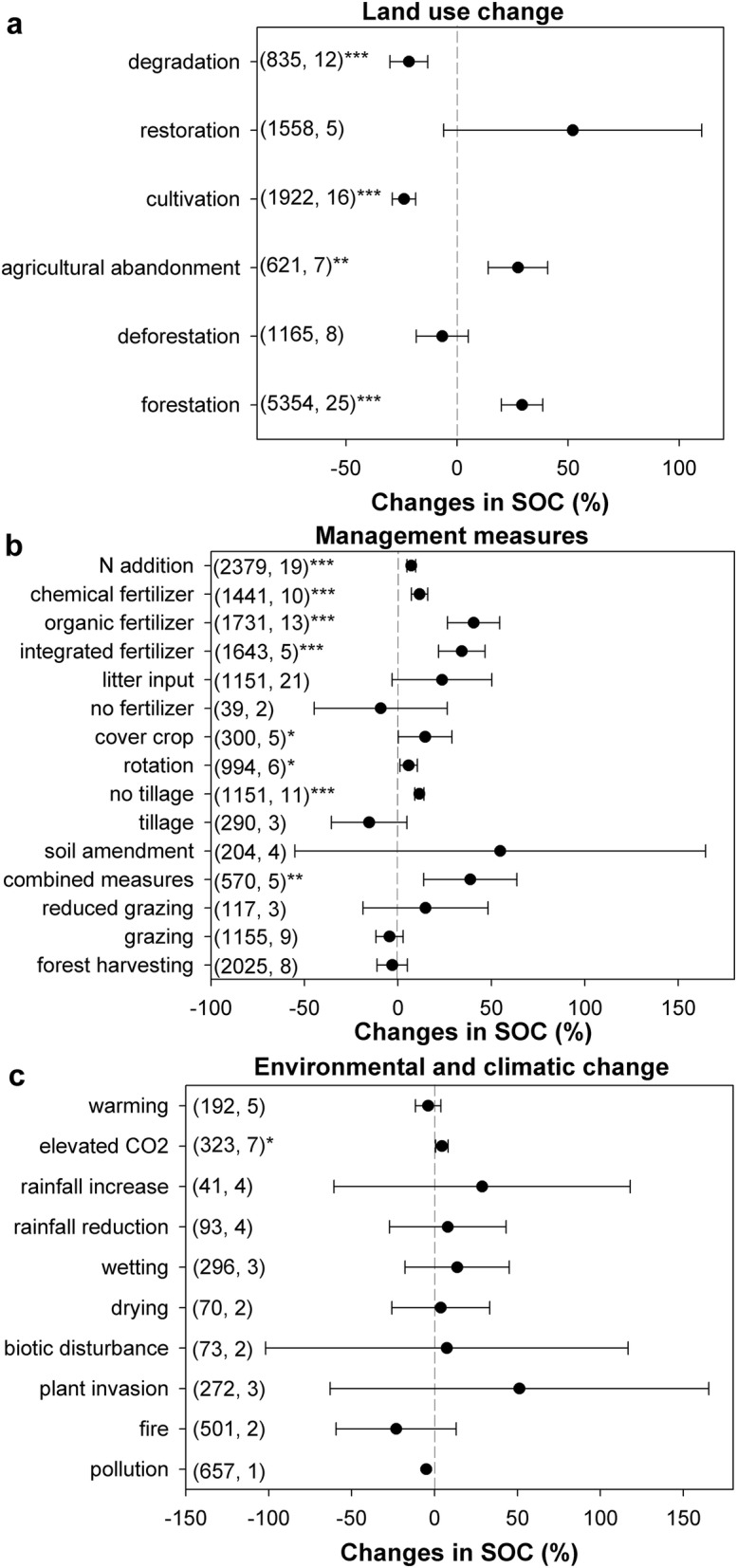
Soil carbon (C) plays a critical role in the global C cycle and has a profound effect on climate change. To obtain an in-depth and comprehensive understanding of global soil C changes and better manage soil C, all meta-analysis results published during 2001-2019 relative to soil C were collected and synthesized. The effects of 33 influencing factors on soil C were analyzed, compared and classified into 5 grades according to their effects on soil C. The effects of different categories of influencing factors, including land use change (LUC), management and climate change, on soil C and the underlying mechanism were compared and discussed. We propose that natural ecosystems have the capacity to buffer soil C changes and that increasing C inputs is one of the best measures to sequester C. Furthermore, a comparison between the meta-analyses and previous studies related to soil C based on bibliometric analysis suggested that studies on wetland soil C, soil C budgets and the effects of pollution and pesticides on soil C should be strengthened in future research.
土壤碳(C)在全球碳循环中起着关键作用,对气候变化有着深远影响。为了深入全面地了解全球土壤碳变化并更好地管理土壤碳,我们收集并综合了2001年至2019年期间发表的所有与土壤碳相关的荟萃分析结果。分析了33个影响因素对土壤碳的影响,根据其对土壤碳的影响进行比较并分为5个等级。比较并讨论了不同类别影响因素,包括土地利用变化(LUC)、管理和气候变化,对土壤碳的影响及其潜在机制。我们提出,自然生态系统有能力缓冲土壤碳变化,增加碳输入是碳固存的最佳措施之一。此外,基于文献计量分析的荟萃分析与先前有关土壤碳的研究之间的比较表明,未来研究应加强对湿地土壤碳、土壤碳预算以及污染和农药对土壤碳影响的研究。