Department of Clinical Sciences, Danderyd Hospital, Karolinska Institutet, 18288 Stockholm, Sweden.
Department of Medical Sciences, Uppsala University, 75185 Uppsala, Sweden.
Eur Heart J. 2020 Oct 21;41(40):3900-3909. doi: 10.1093/eurheartj/ehaa034.
To estimate the proportion of patients with a recent myocardial infarction (MI) who would be eligible for additional lipid-lowering therapy according to the 2019 European Society of Cardiology (ESC)/European Atherosclerosis Society (EAS) guidelines for the management of dyslipidaemias, and to simulate the effects of expanded lipid-lowering therapy on attainment of the low-density lipoprotein cholesterol (LDL-C) target as recommended by the guidelines.
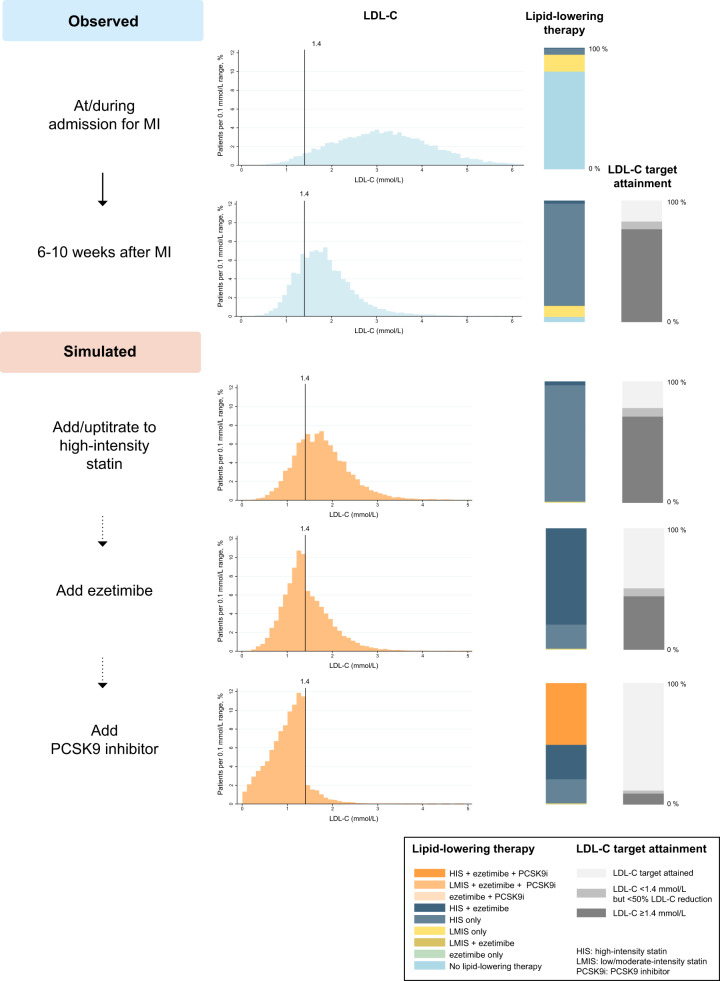
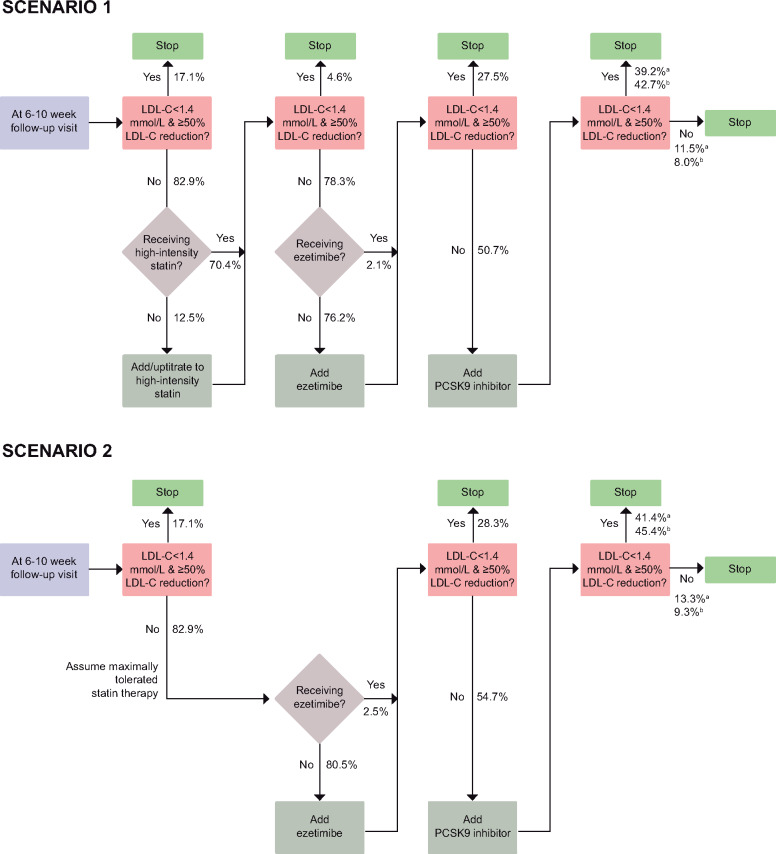
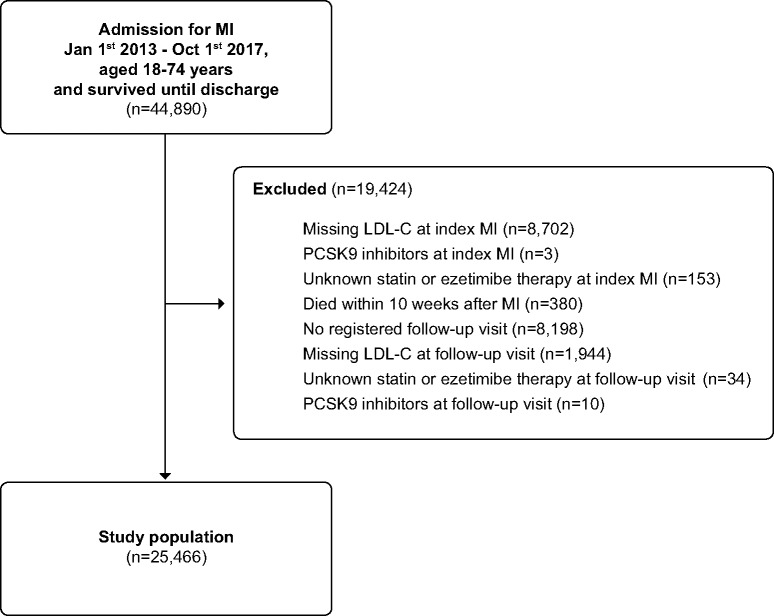
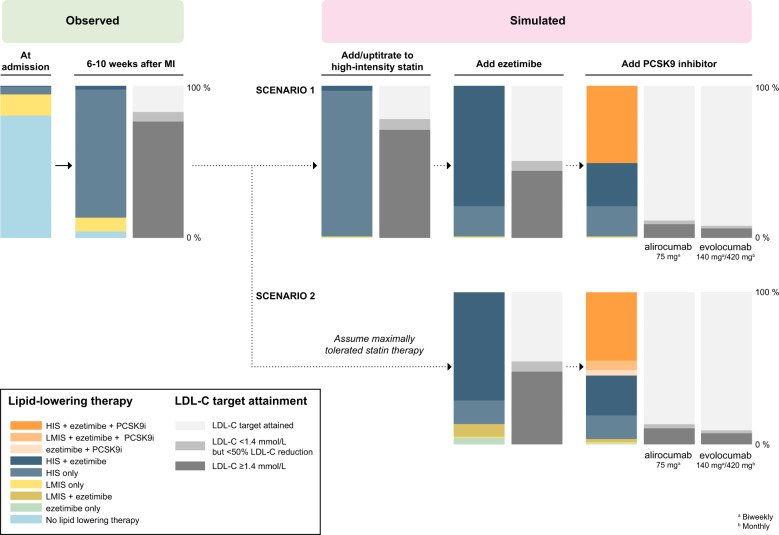
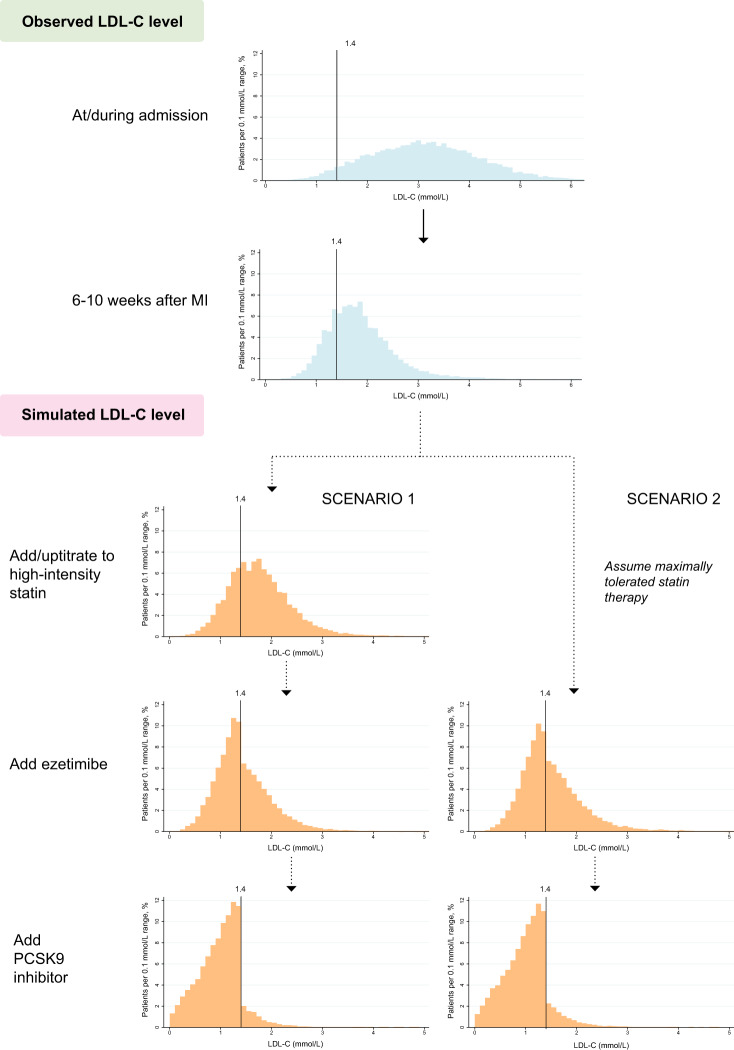
Using the nationwide SWEDEHEART register, we included 25 466 patients who had attended a follow-up visit 6-10 weeks after an MI event, 2013-17. While most patients (86.6%) were receiving high-intensity statins, 82.9% of the patients would be eligible for expanded lipid-lowering therapy, as they had not attained the target of an LDL-C level of <1.4 mmol and a ≥50% LDL-C level reduction. When maximized use of high-intensity statins followed by add-on therapy with ezetimibe was simulated using a Monte Carlo model, the LDL-C target was reached in 19.9% using high-intensity statin monotherapy and in another 28.5% with high-intensity statins and ezetimibe, while 50.7% would still be eligible for proprotein convertase subtilisin/kexin type 9 (PCSK9) inhibitors. When use of alirocumab or evolocumab was simulated in those who were eligible for PCSK9 inhibitors, around 90% of all patients attained the LDL-C target.
Our study suggests that, even with maximized use of high-intensity statins and ezetimibe, around half of patients with MI would be eligible for treatment with PCSK9 inhibitors according to the 2019 ESC/EAS guidelines. Considering the current cost of PCSK9 inhibitors, the financial implications of the new guidelines may be substantial.
根据 2019 年欧洲心脏病学会(ESC)/欧洲动脉粥样硬化学会(EAS)血脂异常管理指南,估计近期心肌梗死(MI)患者中有多少比例符合额外降脂治疗的条件,并模拟扩大降脂治疗对达到指南推荐的低密度脂蛋白胆固醇(LDL-C)目标的影响。
利用全国性的 SWEDEHEART 登记处,我们纳入了 25466 名在 2013-2017 年 MI 事件后 6-10 周接受随访的患者。虽然大多数患者(86.6%)正在服用高强度他汀类药物,但 82.9%的患者将符合扩大降脂治疗的条件,因为他们尚未达到 LDL-C<1.4mmol 和 LDL-C 水平降低≥50%的目标。当使用蒙特卡罗模型模拟最大化使用高强度他汀类药物,然后添加依折麦布的附加治疗时,高强度他汀类药物单药治疗的 LDL-C 目标达到了 19.9%,高强度他汀类药物和依折麦布联合治疗的 LDL-C 目标达到了另外 28.5%,而仍有 50.7%的患者符合前蛋白转化酶枯草溶菌素/kexin 9(PCSK9)抑制剂的使用条件。当模拟那些符合 PCSK9 抑制剂使用条件的患者使用阿利西尤单抗或依洛尤单抗时,大约 90%的患者达到了 LDL-C 目标。
我们的研究表明,即使最大限度地使用高强度他汀类药物和依折麦布,根据 2019 年 ESC/EAS 指南,仍有约一半的 MI 患者符合 PCSK9 抑制剂的治疗条件。考虑到目前 PCSK9 抑制剂的成本,新指南可能会产生重大的财务影响。