Department of Pharmacy and Pharmacology, University of Bath, Claverton Down, Bath, BA2 7AY, UK.
Pharmaceutical Technology & Development, AstraZeneca, Macclesfield, UK.
AAPS J. 2020 Feb 18;22(2):49. doi: 10.1208/s12248-019-0411-1.
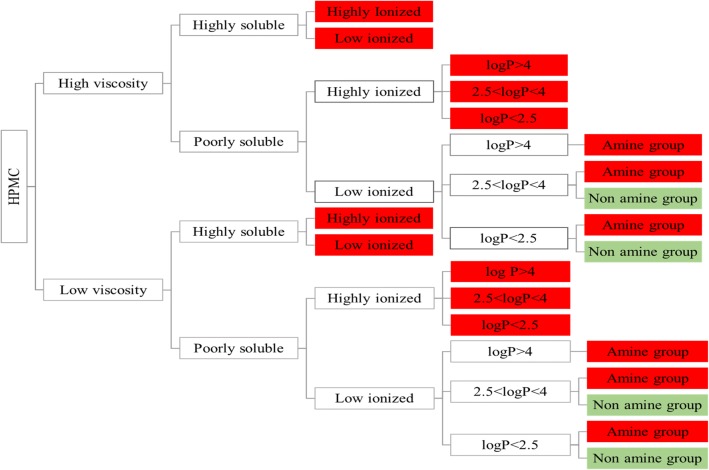
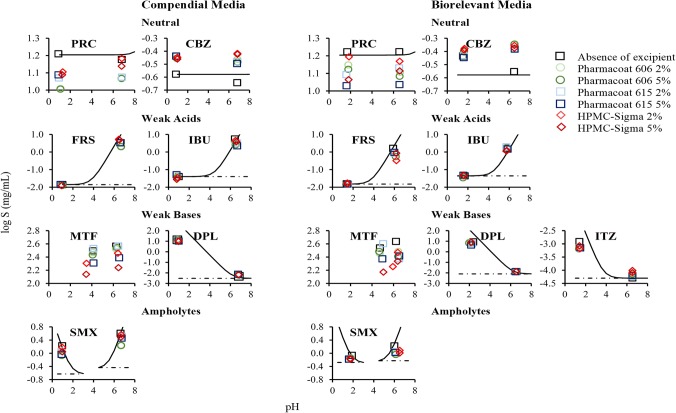
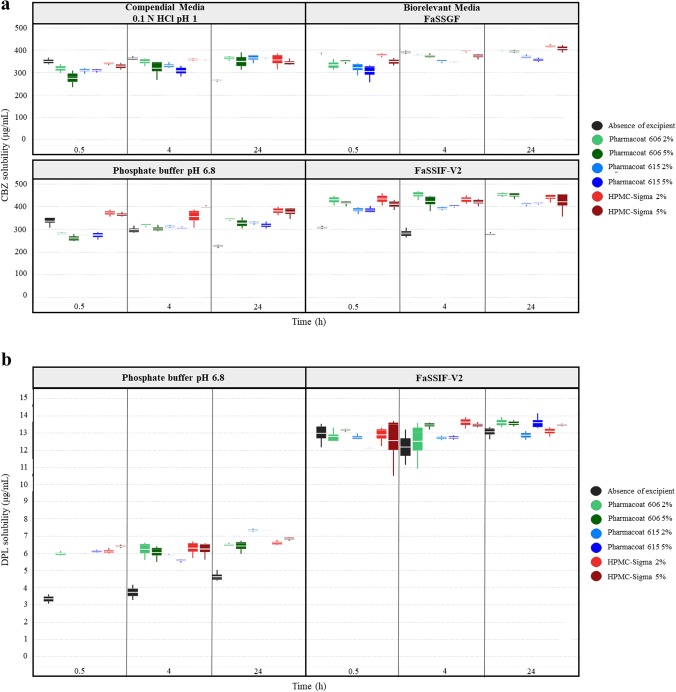
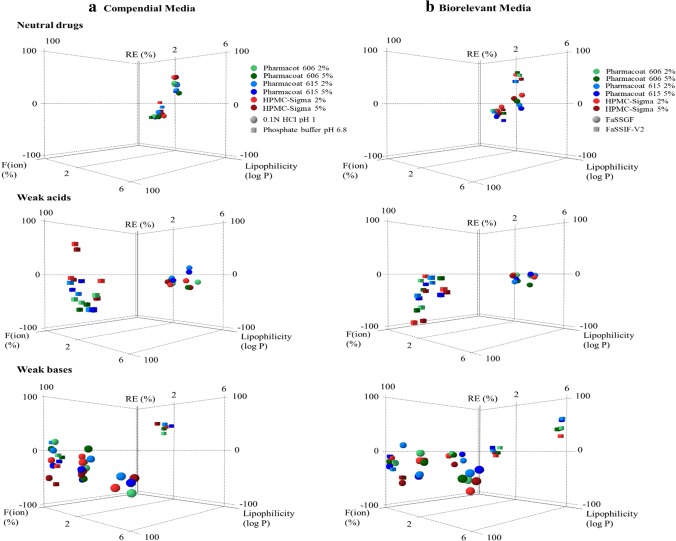
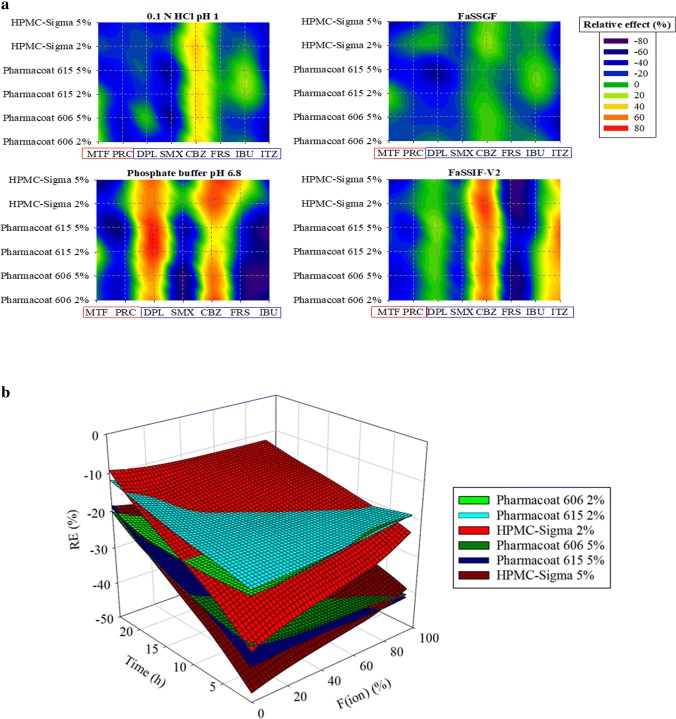
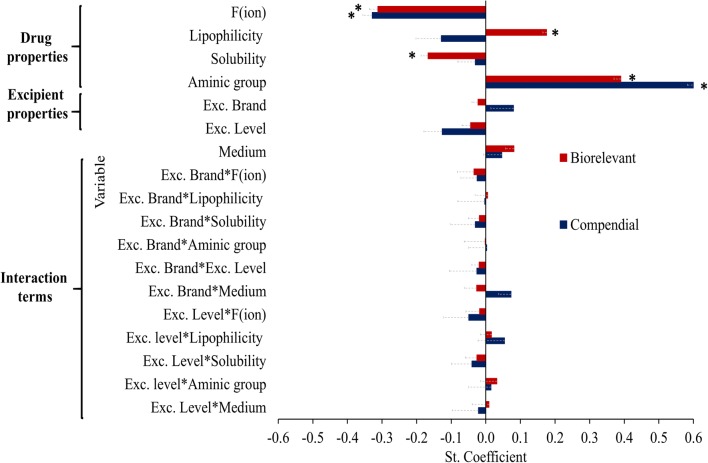
Identification of the biopharmaceutical risks of excipients and excipient variability on oral drug performance can be beneficial for the development of robust oral drug formulations. The current study investigated the impact of Hypromellose (HPMC) presence and varying viscosity type, when used as a binder in immediate release formulations, on the apparent solubility of drugs with wide range of physicochemical properties (drug ionization, drug lipophilicity, drug aqueous solubility). The role of physiological conditions on the impact of excipients on drug apparent solubility was assessed with the use of pharmacopoeia (compendial) and biorelevant media. Presence of HPMC affected drug solubility according to the physicochemical properties of studied compounds. The possible combined effects of polymer adsorption (drug shielding effect) or the formation of a polymeric viscous layer around drug particles may have retarded drug dissolution leading to reduced apparent solubility of highly soluble and/or highly ionized compounds and were pronounced mainly at early time points. Increase in the apparent solubility of poorly soluble low ionized drugs containing a neutral amine group was observed which may relate to enhanced drug solubilization or reduced drug precipitation. The use of multivariate data analysis confirmed the importance of drug physicochemical properties on the impact of excipients on drug apparent solubility and revealed that changes in HPMC material properties or amount may not be critical for oral drug performance when HPMC is used as a binder. The construction of a roadmap combining drug, excipient, and medium characteristics allowed the identification of the cases where HPMC presence may present risks in oral drug performance and bioavailability.
确定辅料的生物制药风险以及辅料的变化对口服药物性能的影响,有助于开发稳健的口服药物制剂。本研究考察了羟丙甲纤维素(HPMC)作为速释制剂的粘合剂存在时以及不同粘度类型对具有广泛物理化学性质的药物(药物离解度、药物亲脂性、药物水溶解度)表观溶解度的影响。使用药典(法定标准)和生物相关介质评估生理条件对辅料对药物表观溶解度影响的作用。HPMC 的存在根据研究化合物的物理化学性质影响药物溶解度。聚合物吸附(药物屏蔽效应)或聚合物粘性层在药物颗粒周围形成的可能联合作用可能会延迟药物溶解,导致高溶解度和/或高离解化合物的表观溶解度降低,并且在早期时间点更为明显。观察到含有中性胺基团的低溶解度低离解药物的表观溶解度增加,这可能与药物增溶或药物沉淀减少有关。多元数据分析的使用证实了药物物理化学性质对辅料对药物表观溶解度影响的重要性,并表明当 HPMC 用作粘合剂时,HPMC 材料性质或用量的变化可能不会对口服药物性能产生关键影响。将药物、辅料和介质特性结合起来的路线图的构建,使得确定 HPMC 存在可能会对口服药物性能和生物利用度产生风险的情况成为可能。