Brown Callie L, Howard Janna B, Perrin Eliana M
Department of Pediatrics, Wake Forest School of Medicine, Winston-Salem, North Carolina.
Department of Epidemiology and Prevention, Wake Forest School of Medicine, Winston-Salem, North Carolina.
Pediatr Obes. 2020 Jul;15(7):e12625. doi: 10.1111/ijpo.12625. Epub 2020 Feb 18.
Recognition of childhood weight status is important to the adoption of healthy lifestyle behaviours.
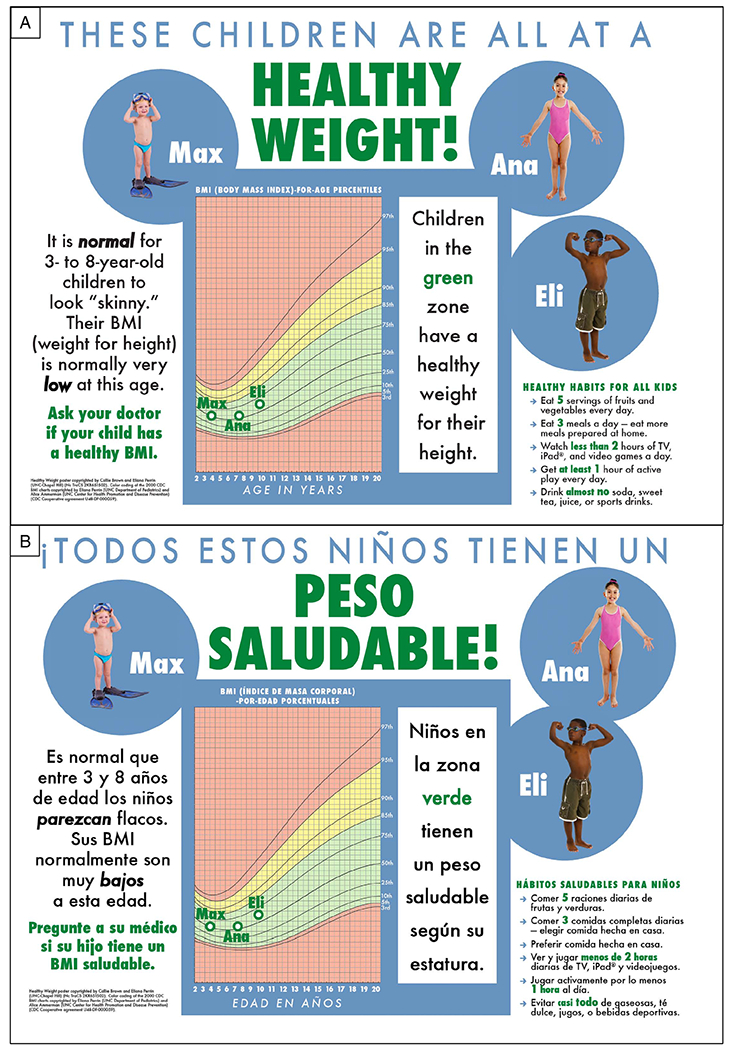
We assessed whether an exam room educational poster addressing weight and healthy lifestyle behaviours was acceptable to parents, prompted parent-provider communication or improved parental weight perception accuracy.
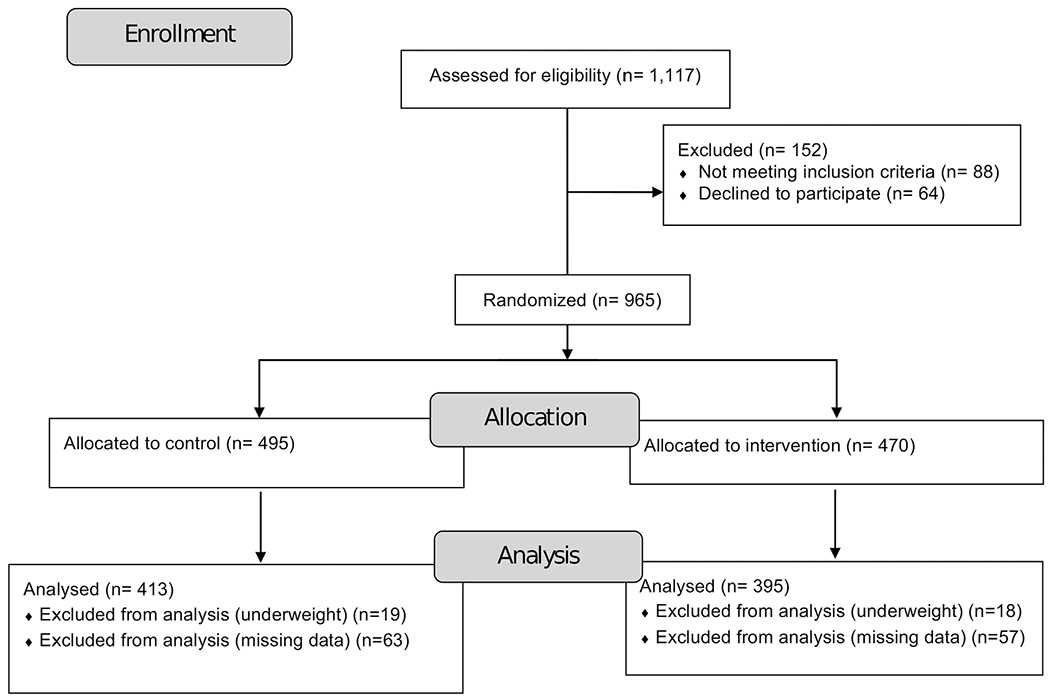
In this multi-site randomized controlled trial, exam rooms were randomized to display the posters (English and Spanish) or not. Children ages 3 to 8 years (N = 965) attending well visits were weighed and roomed per usual clinic protocol. After the visit, parents completed a questionnaire assessing demographics, child weight status perceptions and whether they discussed weight status with provider or were shown growth charts. We used separate logistic regression analyses to examine associations between intervention status and: asking provider about child weight, being shown growth charts, and accuracy of weight perception, adjusting for covariates and clustering by exam room.
Of the parents who saw the poster, 97% liked seeing it and reported greater understanding of weight status visualization (96%) and healthy lifestyle behaviours (94%). Parents who saw the poster were more likely to report being shown a growth chart (OR 1.87, 95% 1.06, 3.30) but were not more likely to ask about their child's weight status nor accurately report their child's weight status.
An educational exam room poster about healthy weight was well-received by parents and prompted providers to show the child's growth chart but did not prompt parent-initiated conversations about weight status nor improve parental weight perception accuracy.
认识儿童的体重状况对于采取健康的生活方式行为很重要。
我们评估了一张关于体重和健康生活方式行为的诊室教育海报是否为家长所接受,是否促进了家长与医护人员的沟通,或提高了家长对体重认知的准确性。
在这项多中心随机对照试验中,诊室被随机分为展示海报(英语和西班牙语)组和不展示海报组。按照常规门诊流程,对3至8岁前来进行健康检查的儿童(N = 965)进行称重并安排就诊。就诊后,家长完成一份问卷,评估人口统计学信息、对孩子体重状况的认知,以及他们是否与医护人员讨论过体重状况或是否看过生长曲线图。我们使用单独的逻辑回归分析来检验干预状态与以下方面之间的关联:向医护人员询问孩子的体重、看过生长曲线图、体重认知的准确性,并对协变量进行调整,同时按诊室进行聚类分析。
看过海报的家长中,97%喜欢看到海报,并表示对体重状况可视化(96%)和健康生活方式行为(94%)有了更多了解。看过海报的家长更有可能报告看过生长曲线图(比值比1.87,95%置信区间1.06,3.30),但不太可能询问孩子的体重状况,也不太可能准确报告孩子的体重状况。
一张关于健康体重的诊室教育海报受到了家长的好评,并促使医护人员展示孩子的生长曲线图,但并未促使家长主动讨论体重状况,也未提高家长对体重认知的准确性。