Department of Medical Oncology, Erasmus MC Cancer Institute, University Medical Center Rotterdam, Erasmus MC, Rotterdam, The Netherlands.
Department of Pathology, University Medical Center Rotterdam, Erasmus MC, Rotterdam, The Netherlands.
Sci Rep. 2020 Feb 19;10(1):2927. doi: 10.1038/s41598-020-59789-4.
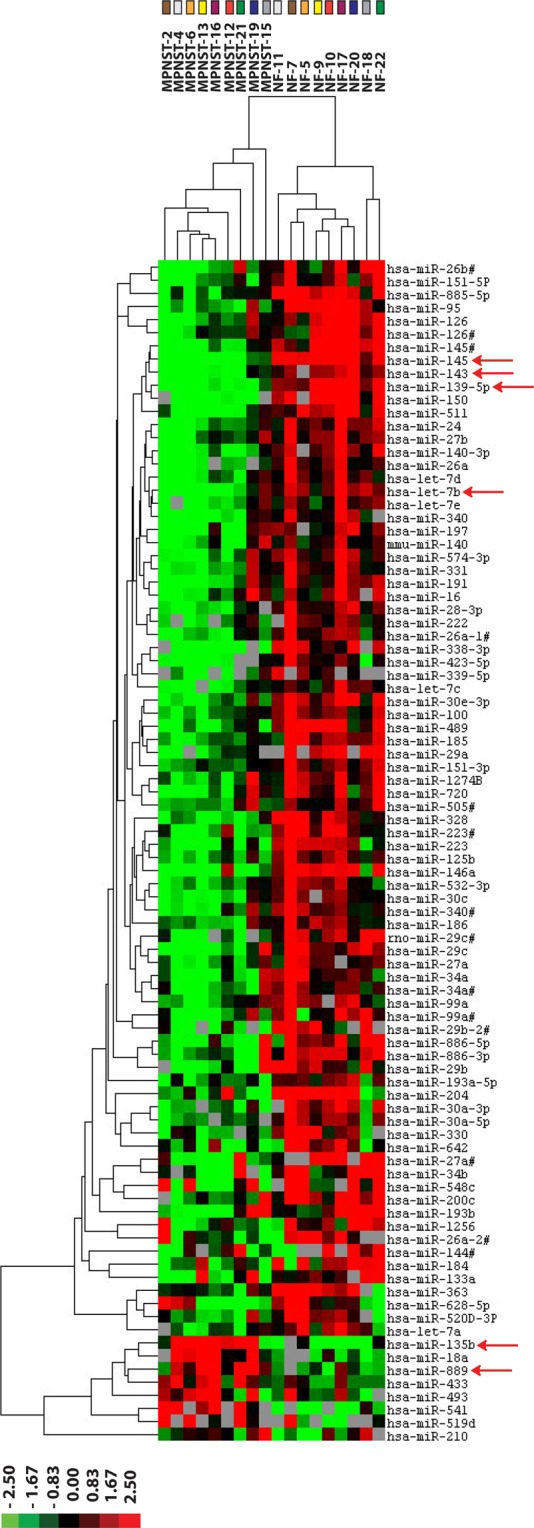
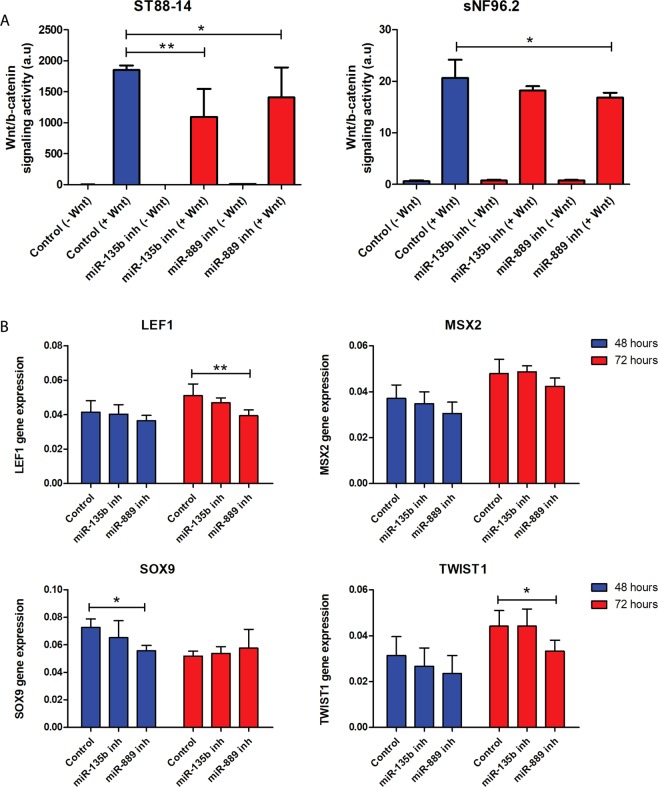
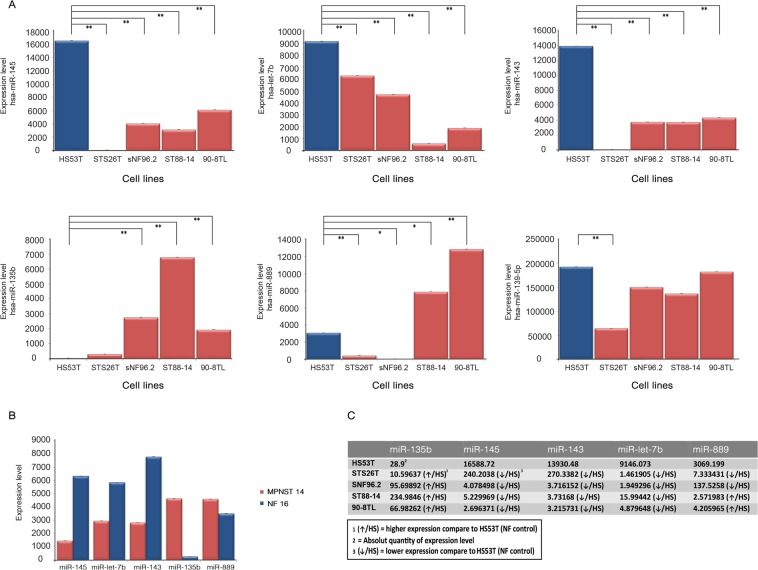
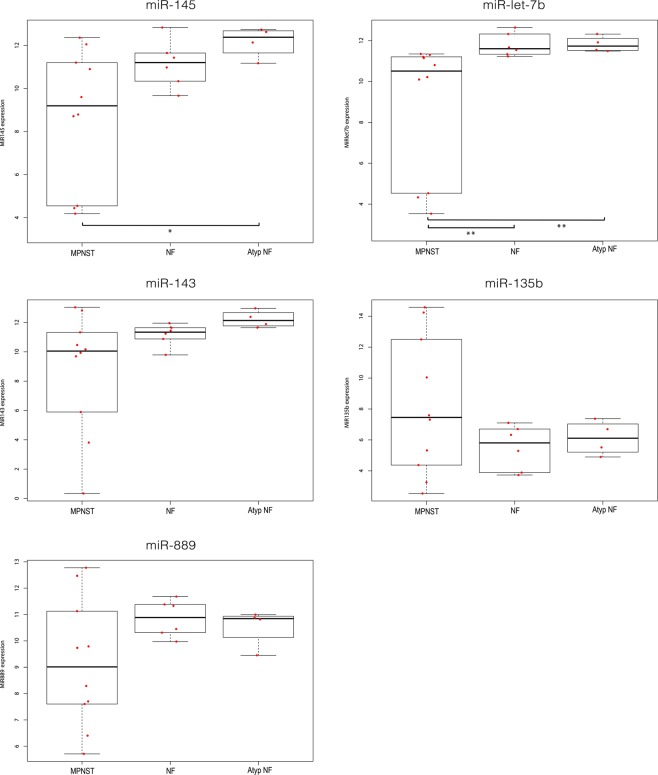
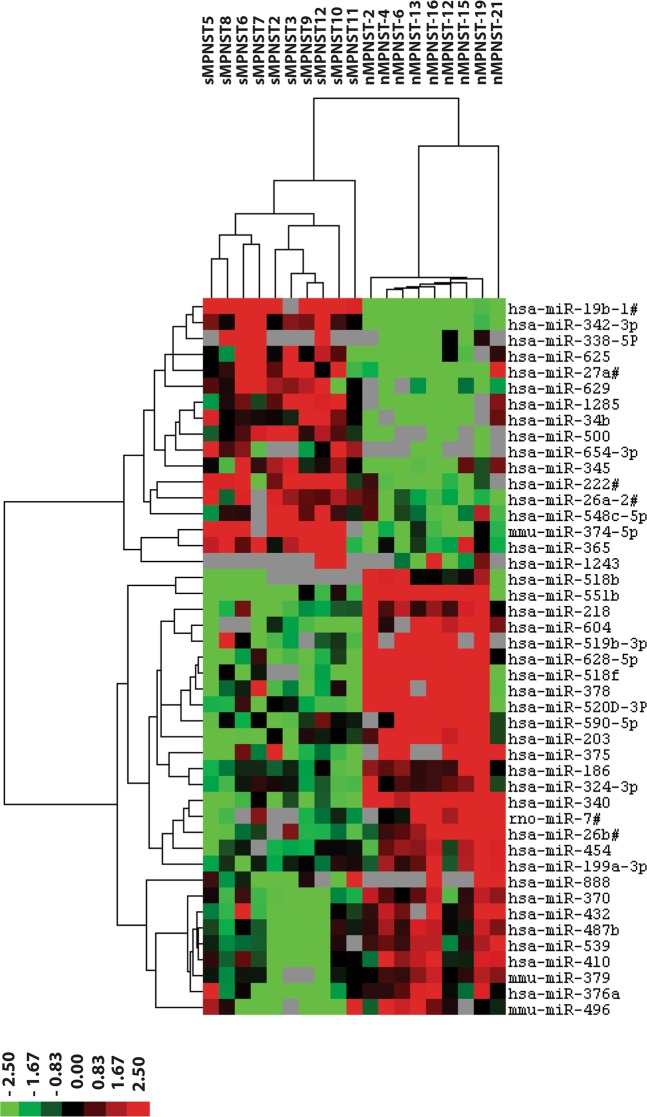
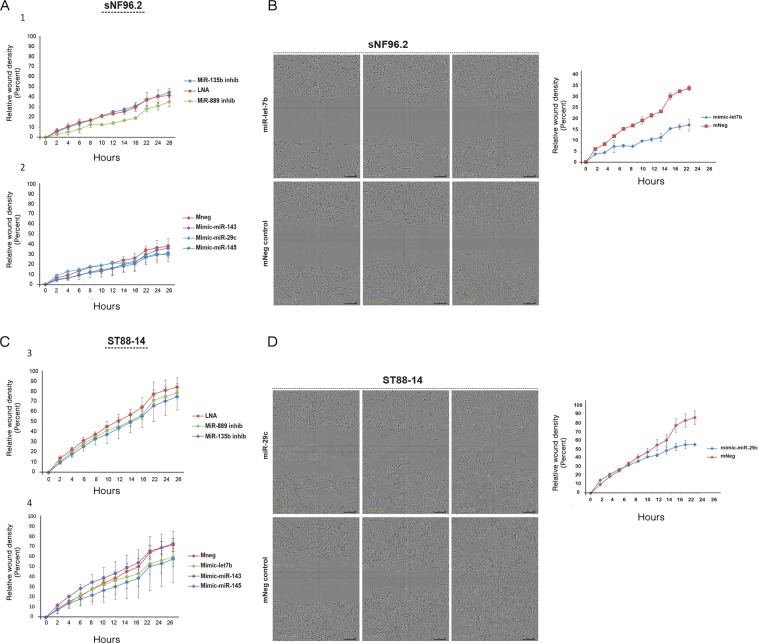
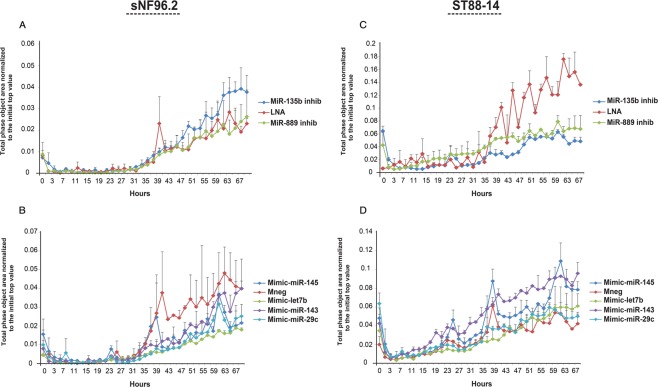
Malignant peripheral nerve sheath tumors (MPNST) are aggressive cancers that occur spontaneously (sporadic MPNST) or from benign plexiform neurofibromas in neurofibromatosis type 1 (NF1) patients. MPNSTs metastasize easily, are therapy resistant and are frequently fatal. The molecular changes underlying the malignant transformation in the NF1 setting are incompletely understood. Here we investigate the involvement of microRNAs in this process. MicroRNA expression profiles were determined from a series of archival, paired samples of plexiform neurofibroma and MPNST. Ninety differentially expressed microRNAs were identified between the paired samples. Three downregulated microRNAs (let-7b-5p, miR-143-3p, miR-145-5p) and two upregulated microRNAs (miR135b-5p and miR-889-3p) in MPNST were selected for functional characterization. In general, their differential expression was validated in a relevant cell line panel but only partly in a series of unpaired, fresh frozen tumor samples. As part of the validation process we also analyzed microRNA expression profiles of sporadic MPNSTs observing that microRNA expression discriminates NF1-associated and sporadic MPNSTs. The role of microRNAs in cancer progression was examined in NF1-derived MPNST cell lines by transiently modulating microRNA levels. Our findings indicate that some microRNAs affect migratory and invasive capabilities and Wnt signaling activity but the effects are distinct in different cell lines. We conclude that miRNAs play essential regulatory roles in MPNST facilitating tumor progression.
恶性外周神经鞘瘤(MPNST)是一种侵袭性癌症,可自发发生(散发性 MPNST)或源自神经纤维瘤病 1 型(NF1)患者的良性丛状神经纤维瘤。MPNST 容易转移,对治疗有抗药性,且常致命。NF1 背景下恶性转化的分子变化尚不完全清楚。在这里,我们研究了 microRNA 在这个过程中的作用。从一系列存档的、配对的丛状神经纤维瘤和 MPNST 样本中确定了 microRNA 表达谱。在配对样本之间鉴定出 90 个差异表达的 microRNA。在 MPNST 中选择了三个下调的 microRNA(let-7b-5p、miR-143-3p、miR-145-5p)和两个上调的 microRNA(miR135b-5p 和 miR-889-3p)进行功能特征分析。总体而言,它们的差异表达在相关的细胞系面板中得到了验证,但在一系列未配对的新鲜冷冻肿瘤样本中仅部分得到了验证。作为验证过程的一部分,我们还分析了散发性 MPNST 的 microRNA 表达谱,观察到 microRNA 表达可区分 NF1 相关和散发性 MPNST。通过瞬时调节 microRNA 水平,在 NF1 衍生的 MPNST 细胞系中研究了 microRNA 在癌症进展中的作用。我们的发现表明,一些 microRNA 影响迁移和侵袭能力以及 Wnt 信号活性,但在不同的细胞系中作用不同。我们得出结论,microRNA 在 MPNST 中发挥着重要的调节作用,促进肿瘤的进展。