Wilf Peter
Department of Geosciences, Pennsylvania State University, University Park, PA 16802, USA Pennsylvania State University University Park United States of America.
PhytoKeys. 2020 Feb 3;139:77-89. doi: 10.3897/phytokeys.139.48717. eCollection 2020.
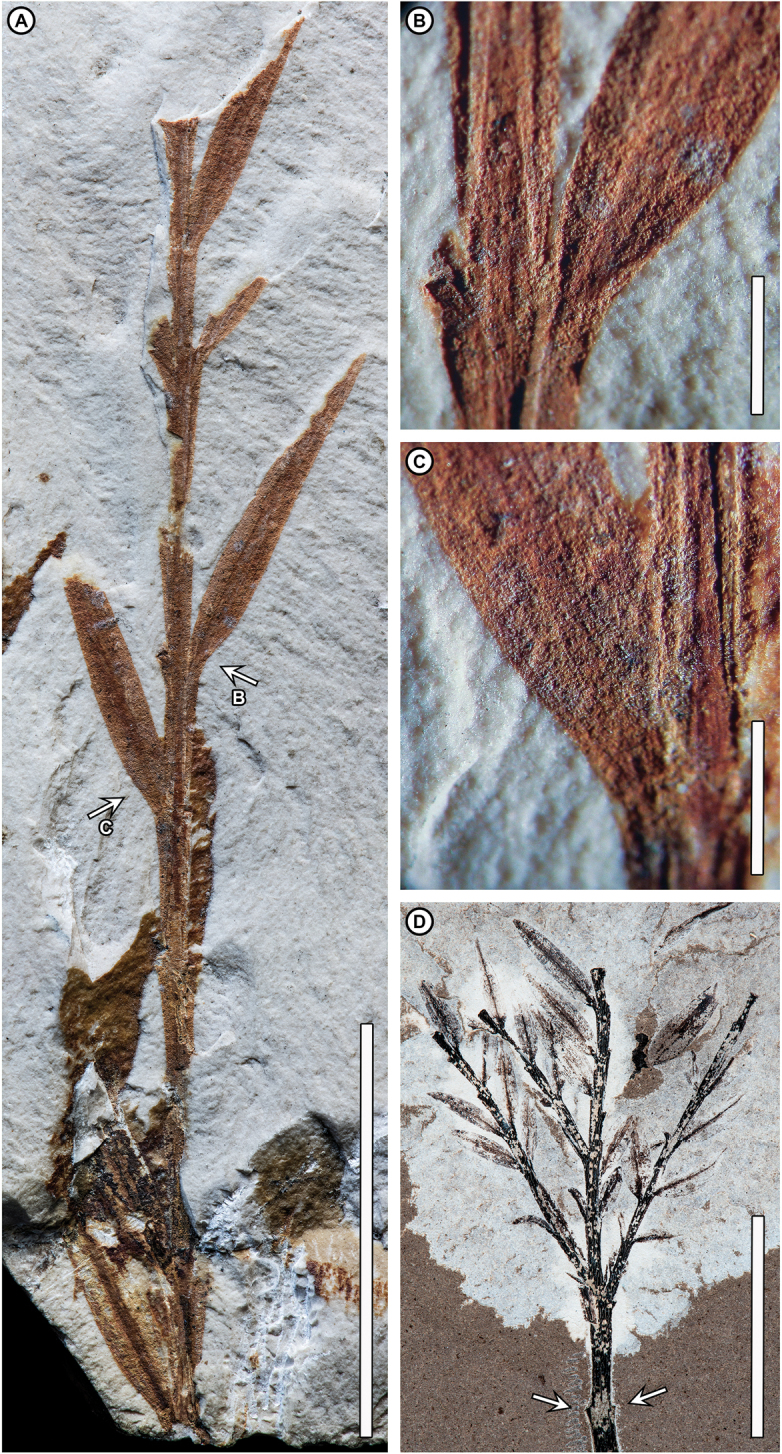
Freng. & Parodi, 1941, a fossilized leafy branch from the early Eocene (52 Ma), late-Gondwanan Laguna del Hunco biota of southern Argentina, is still cited as the oldest potential bamboo fossil and as evidence for a Gondwanan origin of bamboos. On recent examination, the holotype specimen was found to lack any typical bamboo characters such as nodes, sheaths, ligules, pseudopetioles, or parallel leaf venation. Instead, it has decurrent, clasping, univeined, heterofacially twisted leaves with thickened, central-longitudinal bands of presumed transfusion tissue. These and other features allow confident placement in the living Neotropical and West Pacific disjunct genus (Podocarpaceae), which was recently described from the same fossil site based on abundant, well-preserved material. However, the 1941 fossil holds nomenclatural priority, requiring the new combination (Freng. & Parodi) Wilf, No reliable bamboo fossils remain from Gondwana, and the oldest South American bamboo fossils are Pliocene. joins a growing list of living New World genera that are no longer included in Paleogene Patagonian floras, whose extant relatives are primarily concentrated in Australasia and Malesia via the ancient Gondwanan route through Antarctica.
弗伦格和帕罗迪于1941年报道了一个来自早始新世(5200万年前)、阿根廷南部晚冈瓦纳拉古纳德尔洪科生物群的叶状化石树枝,它至今仍被视为最古老的潜在竹类化石,并作为竹类起源于冈瓦纳的证据。最近经检查发现,该正模标本缺乏任何典型的竹类特征,如节、鞘、叶舌、假叶柄或平行叶脉。相反,它具有下延、抱茎、单脉、异面扭曲的叶子,带有假定的输导组织加厚的中央纵向带。这些特征以及其他特征使得它可以可靠地归入现存的新热带和西太平洋间断分布属(罗汉松科),该属最近根据同一化石地点丰富且保存完好的材料进行了描述。然而,1941年的化石具有命名优先权,需要新组合(弗伦格和帕罗迪)威尔夫。冈瓦纳没有可靠的竹类化石留存,南美洲最古老的竹类化石是上新世的。这加入了越来越多现存新世界属的行列,这些属不再包含在古近纪巴塔哥尼亚植物群中,其现存亲属主要通过古代冈瓦纳路线经南极洲集中在澳大拉西亚和马来群岛。