Department of Internal Medicine I, University Hospital Tübingen, Tübingen, Germany.
Novozymes, Bagsvaerd, Denmark.
Front Immunol. 2020 Jan 31;11:93. doi: 10.3389/fimmu.2020.00093. eCollection 2020.
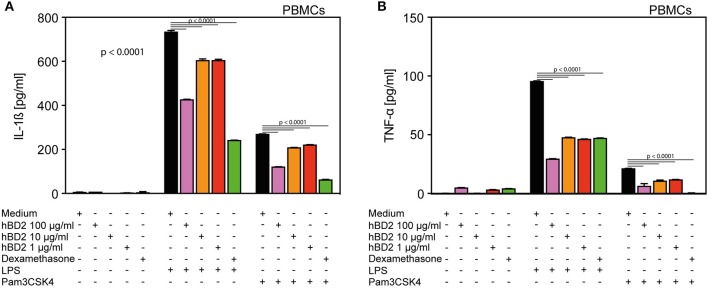
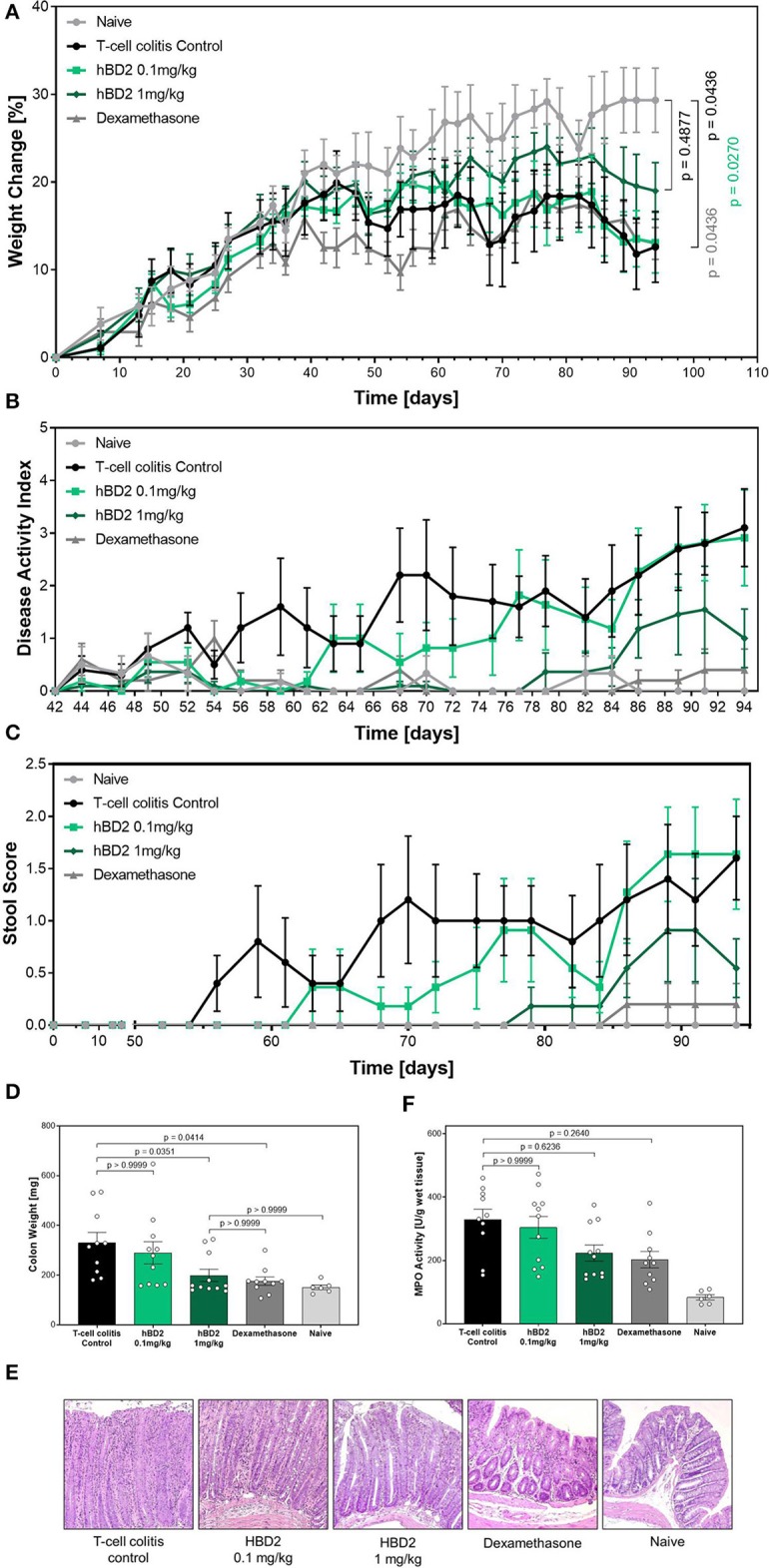
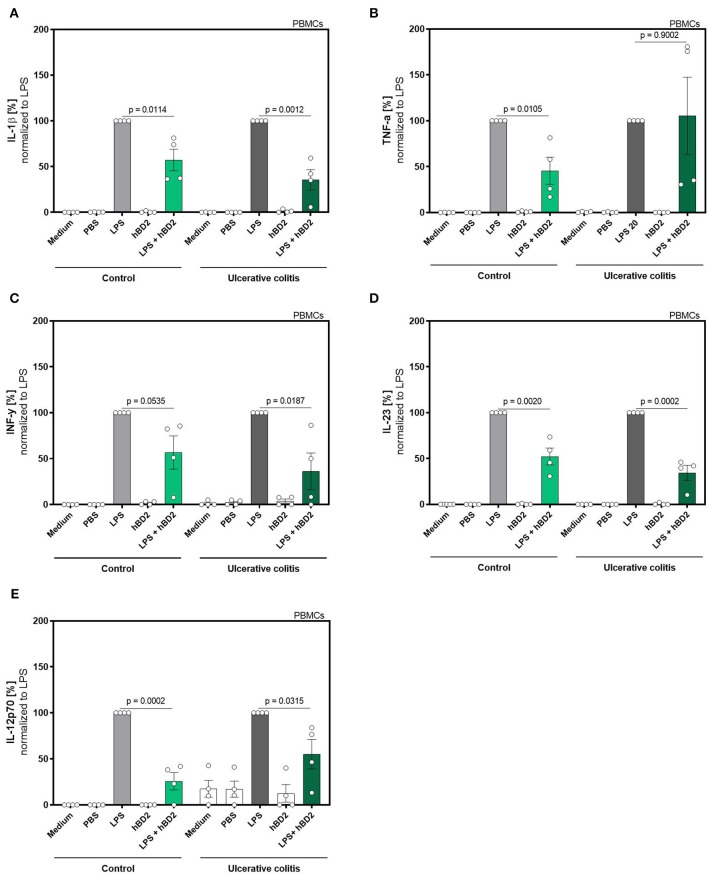
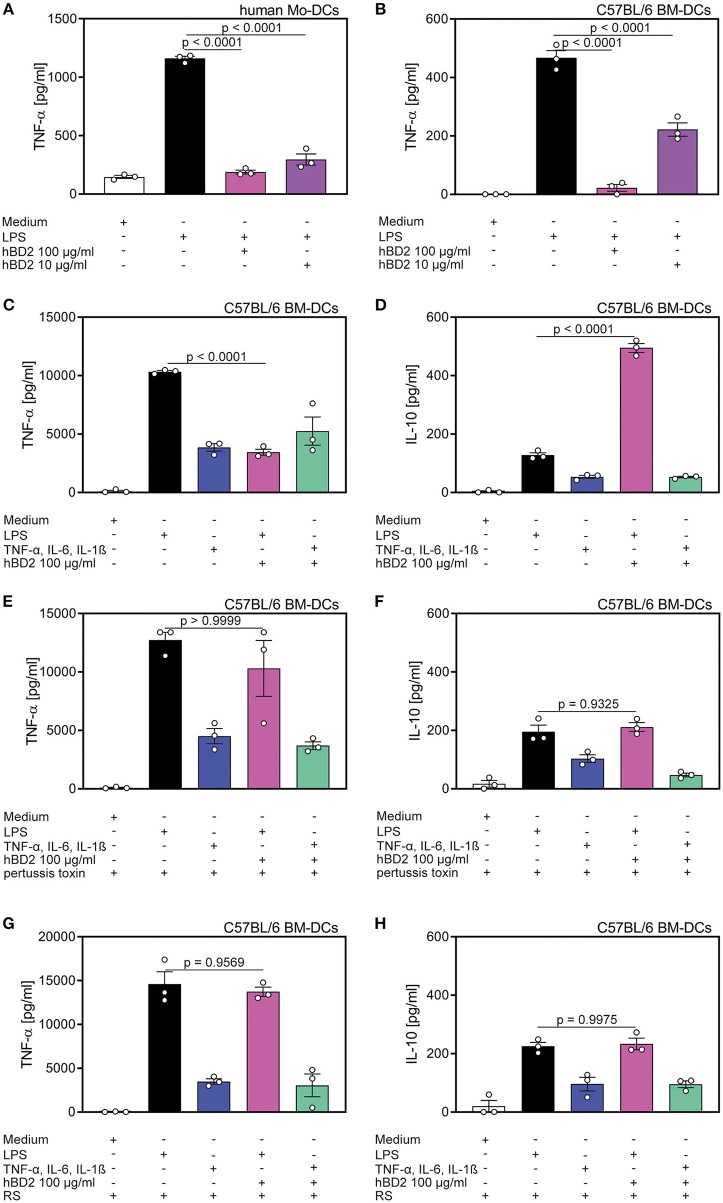
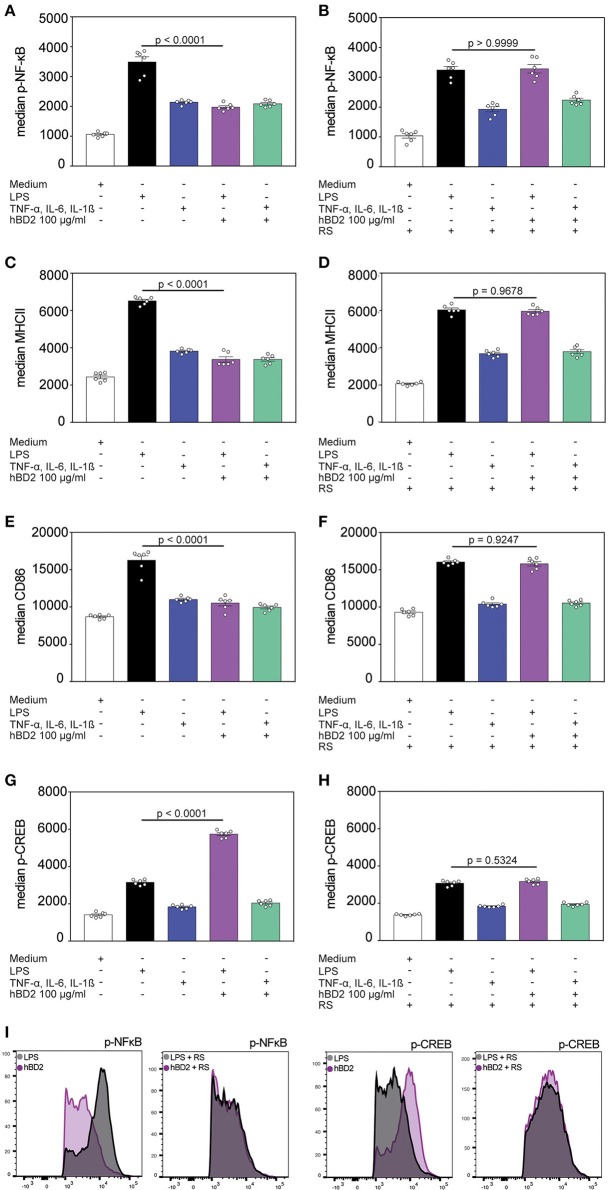
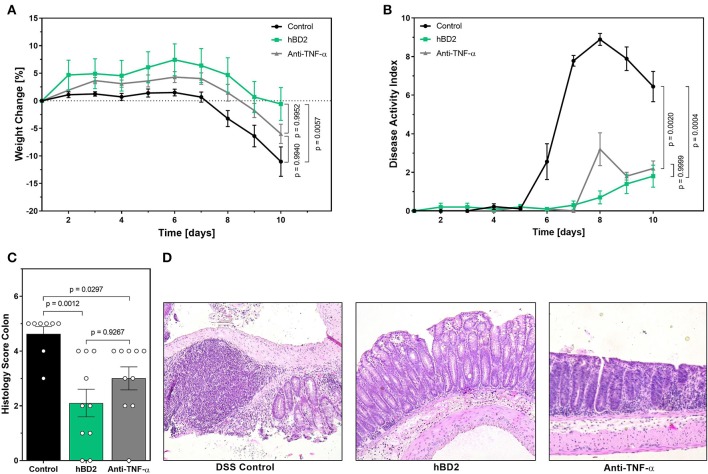
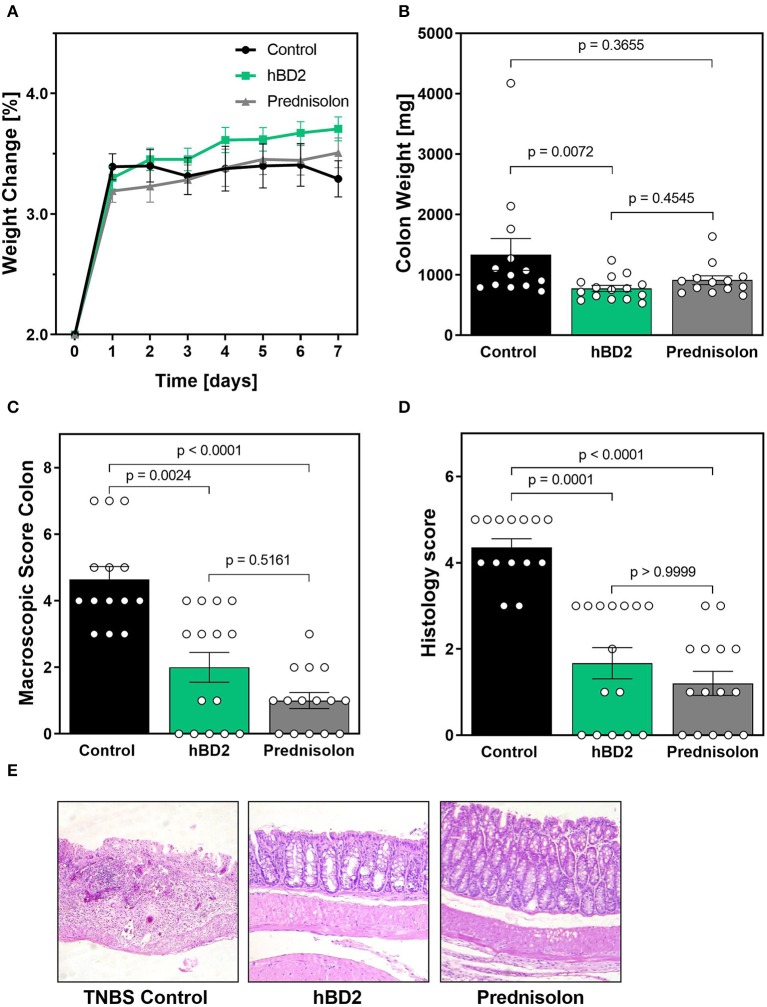
Defensins represents an integral part of the innate immune system serving to ward off potential pathogens and to protect the intestinal barrier from microbial encroachment. In addition to their antimicrobial activities, defensins in general, and human β-defensin 2 (hBD2) in particular, also exhibit immunomodulatory capabilities. In this report, we assessed the therapeutic efficacy of systemically administered recombinant hBD2 to ameliorate intestinal inflammation in three distinct animal models of inflammatory bowel disease; i.e., chemically induced mucosal injury (DSS), loss of mucosal tolerance (TNBS), and T-cell transfer into immunodeficient recipient mice. Treatment efficacy was confirmed in all tested models, where systemically administered hBD2 mitigated inflammation, improved disease activity index, and hindered colitis-induced body weight loss on par with anti-TNF-α and steroids. Treatment of lipopolysaccharide (LPS)-activated human peripheral blood mononuclear cells with rhBD2 confirmed the immunomodulatory capacity in the circulatory compartment. Subsequent analyzes revealed dendritic cells (DCs) as the main target population. Suppression of LPS-induced inflammation was dependent on chemokine receptor 2 (CCR2) expression. Mechanistically, hBD2 engaged with CCR2 on its DC target cell to decrease NF-κB, and increase CREB phosphorylation, hence curbing inflammation. To our knowledge, this is the first study showing efficacy of a systemically administered defensin in experimental disease.
防御素是先天免疫系统的一个组成部分,有助于抵御潜在的病原体,并保护肠道屏障免受微生物侵袭。除了具有抗菌活性外,防御素一般,特别是人β防御素 2(hBD2),还具有免疫调节能力。在本报告中,我们评估了系统给予重组 hBD2 以改善三种不同的炎症性肠病动物模型中的肠道炎症的治疗效果;即,化学诱导的粘膜损伤(DSS)、粘膜耐受性丧失(TNBS)和 T 细胞转移到免疫缺陷受体小鼠。在所有测试的模型中都证实了治疗效果,其中系统给予 hBD2 减轻了炎症,改善了疾病活动指数,并阻止了结肠炎引起的体重减轻,与抗 TNF-α 和类固醇相当。用 rhBD2 处理脂多糖(LPS)激活的人外周血单核细胞证实了循环部分的免疫调节能力。随后的分析显示树突状细胞(DC)是主要的靶细胞群。抑制 LPS 诱导的炎症依赖于趋化因子受体 2(CCR2)的表达。从机制上讲,hBD2 与 DC 靶细胞上的 CCR2 结合,降低 NF-κB 并增加 CREB 磷酸化,从而抑制炎症。据我们所知,这是第一项研究表明系统给予防御素在实验性疾病中的疗效。