MMWR Morb Mortal Wkly Rep. 2020 Feb 21;69(7):183-188. doi: 10.15585/mmwr.mm6907a2.
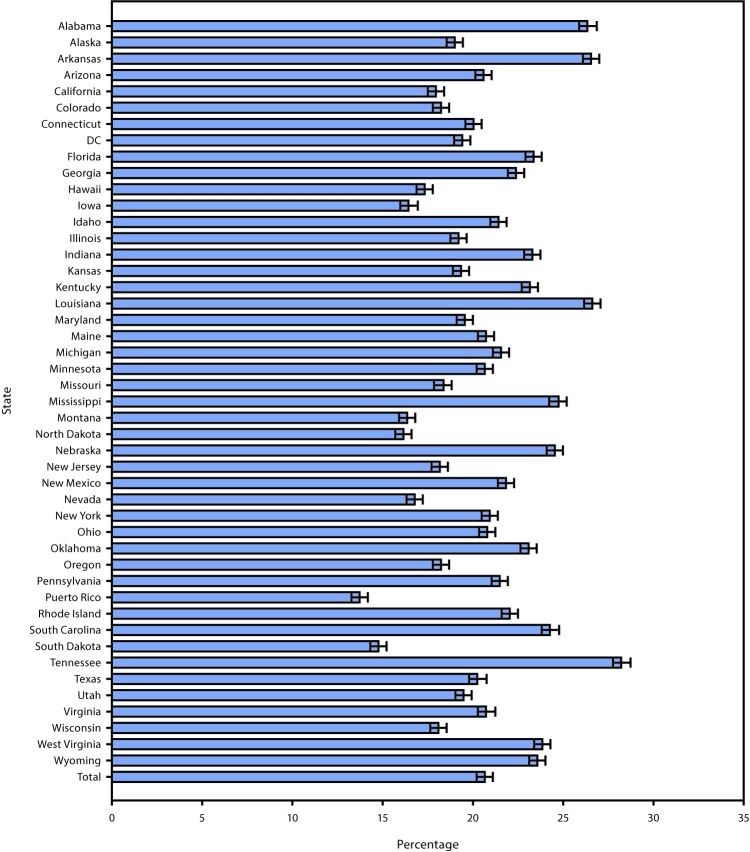
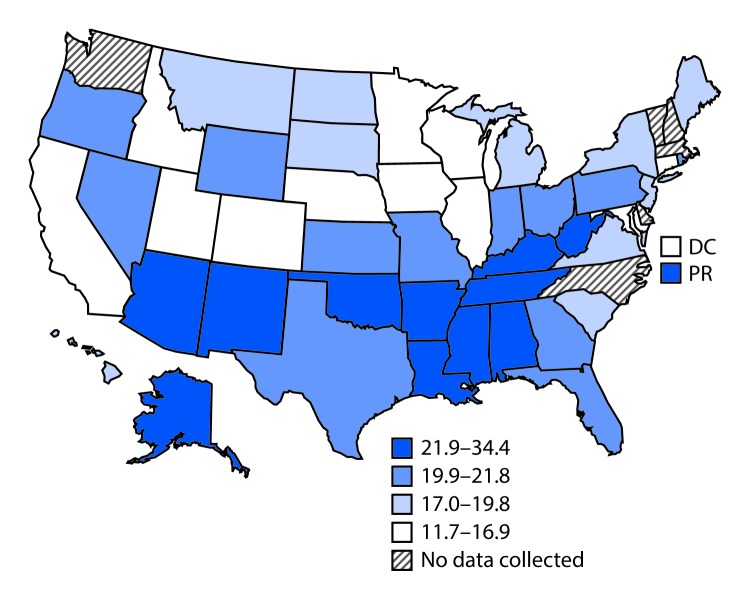
In 2015, an estimated 17.7 million U.S. persons were informal caregivers who provided substantial services through in-home, unpaid assistance to their family members and friends (1). Caregiving can have many benefits, such as enhancing the bond between caregiver and recipient, but it can also place an emotional and physical strain on caregivers, leading to higher rates of depression, lower quality of life, and poorer overall health (2). As the U.S. population continues to age (3), the need for informal caregivers will likely increase. However, little nationally representative information on prevalence of caregivers is available. This study examined demographic characteristics and health status of informal caregivers from 44 states,* the District of Columbia (DC), and Puerto Rico, based on data from the Behavioral Risk Factor Surveillance System (BRFSS) collected during 2015-2017. Overall, approximately one in five adults reported that they had provided care to a family member or friend in the preceding 30 days. Fifty-eight percent of caregivers were women, and a majority were non-Hispanic white, with at least some college education, and married or living with a partner. Across all states, 19.2% of caregivers reported being in fair or poor health, although significant state-to-state variation occurred. Caregivers provide important support to family members, friends, and the health care system and might compromise their own health to provide this support (1,2). Better understanding of caregivers and the challenges they face could inform implementation of improvements in support systems that could enhance not only the health of the caregiver, but that of the care recipient as well. For example, additional data regarding demographics at the state level might aid in more effective planning and support of caregivers with evidence-based programs and assistance (https://www.cdc.gov/aging/publications/features/caring-for-yourself.html).
2015 年,美国约有 1770 万人是非正式护理人员,他们通过非专业的家庭护理为家庭成员和朋友提供了大量服务(1)。护理可以带来许多好处,例如增强护理人员和接受者之间的联系,但也会给护理人员带来情感和身体上的压力,导致更高的抑郁率、更低的生活质量和更差的整体健康状况(2)。随着美国人口的持续老龄化(3),对非正式护理人员的需求可能会增加。然而,关于护理人员的流行率,很少有全国性的代表性信息。本研究根据 2015-2017 年行为风险因素监测系统(BRFSS)收集的数据,检查了来自 44 个州、哥伦比亚特区(DC)和波多黎各的非正式护理人员的人口统计学特征和健康状况。总体而言,大约五分之一的成年人报告在过去 30 天内照顾过家庭成员或朋友。58%的护理人员是女性,大多数是非西班牙裔白人,至少受过一些大学教育,已婚或与伴侣生活在一起。在所有州,19.2%的护理人员报告健康状况不佳或较差,尽管各州之间存在显著差异。护理人员为家庭成员、朋友和医疗保健系统提供了重要支持,他们可能会为了提供这种支持而损害自己的健康(1,2)。更好地了解护理人员及其面临的挑战,可以为改进支持系统提供信息,这不仅可以改善护理人员的健康状况,还可以改善护理接受者的健康状况。例如,关于州一级人口统计学的数据可能有助于更有效地规划和支持有证据支持的项目和援助的护理人员(https://www.cdc.gov/aging/publications/features/caring-for-yourself.html)。