School of Kinesiology, Shanghai University of Sport, Shanghai 200438, China.
Key Laboratory of Exercise and Health Sciences of Ministry of Education, Shanghai University of Sport, Shanghai 200438, China.
Int J Environ Res Public Health. 2020 Feb 17;17(4):1274. doi: 10.3390/ijerph17041274.
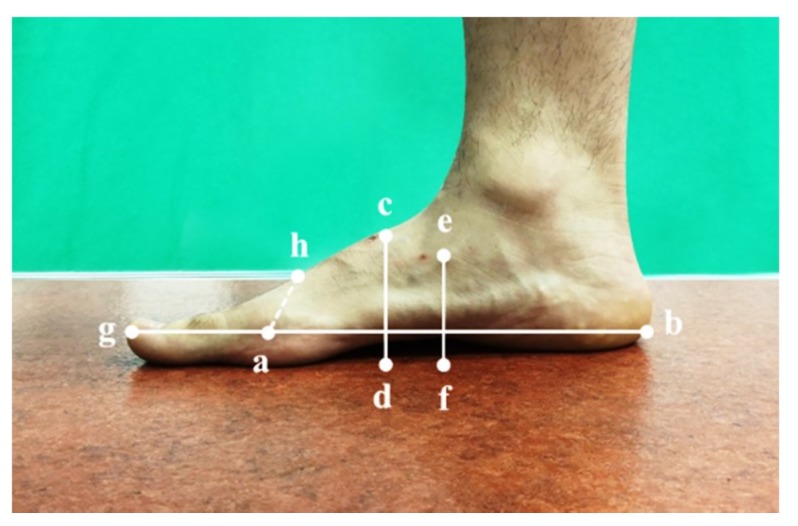
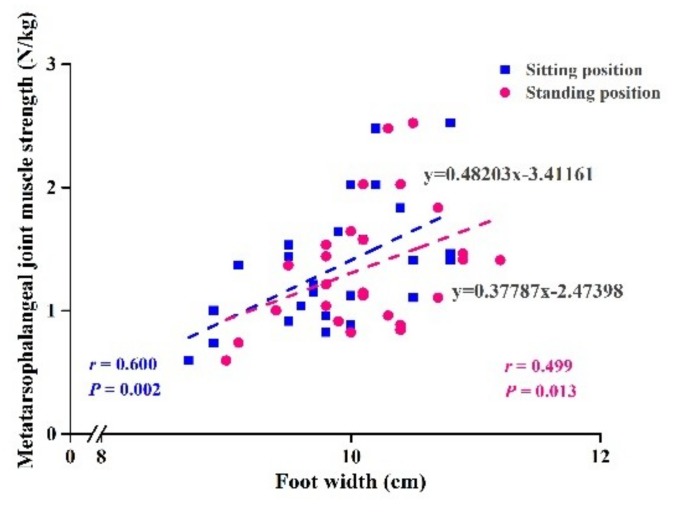
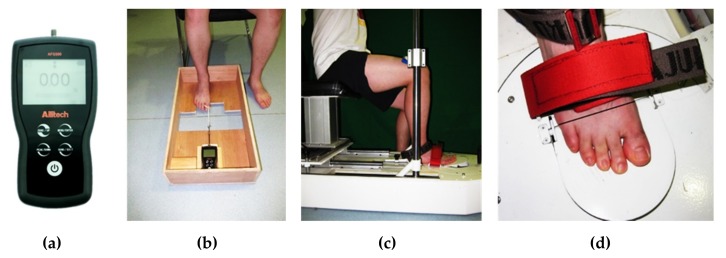
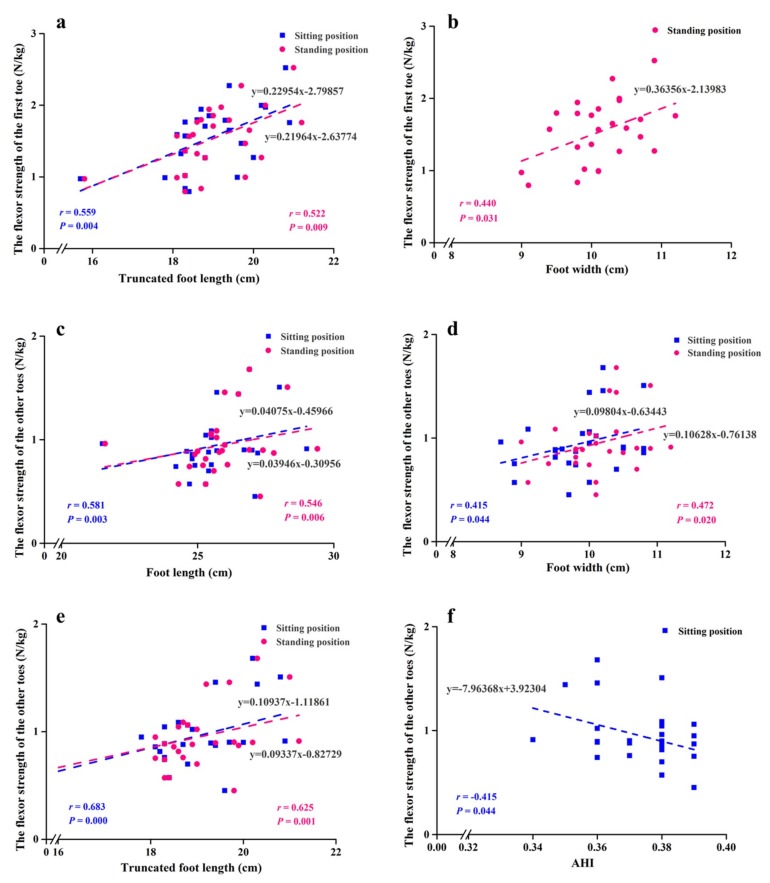
The purpose of this study was to investigate if measurements of foot morphology in sitting and standing positions can predict foot muscle strength. Twenty-six healthy male adults were recruited, and their foot morphology and foot muscle strength were measured. Foot morphological variables, toe flexor strength, and metatarsophalangeal joint flexor strength were measured by using a digital caliper, Ailitech-AFG500 dynameter and metatarsophalangeal joint flexor strength tester, respectively. Partial correlation and multivariate stepwise regression were used to explore the relationships between foot morphology and toe/metatarsophalangeal joint strength. Results adjusted by age and body mass index were as follows: (1) truncated foot length in sitting and standing positions and foot width in standing position were positively correlated with the flexor strength of the first toe; (2) foot length, foot width, and truncated foot length in both positions were positively related to the flexor strength of the other toes; (3) arch height index in sitting position and differences in navicular height were negatively associated with the flexor strength of the other toes; (4) differences in foot width were negatively associated with metatarsophalangeal joint flexor strength; and (5) the multivariate stepwise regression model showed that truncated foot length in sitting position, navicular height in standing position, differences in navicular height, foot width in sitting position, and differences in foot width were significantly correlated with toe/metatarsophalangeal joint flexor strength. Simple measurements of foot morphological characteristics can effectively predict foot muscle strength. Preliminary findings provided practical implications for the improvement of the foot ability by making specific foot muscle training sessions in professional sports and by compensating the predicted muscle strength defects to prevent foot injury.
本研究旨在探讨坐姿和站姿下足部形态学测量是否可以预测足部肌肉力量。招募了 26 名健康成年男性,测量其足部形态和足部肌肉力量。使用数字卡尺、Ailitech-AFG500 测力计和跖趾关节屈肌力量测试仪分别测量足部形态变量、趾屈肌力量和跖趾关节屈肌力量。采用偏相关和多元逐步回归分析探讨足部形态与趾/跖趾关节力量的关系。结果经年龄和体重指数校正后如下:(1)坐姿和站姿下截断足长和足宽与第一趾屈肌力量呈正相关;(2)足长、足宽和两种姿势下的截断足长与其他趾屈肌力量呈正相关;(3)坐姿下的足弓高度指数和舟骨高度差与其他趾屈肌力量呈负相关;(4)足宽差与跖趾关节屈肌力量呈负相关;(5)多元逐步回归模型显示,坐姿下的截断足长、站姿下的舟骨高度、舟骨高度差、坐姿下的足宽和足宽差与趾/跖趾关节屈肌力量显著相关。简单的足部形态特征测量可以有效预测足部肌肉力量。初步研究结果为专业运动中通过特定的足部肌肉训练来提高足部能力以及通过补偿预测的肌肉力量缺陷来预防足部损伤提供了实际意义。