Almalki Daklallah Ahmed
Department of Biology, Faculty of Science and Arts (Qelwah), Albaha University-Saudi Arabia.
Mater Sociomed. 2019 Dec;31(4):236-240. doi: 10.5455/msm.2019.31.236-240.
Diabetic nephropathy is the second most common secondary type of glomerular diseases among Saudi patients after systemic lupus erythematosus. () was reported to have anti-diabetic and antioxidants effects.
This study aimed to evaluate the efficacy of in controlling STZ-induced diabetes mellitus in rats and preserving the structure of kidney against diabetes-induced nephropathy.
This study utilized forty adult male Spraque-Dawley rats assigned into four groups (n=10 each); control, streptozotocin-induced diabetic, metformin-treated and -treated groups. The blood glucose level (BGL), total anti-oxidant capacity (TAC), serum creatinine and BUN levels were assessed. Kidneys were dissected out and processed for histopathological and immunohistochemical assessment.
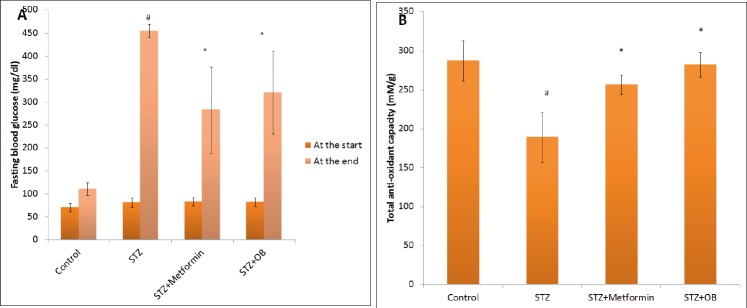
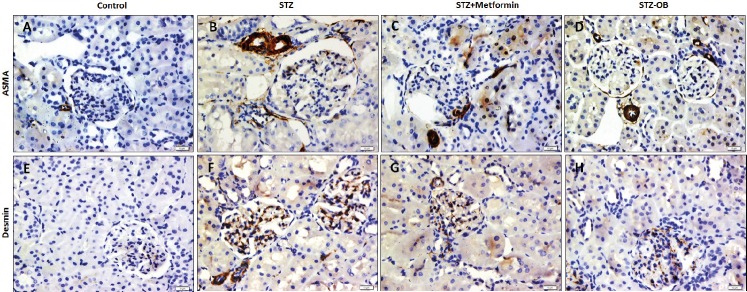
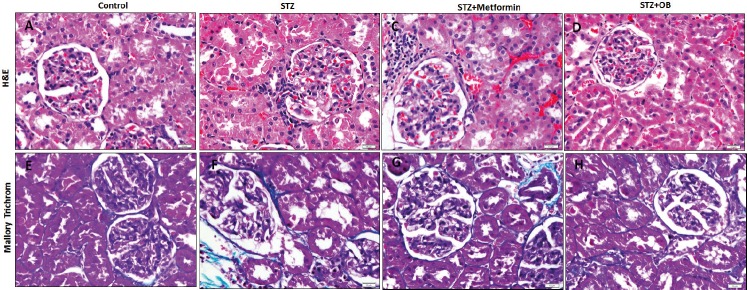
The BGL significantly decreased in Metformin- and -treated (p=0.02, p=0.01) rats while TAC significantly increased (p=0.01, p=0.003) respectively, compared to the untreated diabetic rats. In addition, significantly reduced (p=0.004, p=0.02) both creatinine and BUN levels compared to the untreated diabetic group, respectively. Examination of kidney of -treated diabetic rats revealed few degenerated renal tubules, with no inflammatory cell infiltrates, peritubular capillaries congestion and minimal peritubular collagen fibers deposition. It also reduced immunoexpression of desmin and αsmooth muscle actin in glomeruli of -treated diabetic rats.
Glucose lowering and antioxidant effects of was evident biochemically in this study. could protect the kidney against diabetes-induced nephropathy as revealed biochemically and histopathologically. Further exploration of the mechanism and assessment of efficacy in human through clinical study are recommended.
糖尿病肾病是沙特患者中仅次于系统性红斑狼疮的第二常见继发性肾小球疾病类型。据报道,(某物质)具有抗糖尿病和抗氧化作用。
本研究旨在评估(某物质)在控制链脲佐菌素诱导的大鼠糖尿病以及保护肾脏结构免受糖尿病性肾病影响方面的疗效。
本研究使用了40只成年雄性Spraque-Dawley大鼠,分为四组(每组n = 10);对照组、链脲佐菌素诱导的糖尿病组、二甲双胍治疗组和(某物质)治疗组。评估血糖水平(BGL)、总抗氧化能力(TAC)、血清肌酐和尿素氮水平。取出肾脏进行组织病理学和免疫组织化学评估。
与未治疗的糖尿病大鼠相比,二甲双胍和(某物质)治疗组的大鼠血糖水平显著降低(p = 0.02,p = 0.01),而总抗氧化能力分别显著增加(p = 0.01,p = 0.003)。此外,与未治疗的糖尿病组相比,(某物质)分别显著降低了肌酐和尿素氮水平(p = 0.004,p = 0.02)。对(某物质)治疗的糖尿病大鼠肾脏的检查显示,肾小管仅有少量变性,无炎性细胞浸润、肾小管周围毛细血管充血,肾小管周围胶原纤维沉积极少。它还降低了(某物质)治疗的糖尿病大鼠肾小球中结蛋白和α平滑肌肌动蛋白的免疫表达。
本研究在生化方面明显显示出(某物质)的降糖和抗氧化作用。如生化和组织病理学所示,(某物质)可保护肾脏免受糖尿病性肾病的影响。建议通过临床研究进一步探索其机制并评估其在人体中的疗效。