Aslam Naveed, Alvi Farah
BioSystOmics, Bellaire, TX, United States.
Department of Chemistry and Chemical Engineering, Lahore University of Management Sciences, Lahore, Pakistan.
Front Neurosci. 2020 Jan 31;13:1397. doi: 10.3389/fnins.2019.01397. eCollection 2019.
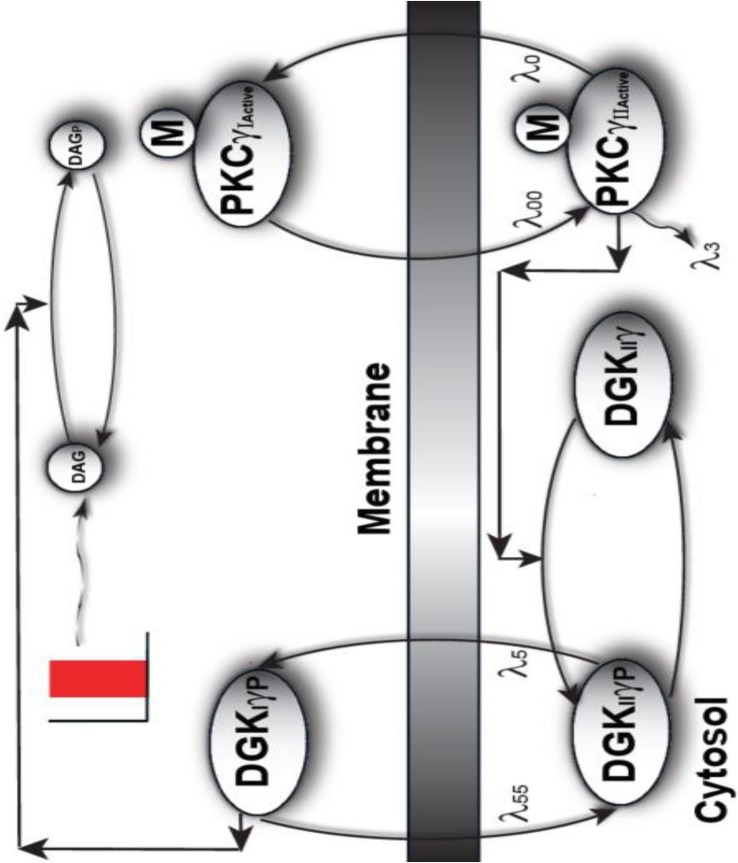
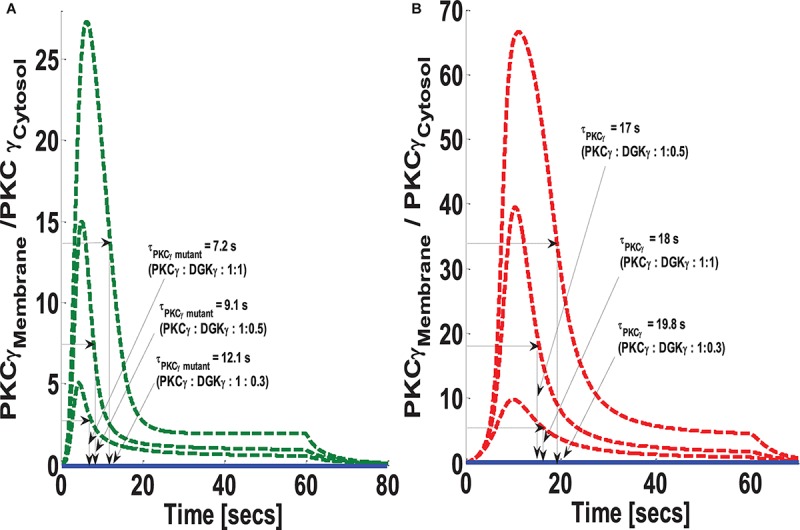
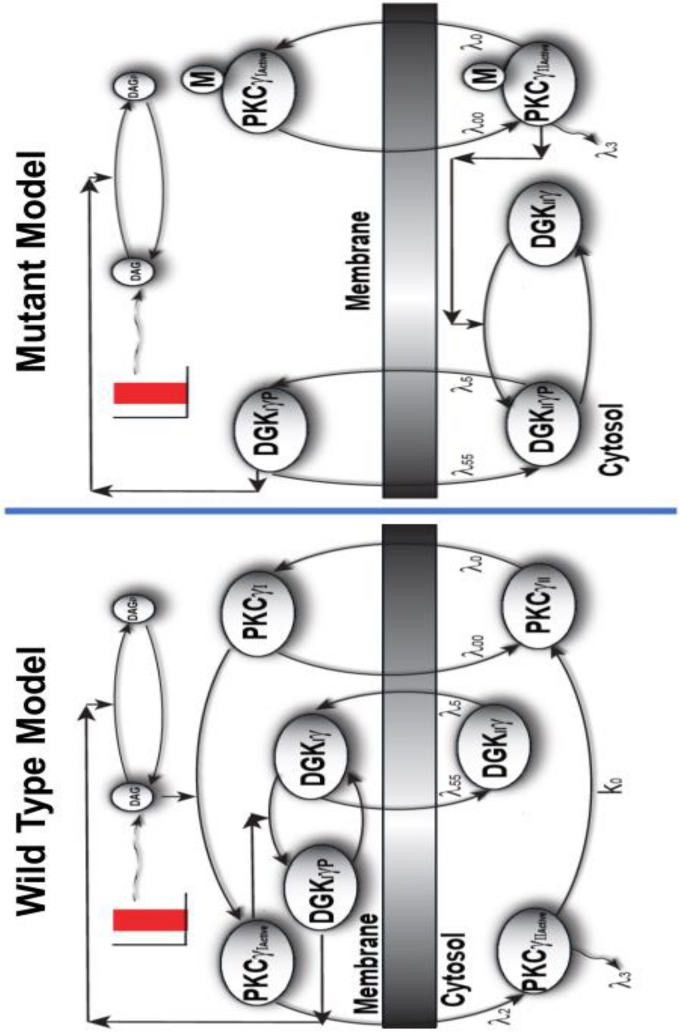
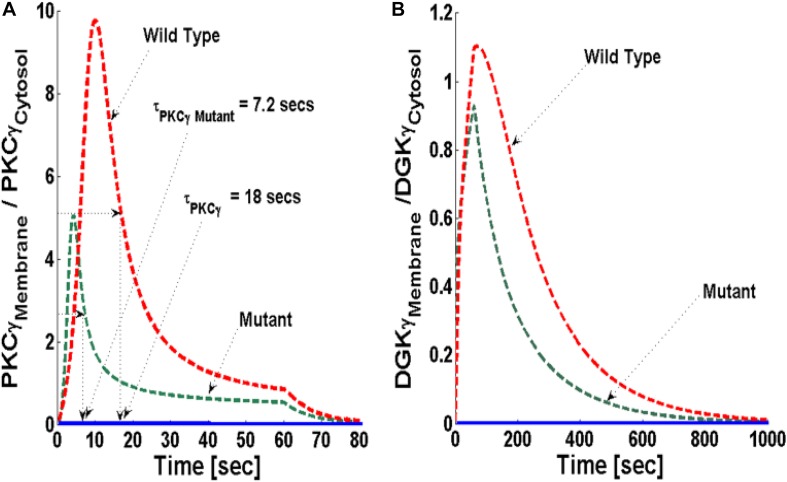
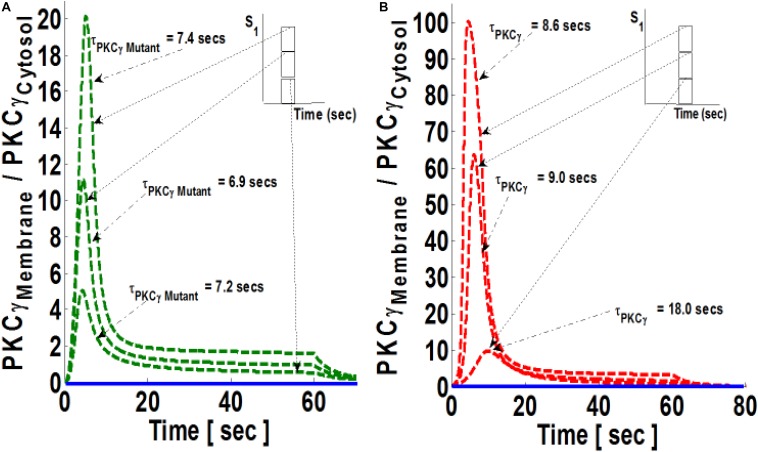
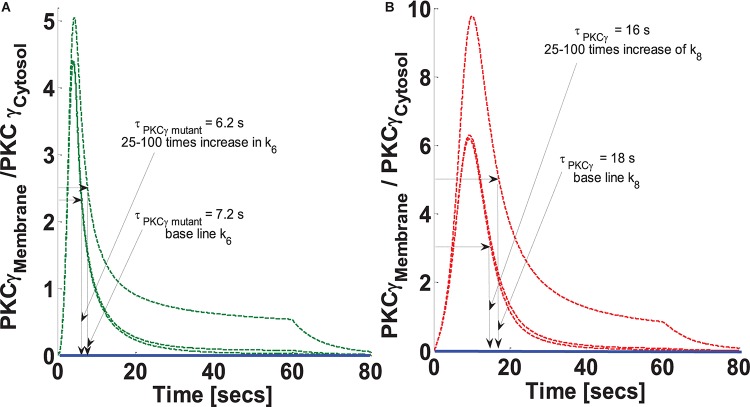
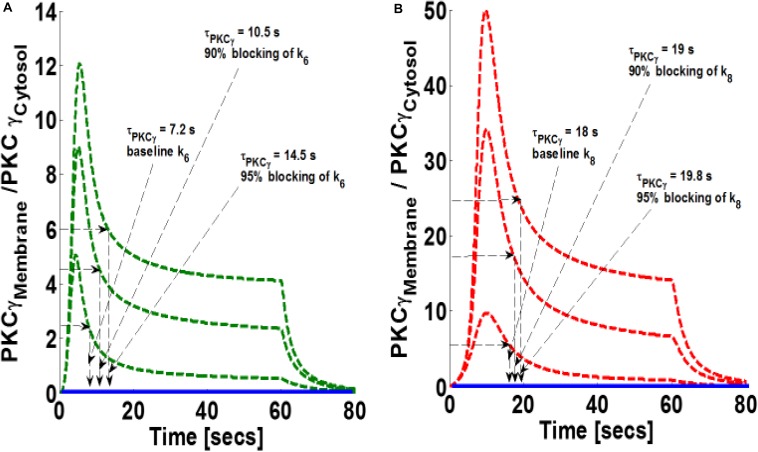
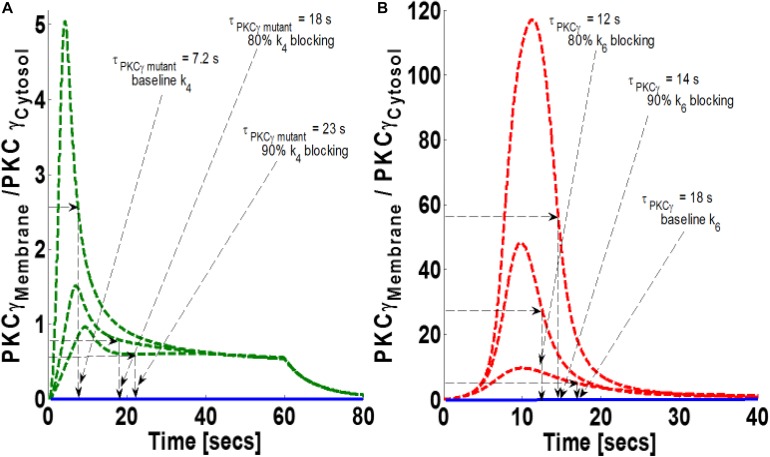
Spinocerebellar ataxia type 14 (SCA14) is an autosomal neurodegenerative disease clinically characterized by progressive ataxia in the patient's gait, accompanied by slurred speech and abnormal eye movements. These symptoms are linked to the loss of Purkinje cells (PCs), which leads to cerebellar neurodegeneration. PC observations link the mutations in PRKCG gene encoding protein kinase C γ (PKCγ) to SCA14. Observations also show that the link between PKCγ and SCA14 relies on a gain-of-function mechanism, and, in fact, both positive and negative regulation of PKCγ expression and activity may result in changes in cellular number, size, and complexity of the dendritic arbors in PCs. Here, through a systems biology approach, we investigate a key question relating to this system: why is PKCγ membrane residence time reduced in SCA14 mutant PCs compared to wild-type (WT) PCs? In this study, we investigate this question through two contrasting PKCγ signaling models in PCs. The first model proposed in this study describes the mechanism through which PKCγ signaling activity may be regulated in WT PCs. In contrast, the second model explores how mutations in PKCγ signaling affect the state of SCA14 in PCs. Numerical simulations of both models show that, in response to extracellular stimuli-induced depolarization of the membrane compartment, PKCγ and diacylglycerol kinase γ (DGKγ) translocate to the membrane. Results from our computational approach indicate that, for the same set of parameters, PKCγ membrane residence time is shorter in the SCA14 mutant model compared to the WT model. These results show how PKCγ membrane residence time is regulated by diacylglycerol (DAG), causing translocated PKCγ to return to the cytosol as DAG levels drop. This study shows that, when the strength of the extracellular signal is held constant, the membrane lifetime of mutant PKCγ is reduced. This reduction is due to the presence of constitutively active mutant PKCγ in the cytosol. Cytosolic PKCγ, in turn, leads to phosphorylation and activation of DGKγ while it is still residing in the cytosol. This effect occurs even during the resting conditions. Thus, the SCA14 mutant model explains that, when both DAG effector molecules are active in the cytosol, their interactions in the membrane compartment are reduced, critically influencing PKCγ membrane residence time.
14型脊髓小脑共济失调(SCA14)是一种常染色体显性神经退行性疾病,临床上以患者步态进行性共济失调为特征,伴有言语不清和眼球运动异常。这些症状与浦肯野细胞(PCs)的丧失有关,这会导致小脑神经变性。对PCs的观察将编码蛋白激酶Cγ(PKCγ)的PRKCG基因突变与SCA14联系起来。观察还表明,PKCγ与SCA14之间的联系依赖于功能获得机制,事实上,PKCγ表达和活性的正向和负向调节都可能导致PCs中细胞数量、大小和树突分支复杂性的变化。在此,我们通过系统生物学方法研究与该系统相关的一个关键问题:与野生型(WT)PCs相比,为什么SCA14突变型PCs中PKCγ的膜停留时间会缩短?在本研究中,我们通过PCs中两种截然不同的PKCγ信号模型来研究这个问题。本研究提出的第一个模型描述了WT PCs中PKCγ信号活性可能被调节的机制。相比之下,第二个模型探讨了PKCγ信号中的突变如何影响PCs中SCA14的状态。两种模型的数值模拟均表明,响应细胞外刺激诱导的膜区去极化,PKCγ和二酰基甘油激酶γ(DGKγ)会转位至膜上。我们的计算方法结果表明,对于同一组参数,与WT模型相比,SCA14突变模型中PKCγ的膜停留时间更短。这些结果表明了PKCγ的膜停留时间是如何被二酰基甘油(DAG)调节的,随着DAG水平下降,转位的PKCγ会返回细胞质。本研究表明,当细胞外信号强度保持恒定时,如果突变型PKCγ的膜寿命减少,这是由于细胞质中存在组成型活性突变型PKCγ。反过来,细胞质中的PKCγ在仍驻留在细胞质时会导致DGKγ的磷酸化和激活。即使在静息状态下这种效应也会发生。因此,SCA14突变模型解释了,当两种DAG效应分子在细胞质中都处于活性状态时,它们在膜区的相互作用会减少,这对PKCγ的膜停留时间有至关重要的影响。