Ke Yuting, Bu Shizhong, Ma Hong, Gao Lei, Cai Yujia, Zhang Yisheng, Zhou Wenhua
Laboratory of Behavioral Neuroscience, Ningbo Addiction Research and Treatment Center, School of Medicine, Ningbo University, Ningbo, China.
School of Pharmacy, Shanghai Jiao Tong University, Shanghai, China.
Front Pharmacol. 2020 Jan 30;10:1621. doi: 10.3389/fphar.2019.01621. eCollection 2019.
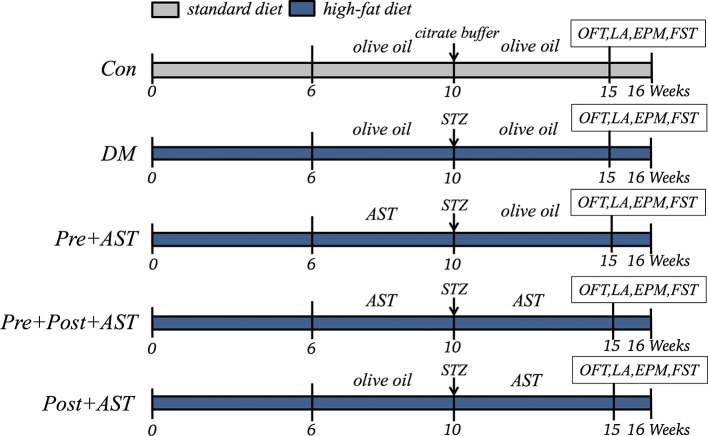
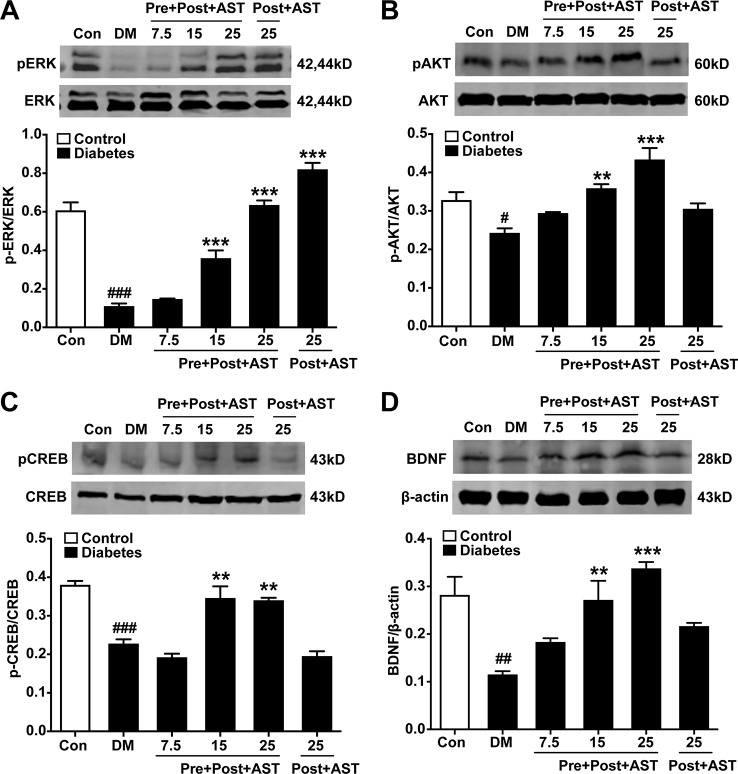
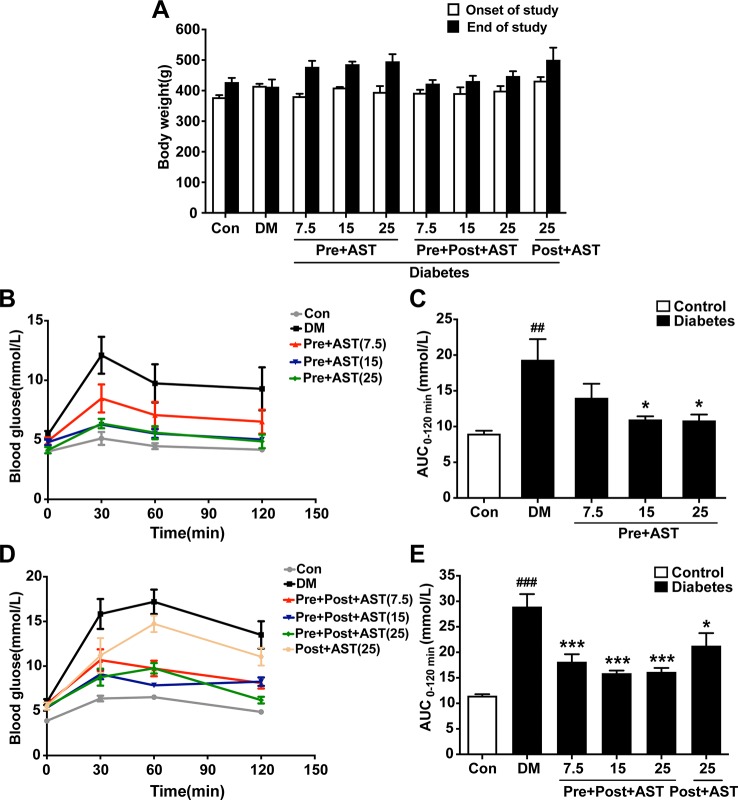
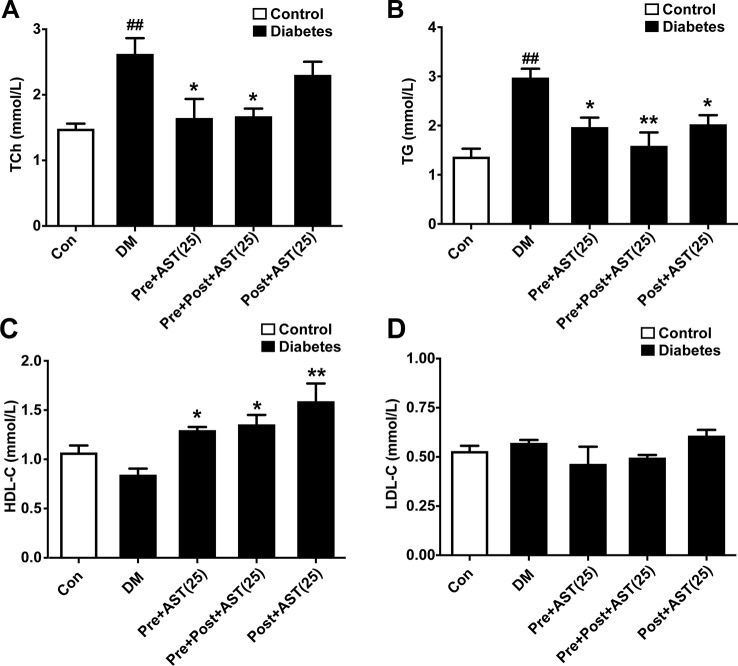
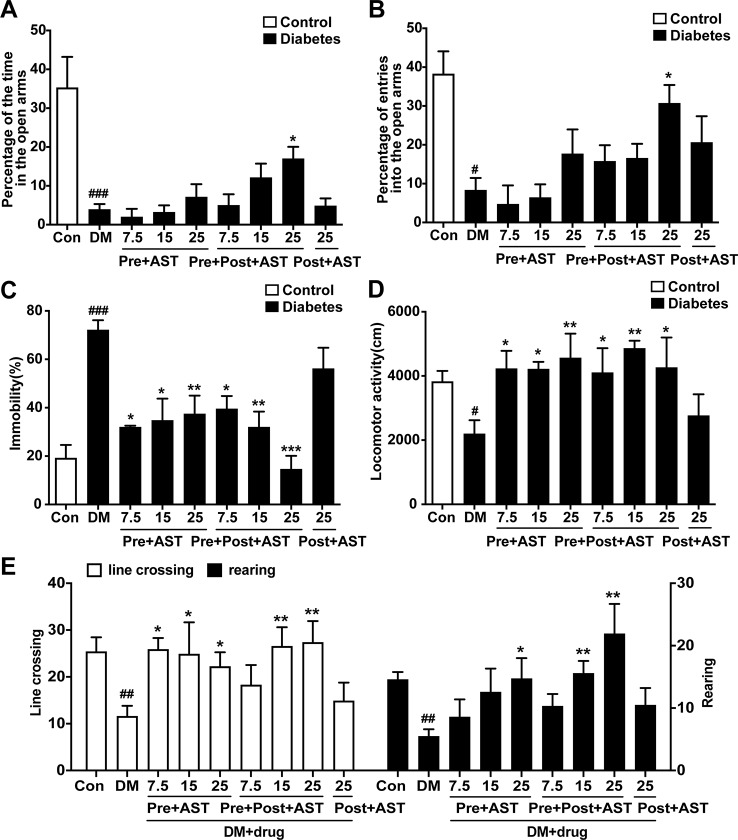
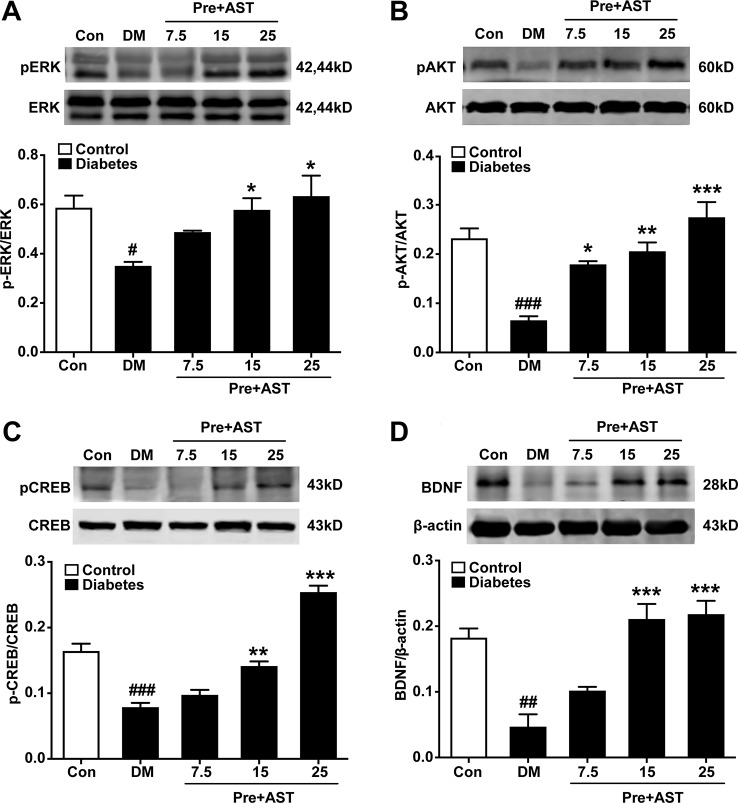
The comorbidity of diabetes and depression has a negative impact on both lifestyle and quality of life. Astaxanthin (AST) has been demonstrated to improve glucose metabolism and has antidepressant-like effects, but it is not clear whether AST has potential for preventing depression in diabetes. The aim of this study is to observe the preventive and therapeutic effects of AST on glucose metabolism or depressive-like behaviors in a diabetic rat model produced by feeding with a high-fat diet for 10 weeks followed by injection of 25 mg/kg streptozotocin (STZ). Preventive treatment with AST at doses of 7.5, 15, and 25 mg/kg/day was given by intragastric gavage 4 weeks before STZ injection. Preventive plus therapeutic treatment also involved therapeutic AST treatments for 6 more weeks after STZ injection, whereas therapeutic-only treatment involved only the 6-week post-STZ treatment. Depressive-like behaviors were evaluated at the end of the treatment by using open field, locomotor activity, elevated plus maze, and forced swimming tests. Preventive and therapeutic treatment with AST both reduced the level of fasting glucose, improved glucose tolerance, and decreased total TCh and TG in diabetic rats. Preventive or preventative plus therapeutic treatment with AST decreased the immobility time and increased the time spent in the open arms of an elevated plus maze and locomotor activity in diabetic rats. However, therapeutic treatment with AST alone failed to affect the depressive-like behaviors. Preventive or preventative plus therapeutic treatment with AST at doses of 15 or 25 mg/kg significantly increased the expression of pERK, pAKT, pCREB, and BDNF in the prefrontal cortex (PFC) in diabetic rats. In contrast, therapeutic treatment with 25 mg/kg AST alone increased the expression of pERK in the PFC. This study indicates that AST may be used as a preventive or therapeutic approach for co-morbidity of diabetes and depression.
糖尿病与抑郁症的共病对生活方式和生活质量均有负面影响。虾青素(AST)已被证明可改善葡萄糖代谢并具有类抗抑郁作用,但尚不清楚AST是否具有预防糖尿病患者抑郁症的潜力。本研究旨在观察AST对通过高脂饮食喂养10周后注射25 mg/kg链脲佐菌素(STZ)制备的糖尿病大鼠模型中葡萄糖代谢或抑郁样行为的预防和治疗作用。在注射STZ前4周,通过灌胃给予剂量为7.5、15和25 mg/kg/天的AST进行预防性治疗。预防性加治疗性治疗还包括在注射STZ后再进行6周的AST治疗,而仅进行治疗性治疗则仅包括STZ注射后的6周治疗。在治疗结束时,通过旷场试验、自发活动试验、高架十字迷宫试验和强迫游泳试验评估抑郁样行为。AST的预防性和治疗性治疗均降低了糖尿病大鼠的空腹血糖水平,改善了葡萄糖耐量,并降低了总胆固醇(TCh)和甘油三酯(TG)水平。AST的预防性或预防性加治疗性治疗减少了糖尿病大鼠的不动时间,增加了其在高架十字迷宫开放臂中的停留时间和自发活动。然而,单独使用AST进行治疗性治疗未能影响抑郁样行为。剂量为15或25 mg/kg的AST进行预防性或预防性加治疗性治疗可显著增加糖尿病大鼠前额叶皮质(PFC)中pERK、pAKT、pCREB和脑源性神经营养因子(BDNF)的表达。相比之下,单独使用25 mg/kg AST进行治疗性治疗可增加PFC中pERK的表达。本研究表明,AST可作为糖尿病与抑郁症共病的一种预防或治疗方法。