Dr. Kiran C. Patel College of Allopathic Medicine, Nova Southeastern University, Fort Lauderdale, FL, United States.
NSU Cell Therapy Institute, Nova Southeastern University, Fort Lauderdale, FL, United States.
Front Immunol. 2020 Jan 28;11:40. doi: 10.3389/fimmu.2020.00040. eCollection 2020.
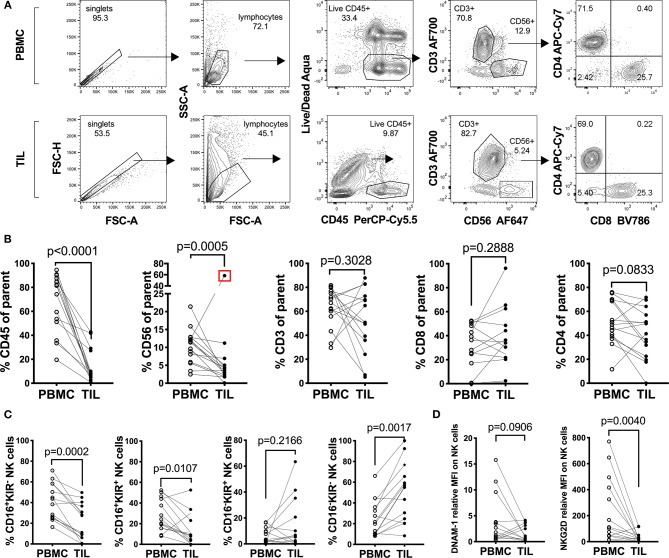
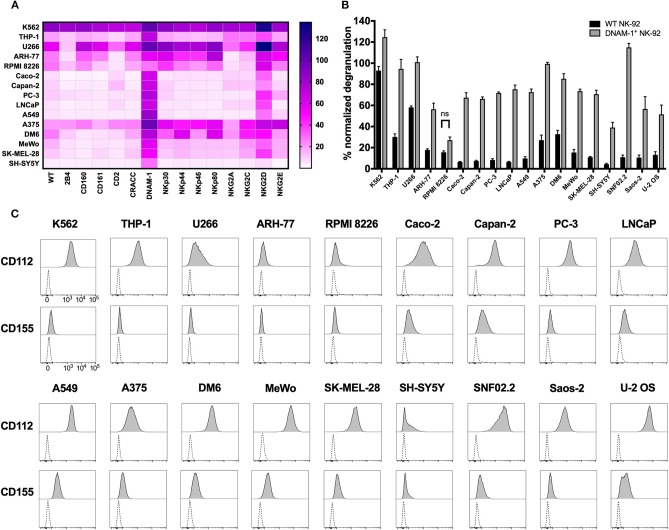
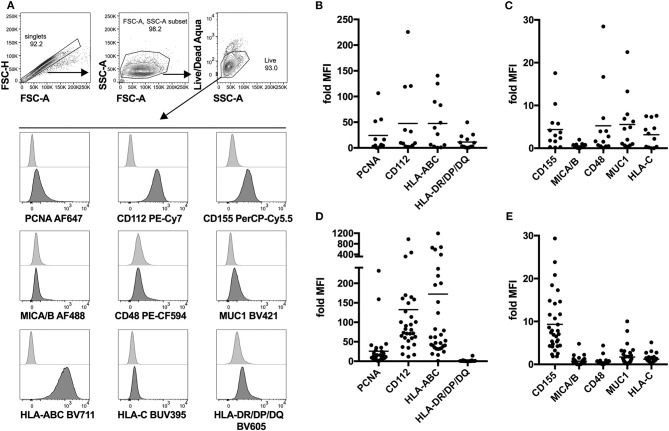
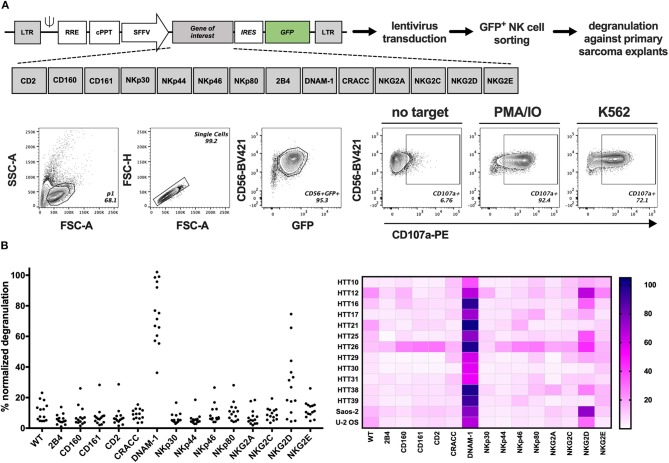
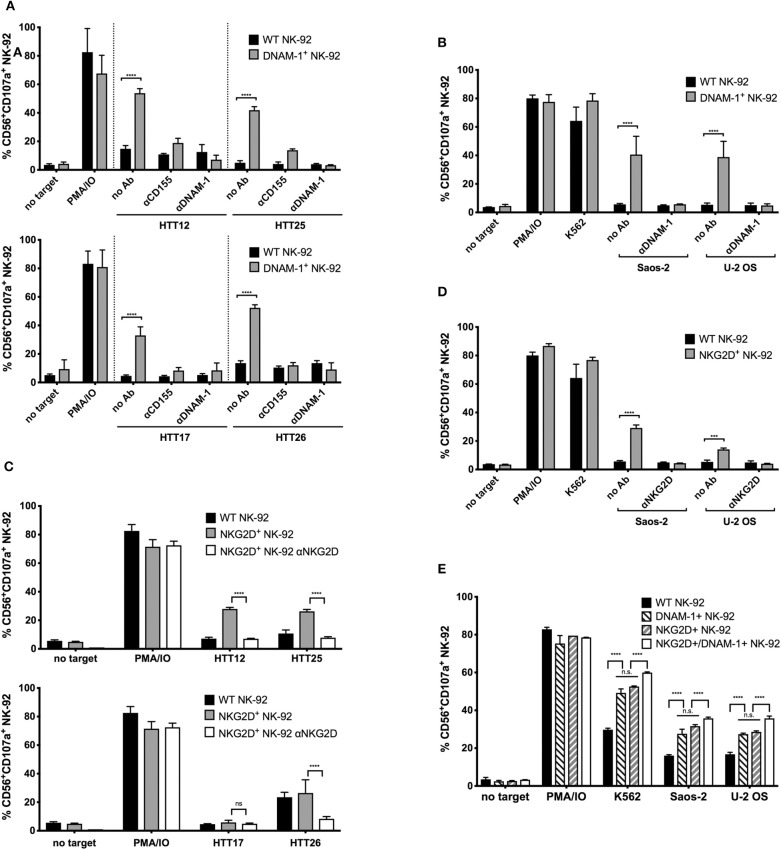
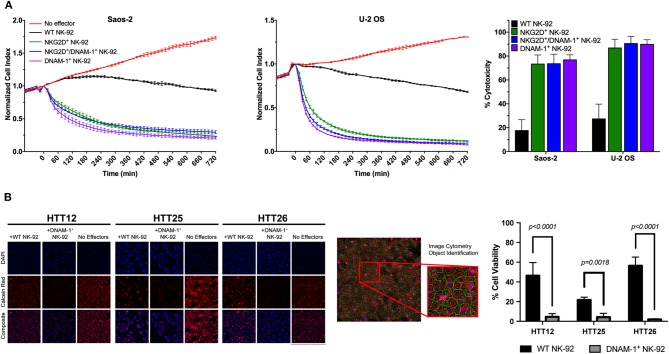
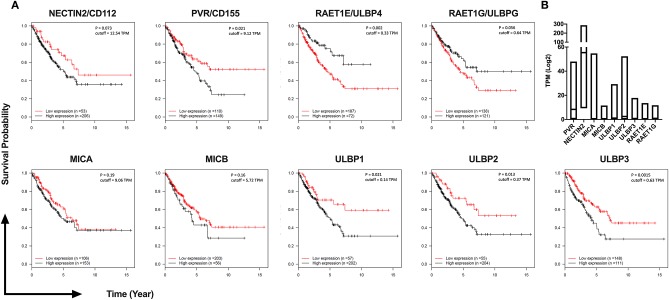
Sarcomas are malignancies of mesenchymal origin that occur in bone and soft tissues. Many are chemo- and radiotherapy resistant, thus conventional treatments fail to increase overall survival. Natural Killer (NK) cells exert anti-tumor activity upon detection of a complex array of tumor ligands, but this has not been thoroughly explored in the context of sarcoma immunotherapy. In this study, we investigated the NK cell receptor/ligand immune profile of primary human sarcoma explants. Analysis of tumors from 32 sarcoma patients identified the proliferative marker PCNA and DNAM-1 ligands CD112 and/or CD155 as commonly expressed antigens that could be efficiently targeted by genetically modified (GM) NK cells. Despite the strong expression of CD112 and CD155 on sarcoma cells, characterization of freshly dissociated sarcomas revealed a general decrease in tumor-infiltrating NK cells compared to the periphery, suggesting a defect in the endogenous NK cell response. We also applied a functional screening approach to identify relevant NK cell receptor/ligand interactions that induce efficient anti-tumor responses using a panel NK-92 cell lines GM to over-express 12 different activating receptors. Using GM NK-92 cells against primary sarcoma explants ( = 12) revealed that DNAM-1 over-expression on NK-92 cells led to efficient degranulation against all tested explants ( = 12). Additionally, NKG2D over-expression showed enhanced responses against 10 out of 12 explants. These results show that DNAM-1 or NKG2D GM NK-92 cells may be an efficient approach in targeting sarcomas. The degranulation capacity of GM NK-92 cell lines was also tested against various established tumor cell lines, including neuroblastoma, Schwannoma, melanoma, myeloma, leukemia, prostate, pancreatic, colon, and lung cancer. Enhanced degranulation of DNAM-1 or NKG2D GM NK-92 cells was observed against the majority of tumor cell lines tested. In conclusion, DNAM-1 or NKG2D over-expression elicited a dynamic increase in NK cell degranulation against all sarcoma explants and cancer cell lines tested, including those that failed to induce a notable response in WT NK-92 cells. These results support the broad therapeutic potential of DNAM-1 or NKG2D GM NK-92 cells and GM human NK cells for the treatment of sarcomas and other malignancies.
肉瘤是起源于间充质的恶性肿瘤,发生在骨和软组织中。许多肉瘤对化疗和放疗具有耐药性,因此传统治疗方法无法提高总体生存率。自然杀伤 (NK) 细胞在检测到复杂的肿瘤配体阵列时会发挥抗肿瘤活性,但这在肉瘤免疫治疗中尚未得到充分探索。在这项研究中,我们研究了原发性人类肉瘤外植体的 NK 细胞受体/配体免疫特征。对 32 名肉瘤患者的肿瘤分析鉴定出增殖标记物 PCNA 和 DNAM-1 配体 CD112 和/或 CD155 作为共同表达的抗原,可被遗传修饰 (GM) NK 细胞有效靶向。尽管肉瘤细胞强烈表达 CD112 和 CD155,但对新鲜分离的肉瘤的表征显示,与外周相比,肿瘤浸润 NK 细胞普遍减少,表明内源性 NK 细胞反应存在缺陷。我们还应用功能筛选方法来鉴定相关的 NK 细胞受体/配体相互作用,使用一组 NK-92 细胞系 GM 过表达 12 种不同的激活受体,从而诱导有效的抗肿瘤反应。使用针对原发性肉瘤外植体的 GMNK-92 细胞(= 12)揭示,NK-92 细胞上的 DNAM-1 过表达导致针对所有测试外植体的有效脱颗粒(= 12)。此外,NKG2D 过表达显示对 12 个外植体中的 10 个有增强的反应。这些结果表明,DNAM-1 或 NKG2D GMNK-92 细胞可能是靶向肉瘤的有效方法。GMNK-92 细胞系的脱颗粒能力也针对各种已建立的肿瘤细胞系进行了测试,包括神经母细胞瘤、神经鞘瘤、黑色素瘤、骨髓瘤、白血病、前列腺癌、胰腺癌、结肠癌和肺癌。针对大多数测试的肿瘤细胞系观察到 DNAM-1 或 NKG2D GMNK-92 细胞的脱颗粒增强。总之,DNAM-1 或 NKG2D 过表达引起针对所有测试的肉瘤外植体和肿瘤细胞系的 NK 细胞脱颗粒动态增加,包括在 WT NK-92 细胞中未引起明显反应的那些。这些结果支持 DNAM-1 或 NKG2D GMNK-92 细胞和 GM 人 NK 细胞在治疗肉瘤和其他恶性肿瘤方面的广泛治疗潜力。