Drug Prevention and Health Branch, Division for Operations, United Nations Office on Drugs and Crime, P.O. Box 500, 1400 Vienna, Austria.
Epidemiology and Health Research Lab, Institute of Clinical Physiology-IFC, National Research Council of Italy-CNR, Via G. Moruzzi, 1, 56124 Pisa, Italy.
Int J Environ Res Public Health. 2020 Feb 18;17(4):1306. doi: 10.3390/ijerph17041306.
Families who live in a disadvantaged socioeconomic situation frequently face substandard housing, unsafe neighborhoods, inadequate schools and more stress in their daily lives than more affluent families, with a host of psychological and developmental consequences that can hinder their children's development in many ways. However, the measurement of socioeconomic status among youth and its link with different forms of illicit substance use is challenging and still unclear. This paper extends existing research on the relationship between socioeconomic status and illicit drug use among adolescents by focusing on three different patterns of use (experimental, episodic and frequent) and making use of two indicators to improve the measurement of individual socioeconomic characteristics in a big sample of European students.
Data were drawn from the European school Survey Project on Alcohol and other Drugs (ESPAD), which, since 1995, collects comparable data among 15-to-16-year-old students to monitor trends in drug use and other risk behaviors across Europe. The sample comes from 28 countries that participated in the 2015 data collection. The consumption of cannabis, cocaine and heroin are considered, and the related patterns are identified based on the frequency of use. Family characteristics at student level are defined through two dimensions: parental educational level and perceived socioeconomic status. Multivariate multilevel mixed-effects logistic regression was performed in order to measure the association between individual characteristics and vulnerability for drug use.
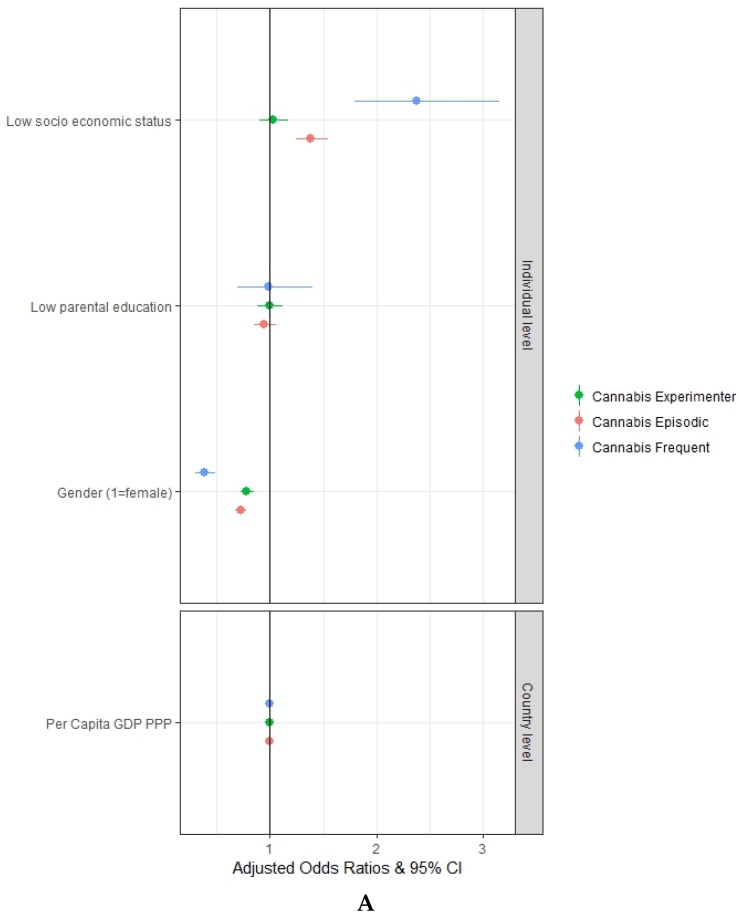
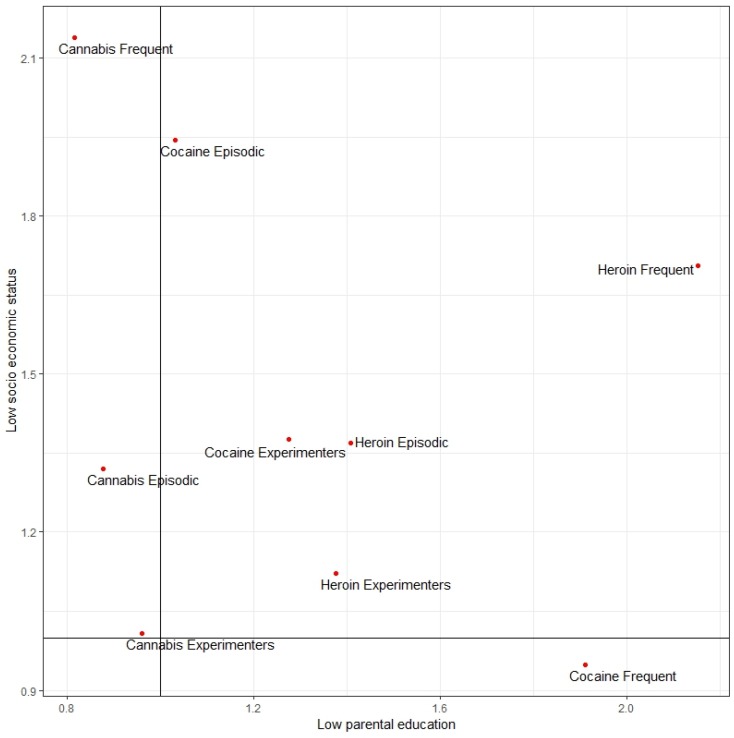
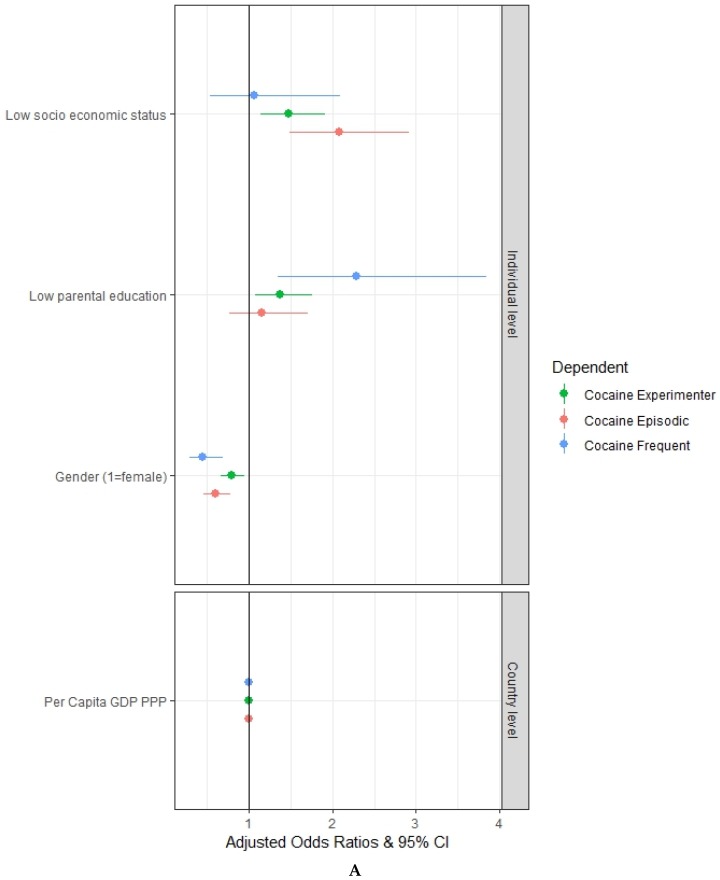
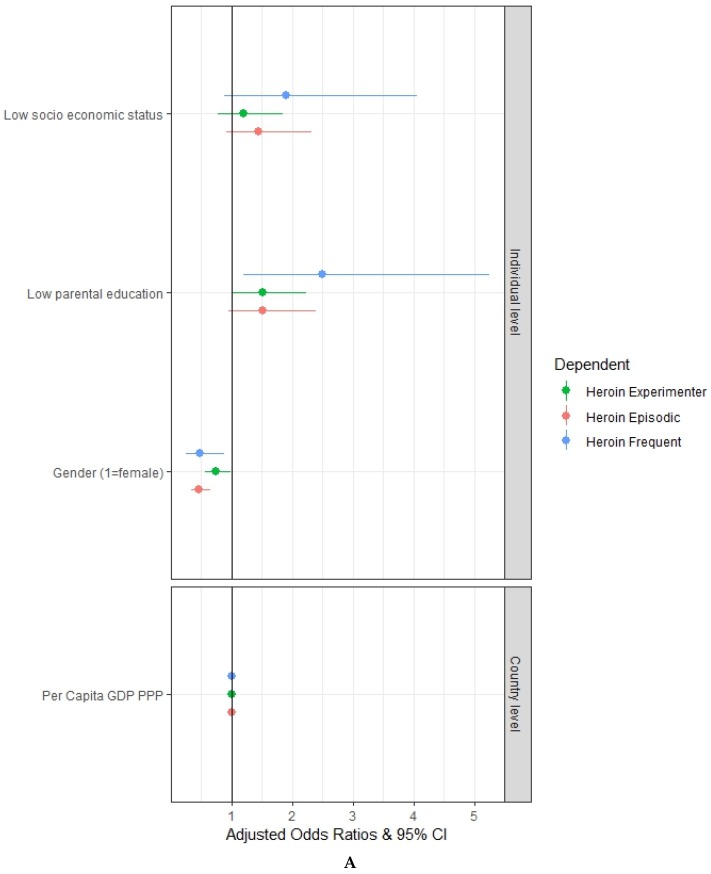
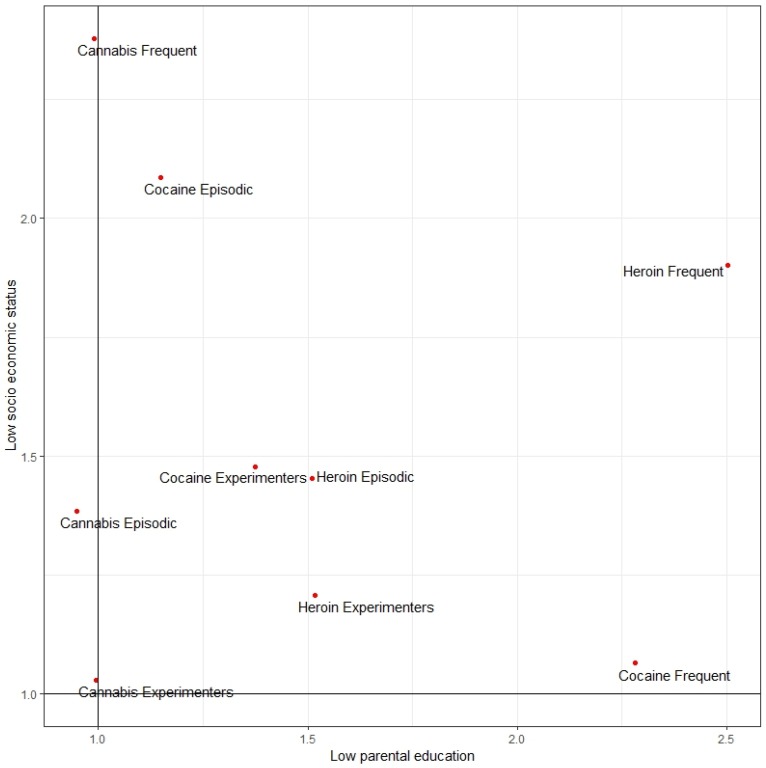
Some patterns of use, episodic and frequent in particular, were found strongly associated with a lower socioeconomic status and lower parental education.
Our results suggest that drug policies should be combined with actions aimed at removing barriers to social inclusion that are attributable to the socioeconomic background of adolescents.
生活在不利社会经济环境中的家庭通常面临住房条件差、居住环境不安全、子女就读学校质量不高以及日常生活压力较大等问题,这些都对其子女的发展造成了多方面的负面影响。然而,青少年的社会经济地位的衡量及其与不同形式的非法药物使用之间的关系是具有挑战性的,目前仍不清楚。本文通过关注三种不同的使用模式(尝试性使用、偶发性使用和频繁性使用),并利用两个指标来改进大样本欧洲学生个体社会经济特征的测量,扩展了青少年社会经济地位与非法药物使用之间关系的现有研究。
数据来自欧洲学校酒精和其他毒品调查项目(ESPAD),自 1995 年以来,该项目在 15 至 16 岁的学生中收集可比数据,以监测整个欧洲青少年药物使用和其他风险行为的趋势。该样本来自 28 个参与 2015 年数据收集的国家。研究考虑了大麻、可卡因和海洛因的使用情况,并根据使用频率确定了相关模式。学生层面的家庭特征通过两个维度来定义:父母的教育水平和感知到的社会经济地位。为了衡量个体特征与药物使用易感性之间的关系,我们采用了多变量多层次混合效应逻辑回归。
发现某些使用模式,特别是偶发性使用和频繁性使用,与较低的社会经济地位和较低的父母教育水平密切相关。
我们的研究结果表明,药物政策应与旨在消除青少年社会经济背景造成的社会包容障碍的行动相结合。