IEEE Trans Med Imaging. 2020 Sep;39(9):2750-2759. doi: 10.1109/TMI.2020.2974844. Epub 2020 Feb 18.
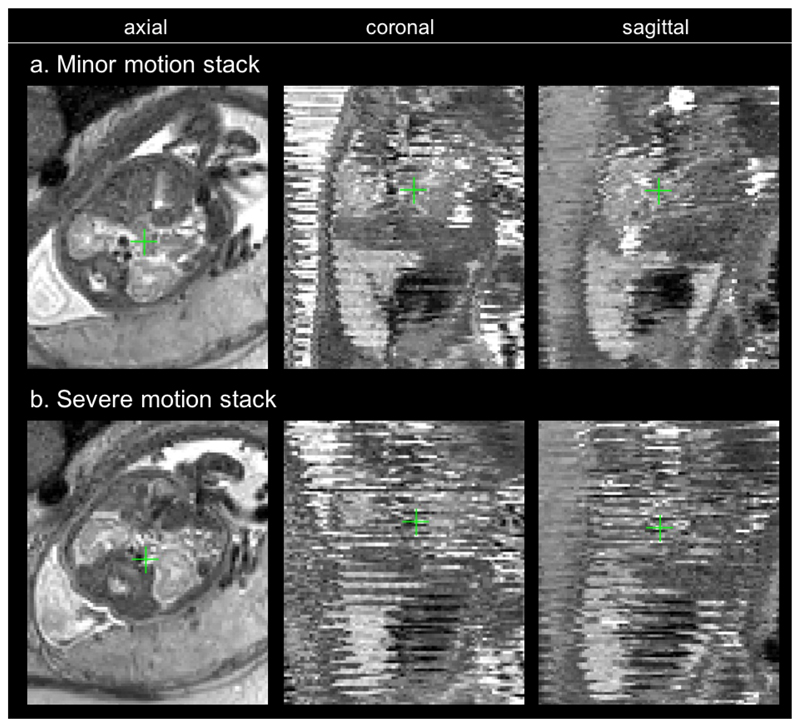
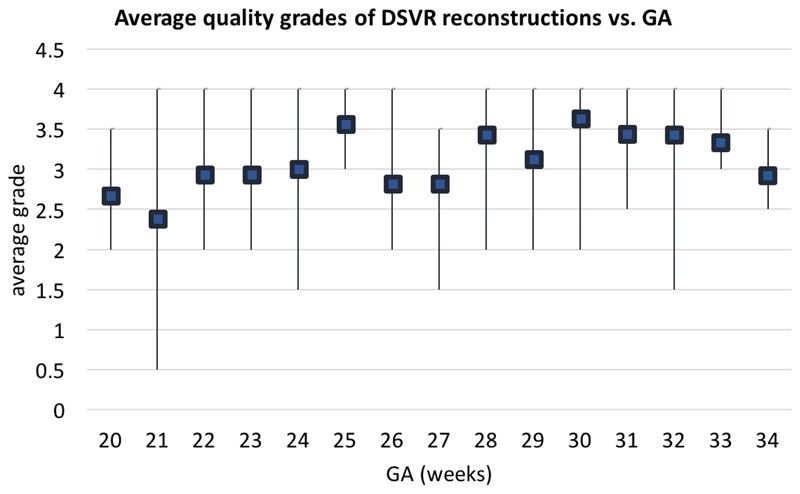
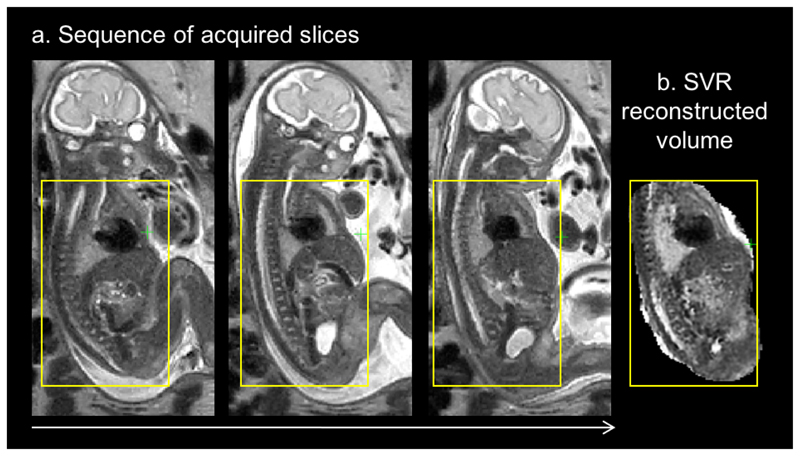
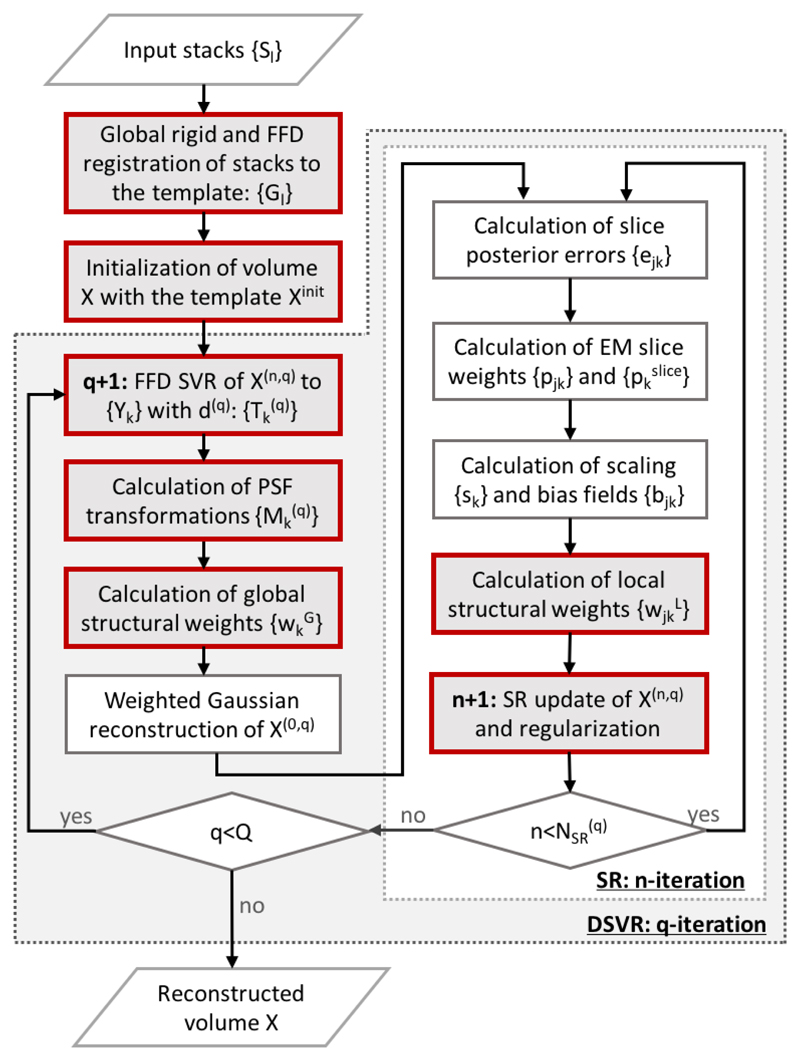
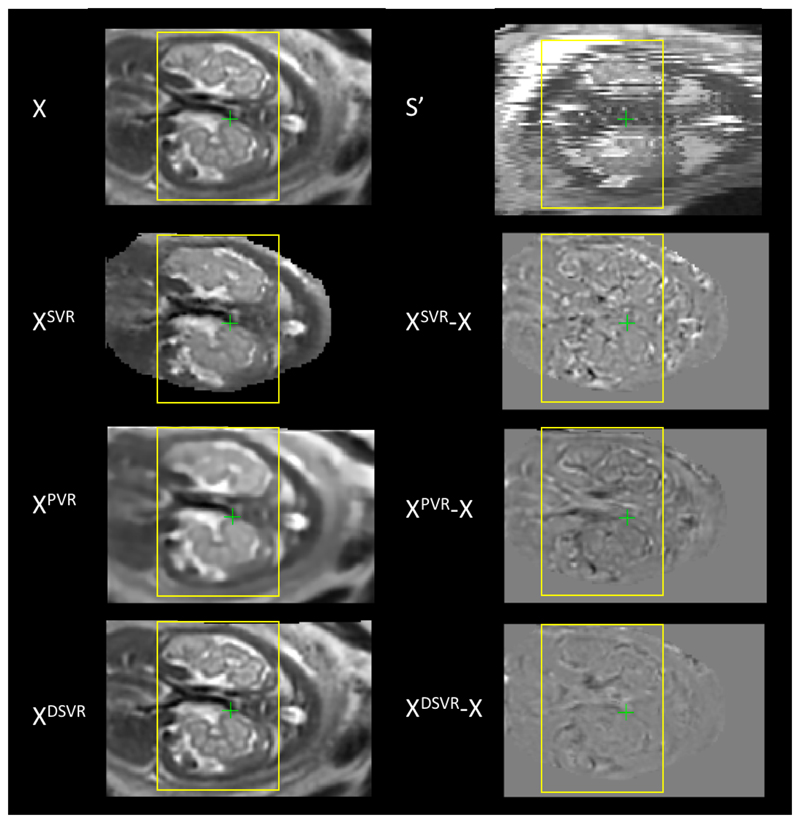
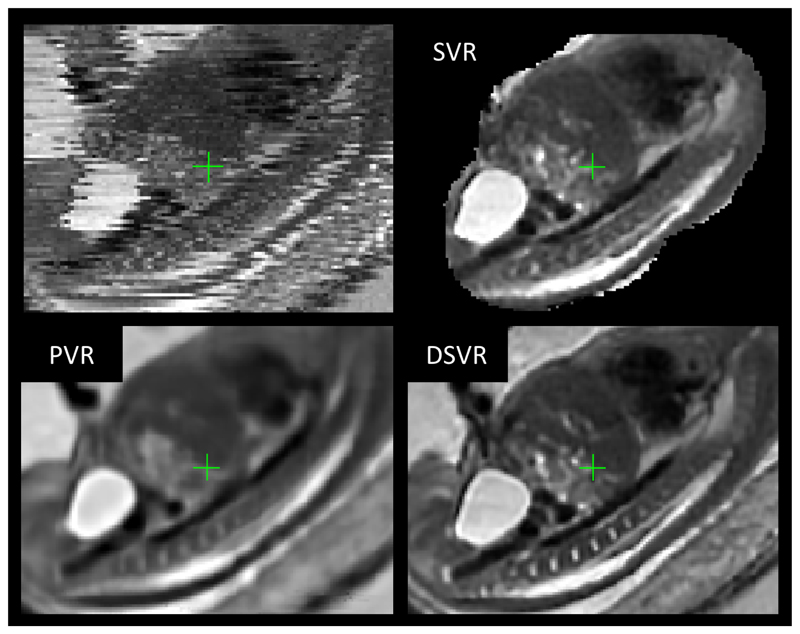
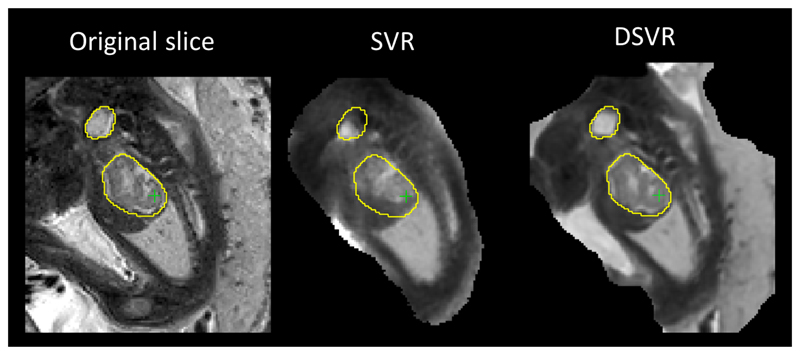
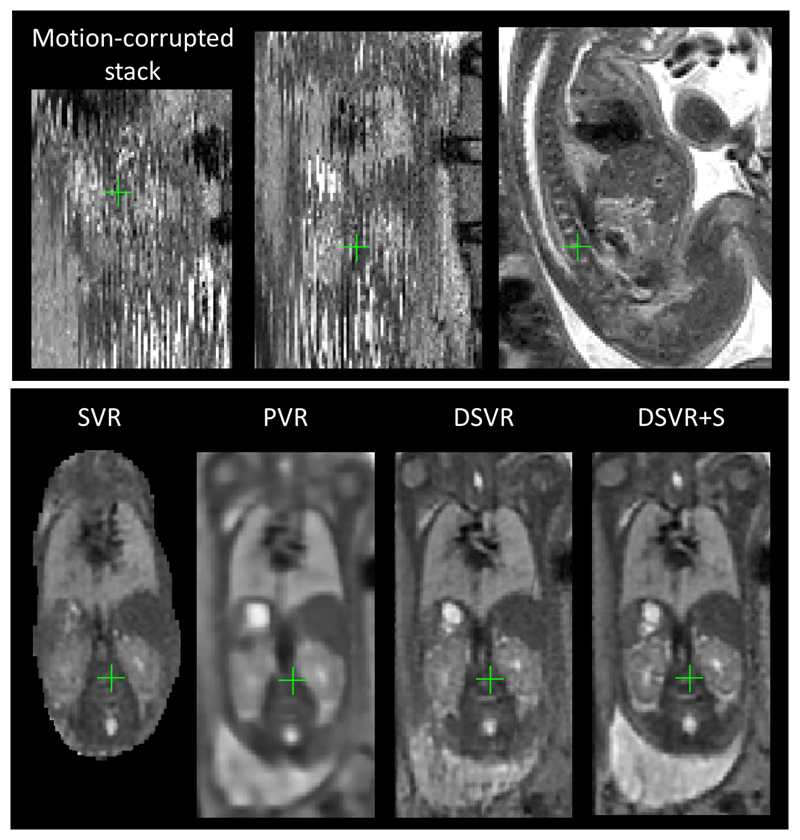
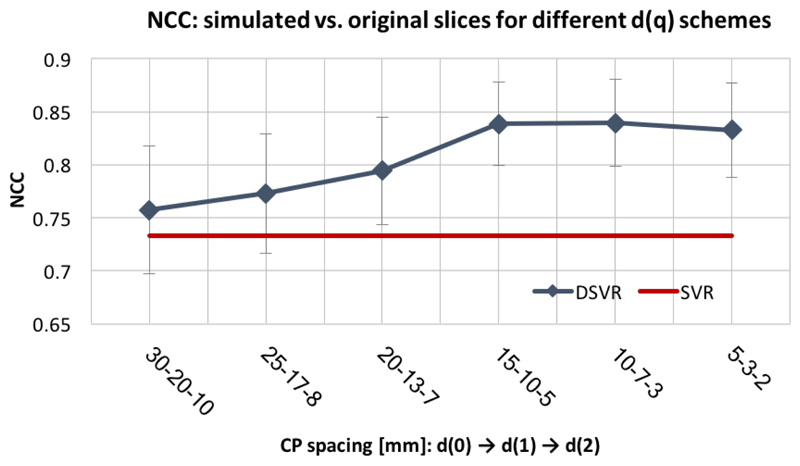
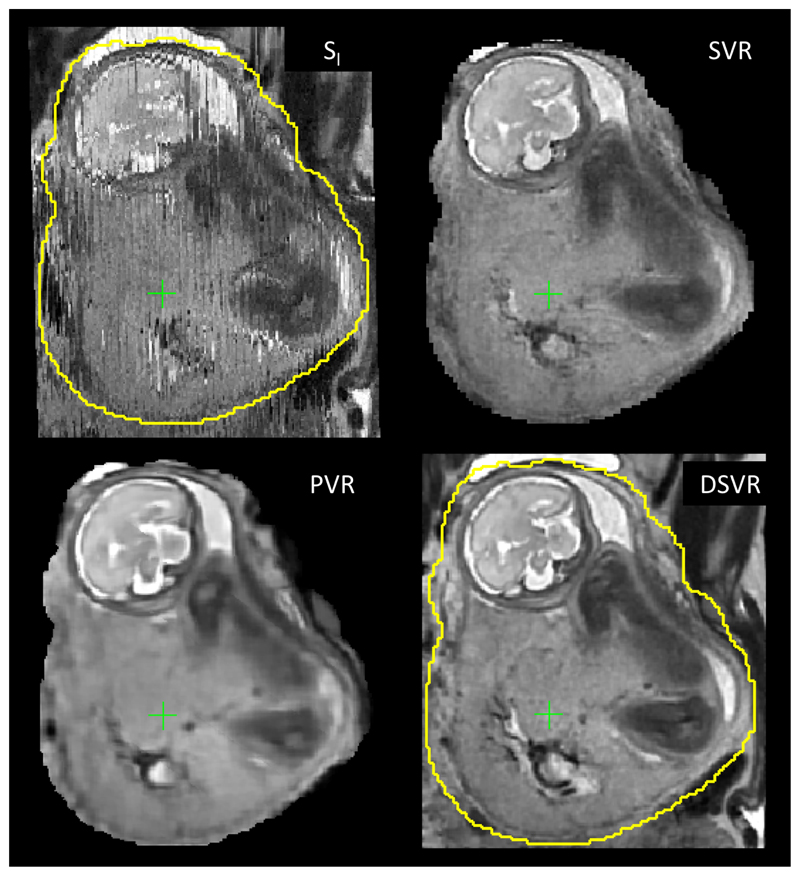
In in-utero MRI, motion correction for fetal body and placenta poses a particular challenge due to the presence of local non-rigid transformations of organs caused by bending and stretching. The existing slice-to-volume registration (SVR) reconstruction methods are widely employed for motion correction of fetal brain that undergoes only rigid transformation. However, for reconstruction of fetal body and placenta, rigid registration cannot resolve the issue of misregistrations due to deformable motion, resulting in degradation of features in the reconstructed volume. We propose a Deformable SVR (DSVR), a novel approach for non-rigid motion correction of fetal MRI based on a hierarchical deformable SVR scheme to allow high resolution reconstruction of the fetal body and placenta. Additionally, a robust scheme for structure-based rejection of outliers minimises the impact of registration errors. The improved performance of DSVR in comparison to SVR and patch-to-volume registration (PVR) methods is quantitatively demonstrated in simulated experiments and 20 fetal MRI datasets from 28-31 weeks gestational age (GA) range with varying degree of motion corruption. In addition, we present qualitative evaluation of 100 fetal body cases from 20-34 weeks GA range.
在胎儿磁共振成像中,由于胎儿身体和胎盘的局部非刚性变形,如弯曲和拉伸引起的器官变形,运动校正特别具有挑战性。现有的层到体配准(SVR)重建方法广泛应用于仅经历刚性变换的胎儿大脑的运动校正。然而,对于胎儿身体和胎盘的重建,刚性配准无法解决由于可变形运动引起的配准错误问题,导致重建体积中的特征退化。我们提出了一种可变形 SVR(DSVR),这是一种基于分层可变形 SVR 方案的用于胎儿 MRI 非刚性运动校正的新方法,可实现胎儿身体和胎盘的高分辨率重建。此外,基于结构的离群值稳健拒绝方案可最大限度地减少配准误差的影响。DSVR 与 SVR 和补丁到体配准(PVR)方法相比,在模拟实验和 20 个 28-31 周妊娠龄(GA)范围的胎儿 MRI 数据集(运动伪影程度不同)中,其性能得到了定量证明。此外,我们还对 20-34 周 GA 范围的 100 例胎儿身体病例进行了定性评估。