Department of Neurosurgery, Second Affiliated Hospital, School of Medicine, Zhejiang University, Hangzhou, China.
Department of Radiology, The Affiliated Hospital of Medical School of Ningbo University, Ningbo University School of Medicine, Ningbo, China.
J Cell Mol Med. 2020 Apr;24(7):3901-3916. doi: 10.1111/jcmm.14976. Epub 2020 Feb 24.
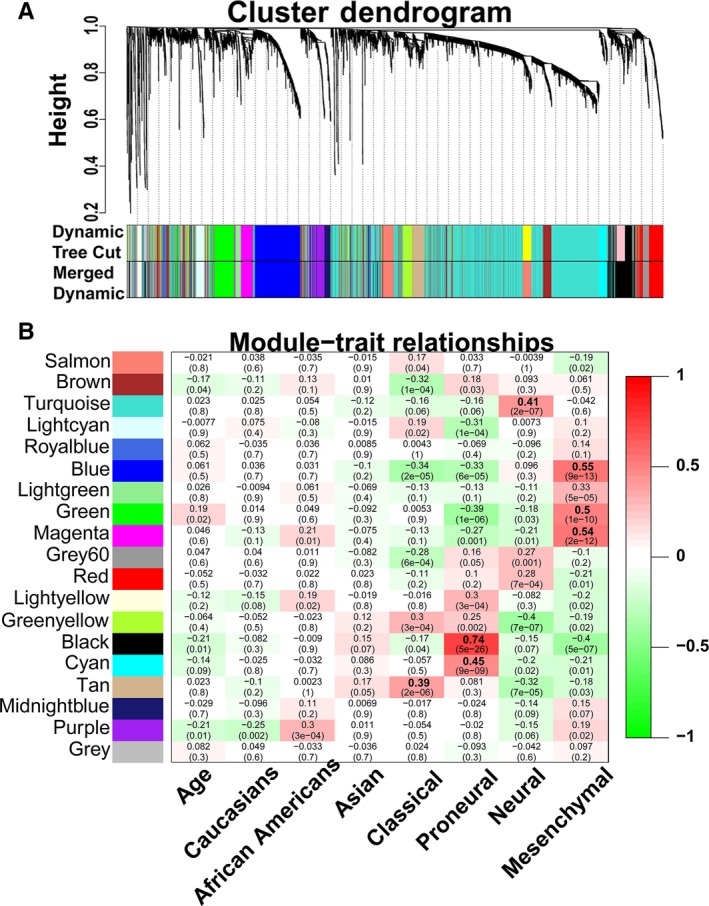
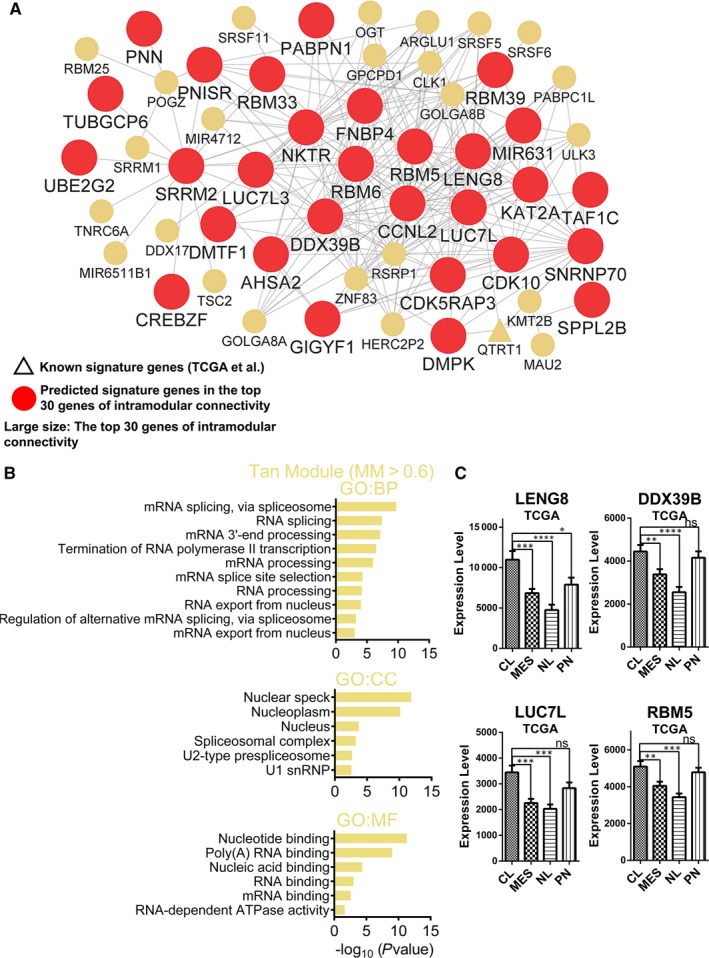
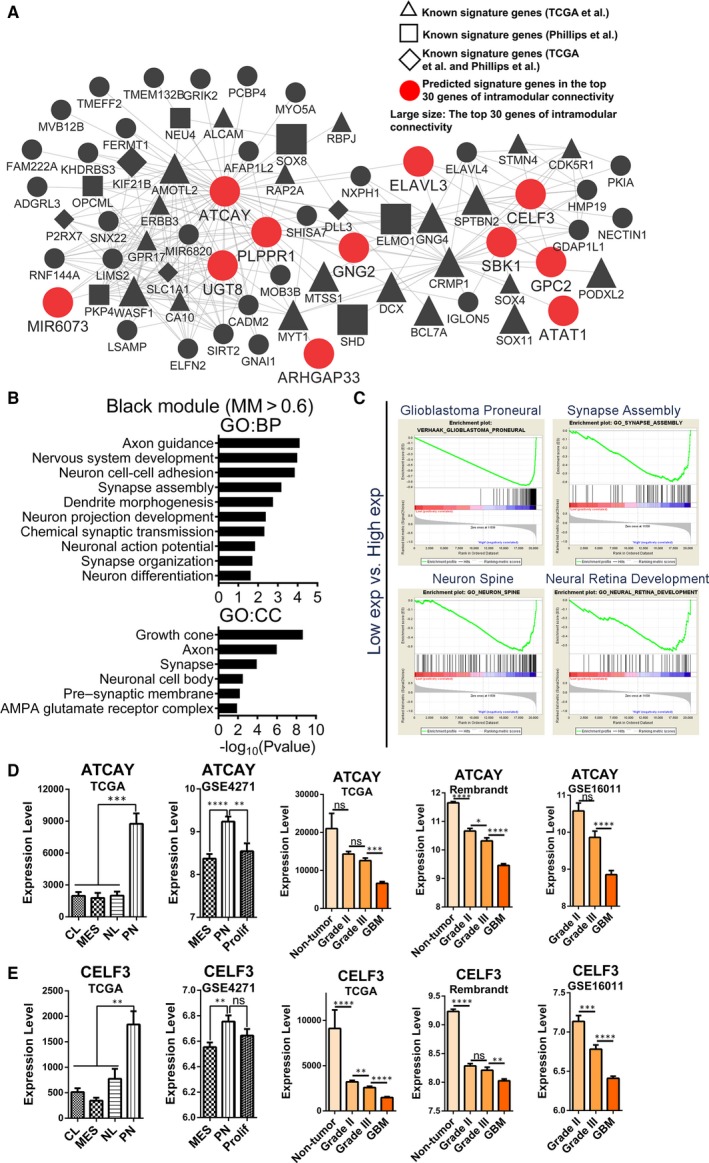
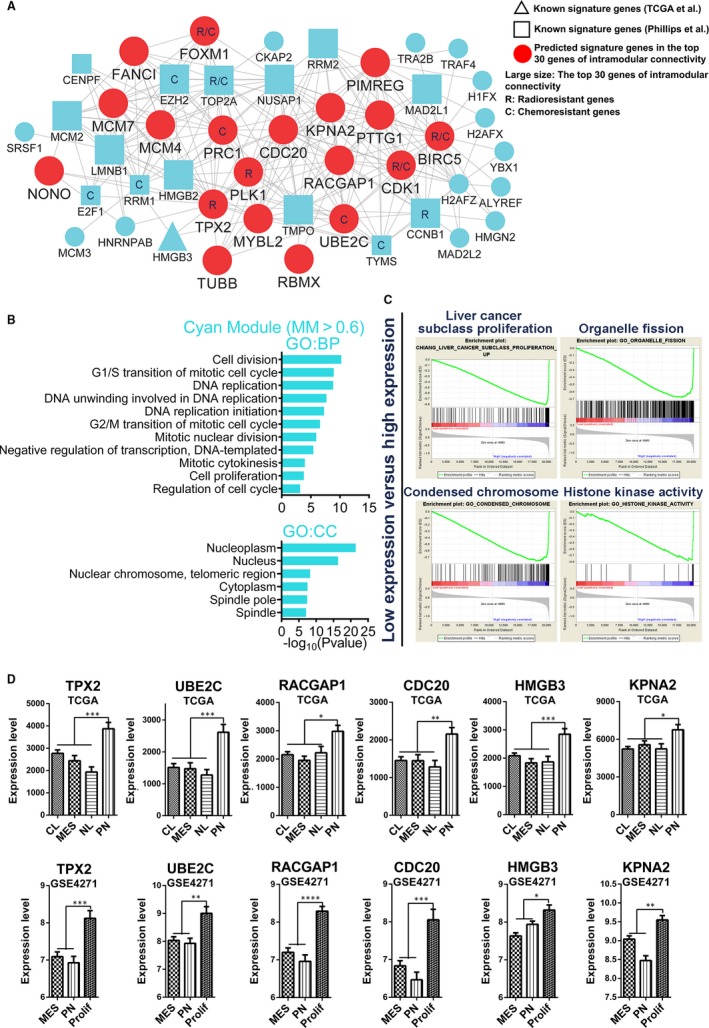
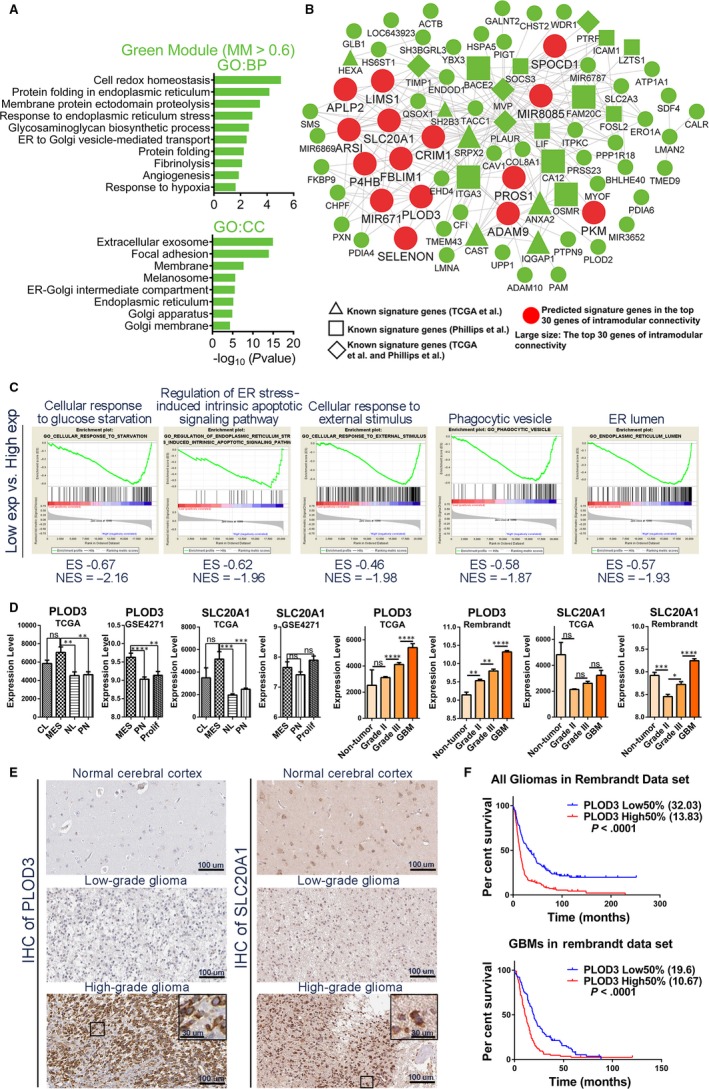
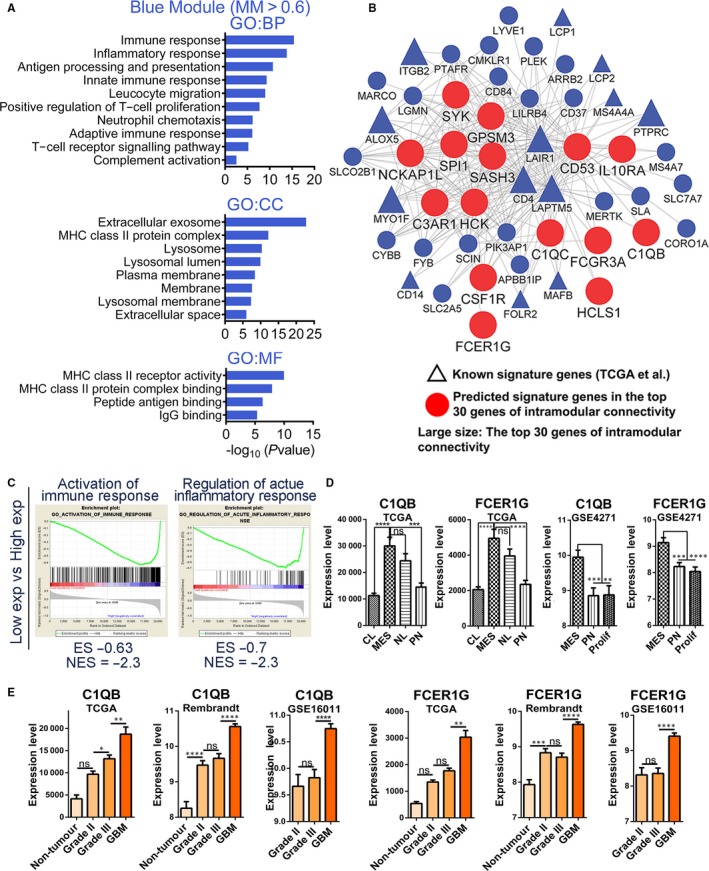
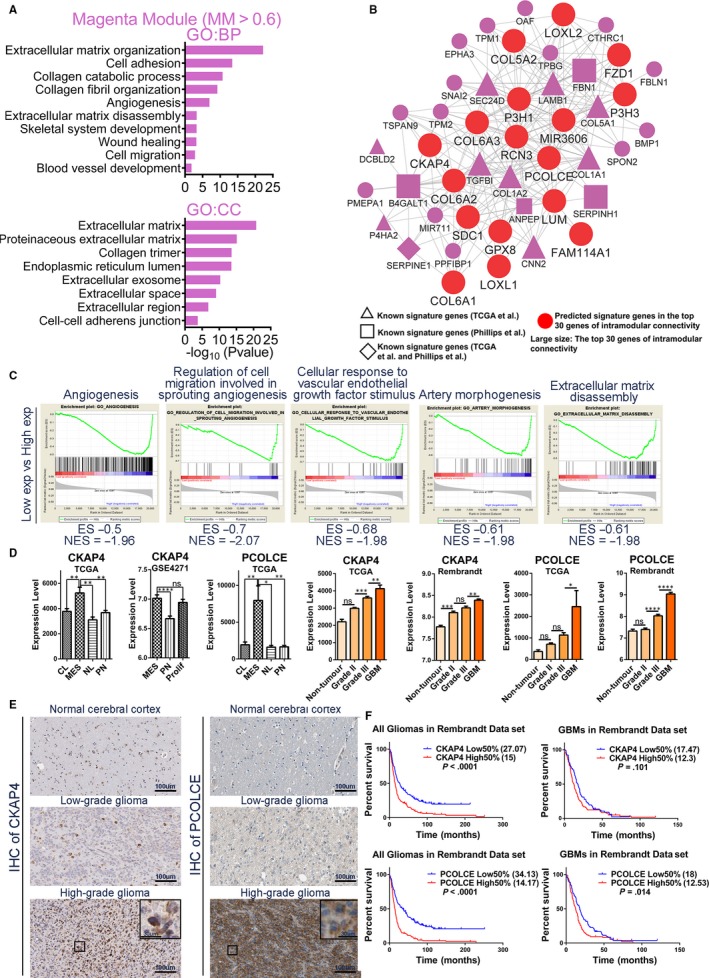
Using molecular signatures, previous studies have defined glioblastoma (GBM) subtypes with different phenotypes, such as the proneural (PN), neural (NL), mesenchymal (MES) and classical (CL) subtypes. However, the gene programmes underlying the phenotypes of these subtypes were less known. We applied weighted gene co-expression network analysis to establish gene modules corresponding to various subtypes. RNA-seq and immunohistochemical data were used to validate the expression of identified genes. We identified seven molecular subtype-specific modules and several candidate signature genes for different subtypes. Next, we revealed, for the first time, that radioresistant/chemoresistant gene signatures exist only in the PN subtype, as described by Verhaak et al, but do not exist in the PN subtype described by Phillips et al PN subtype. Moreover, we revealed that the tumour cells in the MES subtype GBMs are under ER stress and that angiogenesis and the immune inflammatory response are both significantly elevated in this subtype. The molecular basis of these biological processes was also uncovered. Genes associated with alternative RNA splicing are up-regulated in the CL subtype GBMs, and genes pertaining to energy synthesis are elevated in the NL subtype GBMs. In addition, we identified several survival-associated genes that positively correlated with glioma grades. The identified intrinsic characteristics of different GBM subtypes can offer a potential clue to the pathogenesis and possible therapeutic targets for various subtypes.
先前的研究利用分子特征定义了具有不同表型的胶质母细胞瘤(GBM)亚型,如原神经型(PN)、神经型(NL)、间质型(MES)和经典型(CL)亚型。然而,这些亚型表型背后的基因程序还不太清楚。我们应用加权基因共表达网络分析建立了与各种亚型相对应的基因模块。使用 RNA-seq 和免疫组织化学数据来验证鉴定基因的表达。我们鉴定了七个分子亚型特异性模块和几个候选签名基因用于不同的亚型。接下来,我们首次揭示了正如 Verhaak 等人所描述的那样,耐辐射/耐化疗基因特征仅存在于 PN 亚型中,而在 Phillips 等人描述的 PN 亚型中并不存在。此外,我们揭示了 MES 亚型 GBM 中的肿瘤细胞处于内质网应激状态,并且该亚型中的血管生成和免疫炎症反应都显著升高。这些生物学过程的分子基础也被揭示出来。CL 亚型 GBM 中与选择性 RNA 剪接相关的基因上调,NL 亚型 GBM 中与能量合成相关的基因上调。此外,我们还鉴定了一些与胶质瘤分级呈正相关的生存相关基因。不同 GBM 亚型的这些内在特征为不同亚型的发病机制和可能的治疗靶点提供了潜在线索。