Dickie Emily A, Giordani Federica, Gould Matthew K, Mäser Pascal, Burri Christian, Mottram Jeremy C, Rao Srinivasa P S, Barrett Michael P
Wellcome Centre for Integrative Parasitology, Institute of Infection, Immunity and Inflammation, University of Glasgow, Glasgow G12 8TA, UK.
Swiss Tropical and Public Health Institute, Socinstrasse 57, 4002 Basel, Switzerland.
Trop Med Infect Dis. 2020 Feb 19;5(1):29. doi: 10.3390/tropicalmed5010029.
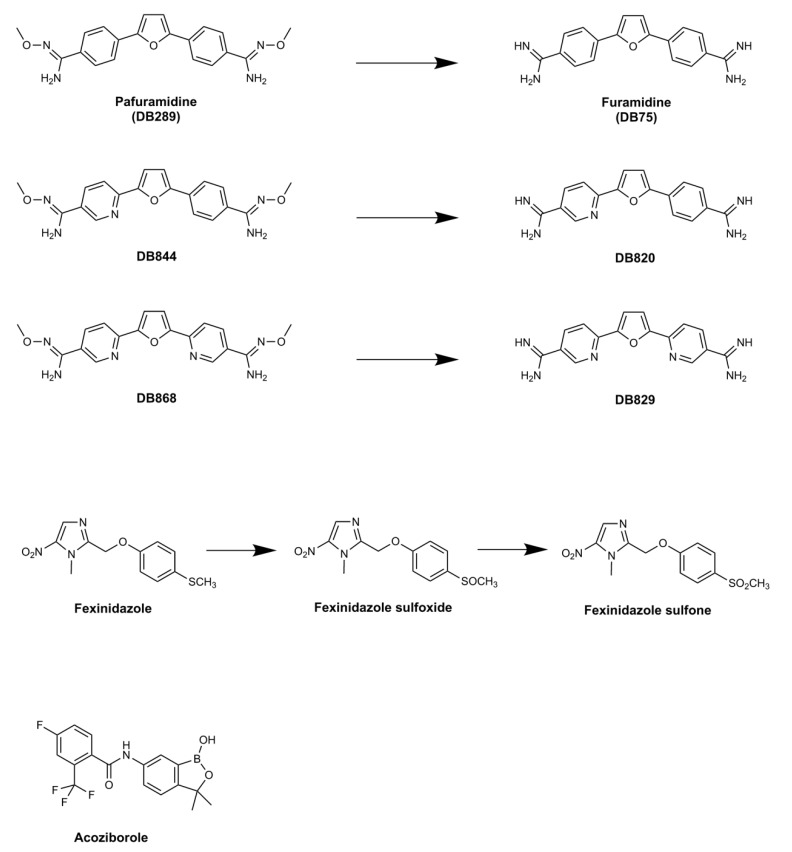
The twentieth century ended with human African trypanosomiasis (HAT) epidemics raging across many parts of Africa. Resistance to existing drugs was emerging, and many programs aiming to contain the disease had ground to a halt, given previous success against HAT and the competing priorities associated with other medical crises ravaging the continent. A series of dedicated interventions and the introduction of innovative routes to develop drugs, involving Product Development Partnerships, has led to a dramatic turnaround in the fight against HAT caused by . The World Health Organization have been able to optimize the use of existing tools to monitor and intervene in the disease. A promising new oral medication for stage 1 HAT, pafuramidine maleate, ultimately failed due to unforeseen toxicity issues. However, the clinical trials for this compound demonstrated the possibility of conducting such trials in the resource-poor settings of rural Africa. The Drugs for Neglected Disease initiative (DNDi), founded in 2003, has developed the first all oral therapy for both stage 1 and stage 2 HAT in fexinidazole. DNDi has also brought forward another oral therapy, acoziborole, potentially capable of curing both stage 1 and stage 2 disease in a single dosing. In this review article, we describe the remarkable successes in combating HAT through the twenty first century, bringing the prospect of the elimination of this disease into sight.
二十世纪结束时,人类非洲锥虫病(HAT)疫情在非洲许多地区肆虐。对现有药物的耐药性正在出现,而且鉴于此前在对抗人类非洲锥虫病方面取得的成功以及与席卷非洲大陆的其他医疗危机相关的相互竞争的优先事项,许多旨在控制该疾病的项目都陷入了停滞。一系列专门的干预措施以及引入涉及产品开发伙伴关系的创新药物研发途径,使对抗由[病原体名称缺失]引起的人类非洲锥虫病的斗争出现了戏剧性的转机。世界卫生组织能够优化现有工具的使用,以监测和干预该疾病。一种有望用于治疗第一阶段人类非洲锥虫病的新型口服药物——马来酸帕氟米定,最终因意外的毒性问题而失败。然而,该化合物的临床试验证明了在非洲农村资源匮乏地区开展此类试验的可能性。2003年成立的被忽视疾病药物研发倡议组织(DNDi)已研发出第一种用于治疗第一阶段和第二阶段人类非洲锥虫病的全口服疗法——非昔硝唑。DNDi还推出了另一种口服疗法——阿考齐硼,有可能单次给药就能治愈第一阶段和第二阶段的疾病。在这篇综述文章中,我们描述了二十一世纪在对抗人类非洲锥虫病方面取得的显著成功,使消除这种疾病的前景在望。