• 文献检索
  • 文档翻译
  • 深度研究
  • 学术资讯
  • Suppr Zotero 插件Zotero 插件
  • 邀请有礼
  • 套餐&价格
  • 历史记录
应用&插件
Suppr Zotero 插件Zotero 插件浏览器插件Mac 客户端Windows 客户端微信小程序
定价
高级版会员购买积分包购买API积分包
服务
文献检索文档翻译深度研究API 文档MCP 服务
关于我们
关于 Suppr公司介绍联系我们用户协议隐私条款
关注我们

Suppr 超能文献

核心技术专利:CN118964589B侵权必究
粤ICP备2023148730 号-1Suppr @ 2026

文献检索

告别复杂PubMed语法,用中文像聊天一样搜索,搜遍4000万医学文献。AI智能推荐,让科研检索更轻松。

立即免费搜索

文件翻译

保留排版,准确专业,支持PDF/Word/PPT等文件格式,支持 12+语言互译。

免费翻译文档

深度研究

AI帮你快速写综述,25分钟生成高质量综述,智能提取关键信息,辅助科研写作。

立即免费体验

一种固定翼无人机的制导与编队半物理仿真平台。

A Semi-Physical Platform for Guidance and Formations of Fixed-Wing Unmanned Aerial Vehicles.

机构信息

Systems Engineering Research Institute, China State Shipbuilding Corporation, Beijing 100094, China.

Delft Center for Systems and Control, Delft University of Technology, 2626CD Delft, The Netherlands.

出版信息

Sensors (Basel). 2020 Feb 19;20(4):1136. doi: 10.3390/s20041136.

DOI:10.3390/s20041136
PMID:32093021
原文链接:https://pmc.ncbi.nlm.nih.gov/articles/PMC7070914/
Abstract

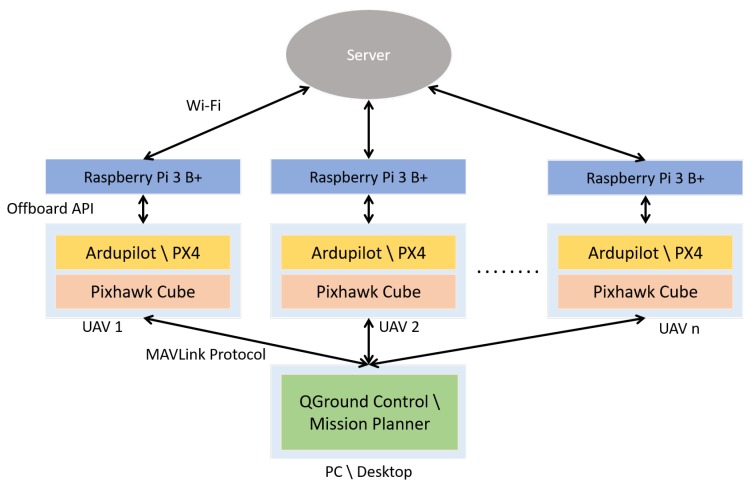
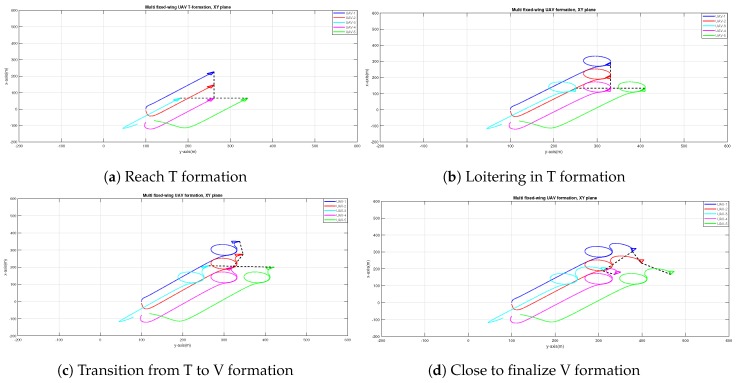
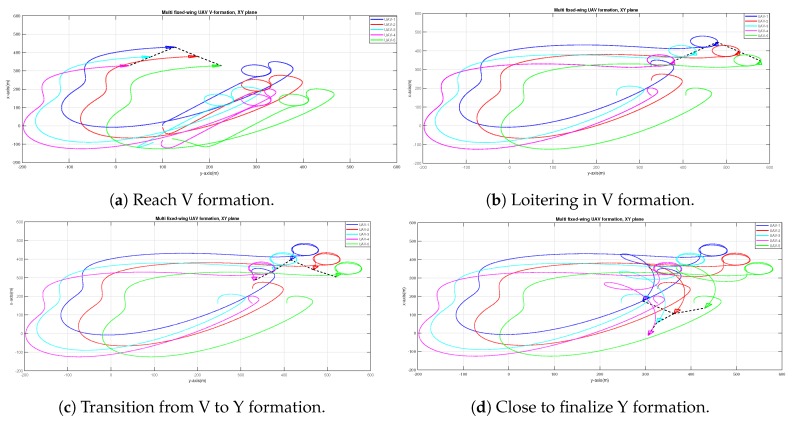
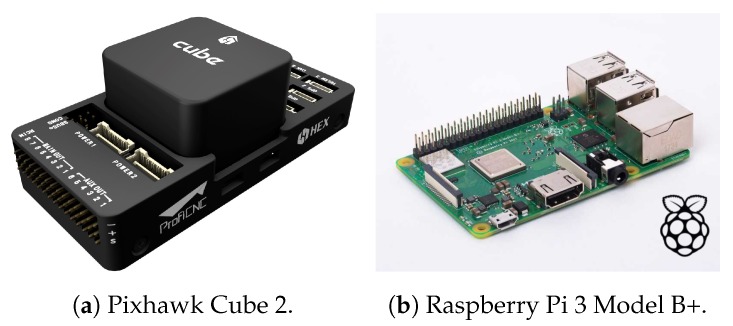
Unmanned Aerial Vehicles (UAVs) have multi-domain applications, fixed-wing UAVs being a widely used class. Despite the ongoing research on the topics of guidance and formation control of fixed-wing UAVs, little progress is known on implementation of semi-physical validation platforms (software-in-the-loop or hardware-in-the-loop) for such complex autonomous systems. A semi-physical simulation platform should capture not only the physical aspects of UAV dynamics, but also the cybernetics aspects such as the autopilot and the communication layers connecting the different components. Such a cyber-physical integration would allow validation of guidance and formation control algorithms in the presence of uncertainties, unmodelled dynamics, low-level control loops, communication protocols and unreliable communication: These aspects are often neglected in the design of guidance and formation control laws for fixed-wing UAVs. This paper describes the development of a semi-physical platform for multi-fixed wing UAVs where all the aforementioned points are carefully integrated. The environment adopts Raspberry Pi's programmed in C++, which can be interfaced to standard autopilots (PX4) as a companion computer. Simulations are done in a distributed setting with a server program designed for the purpose of routing data between nodes, handling the user inputs and configurations of the UAVs. Gazebo-ROS is used as a 3D visualization tool.

摘要

无人飞行器(UAV)在多个领域都有应用,固定翼 UAV 是一种广泛使用的类型。尽管在固定翼 UAV 的制导和编队控制方面的研究一直在进行,但对于这种复杂的自主系统,很少有关于半物理验证平台(软件在环或硬件在环)的实施进展。半物理仿真平台不仅应捕获 UAV 动力学的物理方面,还应捕获诸如自动驾驶仪和连接不同组件的通信层等控制论方面。这种网络物理集成将允许在存在不确定性、未建模动力学、低级控制回路、通信协议和不可靠通信的情况下验证制导和编队控制算法:这些方面在固定翼 UAV 的制导和编队控制律设计中经常被忽略。本文介绍了一种多固定翼 UAV 的半物理平台的开发,其中仔细集成了所有上述要点。该环境采用 C++编程的 Raspberry Pi,可以作为伴生计算机与标准自动驾驶仪(PX4)接口。模拟在分布式设置中进行,服务器程序专为在节点之间路由数据、处理用户输入和配置 UAV 而设计。Gazebo-ROS 用作 3D 可视化工具。
https://cdn.ncbi.nlm.nih.gov/pmc/blobs/1e7b/7070914/bf8befc67a47/sensors-20-01136-g019.jpg
https://cdn.ncbi.nlm.nih.gov/pmc/blobs/1e7b/7070914/0afe90ea474e/sensors-20-01136-g001.jpg
https://cdn.ncbi.nlm.nih.gov/pmc/blobs/1e7b/7070914/cd746a54819f/sensors-20-01136-g002.jpg
https://cdn.ncbi.nlm.nih.gov/pmc/blobs/1e7b/7070914/24b1778661b3/sensors-20-01136-g003.jpg
https://cdn.ncbi.nlm.nih.gov/pmc/blobs/1e7b/7070914/46cec16db765/sensors-20-01136-g004.jpg
https://cdn.ncbi.nlm.nih.gov/pmc/blobs/1e7b/7070914/d4005acf5d7f/sensors-20-01136-g005.jpg
https://cdn.ncbi.nlm.nih.gov/pmc/blobs/1e7b/7070914/90bb7bed2cc7/sensors-20-01136-g006.jpg
https://cdn.ncbi.nlm.nih.gov/pmc/blobs/1e7b/7070914/bf6af3a397f0/sensors-20-01136-g007.jpg
https://cdn.ncbi.nlm.nih.gov/pmc/blobs/1e7b/7070914/13310937cdd8/sensors-20-01136-g008.jpg
https://cdn.ncbi.nlm.nih.gov/pmc/blobs/1e7b/7070914/d5d684ed5e17/sensors-20-01136-g009.jpg
https://cdn.ncbi.nlm.nih.gov/pmc/blobs/1e7b/7070914/c4dd5d625986/sensors-20-01136-g010.jpg
https://cdn.ncbi.nlm.nih.gov/pmc/blobs/1e7b/7070914/160d33e7ba61/sensors-20-01136-g011.jpg
https://cdn.ncbi.nlm.nih.gov/pmc/blobs/1e7b/7070914/4e14f09eea91/sensors-20-01136-g012.jpg
https://cdn.ncbi.nlm.nih.gov/pmc/blobs/1e7b/7070914/a1dc57891c02/sensors-20-01136-g013.jpg
https://cdn.ncbi.nlm.nih.gov/pmc/blobs/1e7b/7070914/c5cf8572a3e6/sensors-20-01136-g014.jpg
https://cdn.ncbi.nlm.nih.gov/pmc/blobs/1e7b/7070914/f6b0ec840b37/sensors-20-01136-g015.jpg
https://cdn.ncbi.nlm.nih.gov/pmc/blobs/1e7b/7070914/a595af136637/sensors-20-01136-g016.jpg
https://cdn.ncbi.nlm.nih.gov/pmc/blobs/1e7b/7070914/d82b3db14e12/sensors-20-01136-g017.jpg
https://cdn.ncbi.nlm.nih.gov/pmc/blobs/1e7b/7070914/75b270c4c6c7/sensors-20-01136-g018.jpg
https://cdn.ncbi.nlm.nih.gov/pmc/blobs/1e7b/7070914/bf8befc67a47/sensors-20-01136-g019.jpg
https://cdn.ncbi.nlm.nih.gov/pmc/blobs/1e7b/7070914/0afe90ea474e/sensors-20-01136-g001.jpg
https://cdn.ncbi.nlm.nih.gov/pmc/blobs/1e7b/7070914/cd746a54819f/sensors-20-01136-g002.jpg
https://cdn.ncbi.nlm.nih.gov/pmc/blobs/1e7b/7070914/24b1778661b3/sensors-20-01136-g003.jpg
https://cdn.ncbi.nlm.nih.gov/pmc/blobs/1e7b/7070914/46cec16db765/sensors-20-01136-g004.jpg
https://cdn.ncbi.nlm.nih.gov/pmc/blobs/1e7b/7070914/d4005acf5d7f/sensors-20-01136-g005.jpg
https://cdn.ncbi.nlm.nih.gov/pmc/blobs/1e7b/7070914/90bb7bed2cc7/sensors-20-01136-g006.jpg
https://cdn.ncbi.nlm.nih.gov/pmc/blobs/1e7b/7070914/bf6af3a397f0/sensors-20-01136-g007.jpg
https://cdn.ncbi.nlm.nih.gov/pmc/blobs/1e7b/7070914/13310937cdd8/sensors-20-01136-g008.jpg
https://cdn.ncbi.nlm.nih.gov/pmc/blobs/1e7b/7070914/d5d684ed5e17/sensors-20-01136-g009.jpg
https://cdn.ncbi.nlm.nih.gov/pmc/blobs/1e7b/7070914/c4dd5d625986/sensors-20-01136-g010.jpg
https://cdn.ncbi.nlm.nih.gov/pmc/blobs/1e7b/7070914/160d33e7ba61/sensors-20-01136-g011.jpg
https://cdn.ncbi.nlm.nih.gov/pmc/blobs/1e7b/7070914/4e14f09eea91/sensors-20-01136-g012.jpg
https://cdn.ncbi.nlm.nih.gov/pmc/blobs/1e7b/7070914/a1dc57891c02/sensors-20-01136-g013.jpg
https://cdn.ncbi.nlm.nih.gov/pmc/blobs/1e7b/7070914/c5cf8572a3e6/sensors-20-01136-g014.jpg
https://cdn.ncbi.nlm.nih.gov/pmc/blobs/1e7b/7070914/f6b0ec840b37/sensors-20-01136-g015.jpg
https://cdn.ncbi.nlm.nih.gov/pmc/blobs/1e7b/7070914/a595af136637/sensors-20-01136-g016.jpg
https://cdn.ncbi.nlm.nih.gov/pmc/blobs/1e7b/7070914/d82b3db14e12/sensors-20-01136-g017.jpg
https://cdn.ncbi.nlm.nih.gov/pmc/blobs/1e7b/7070914/75b270c4c6c7/sensors-20-01136-g018.jpg
https://cdn.ncbi.nlm.nih.gov/pmc/blobs/1e7b/7070914/bf8befc67a47/sensors-20-01136-g019.jpg

相似文献

1
A Semi-Physical Platform for Guidance and Formations of Fixed-Wing Unmanned Aerial Vehicles.一种固定翼无人机的制导与编队半物理仿真平台。
Sensors (Basel). 2020 Feb 19;20(4):1136. doi: 10.3390/s20041136.
2
Formation Flight of Multiple UAVs via Onboard Sensor Information Sharing.基于机载传感器信息共享的多无人机编队飞行
Sensors (Basel). 2015 Jul 17;15(7):17397-419. doi: 10.3390/s150717397.
3
Coordinated path following control of fixed-wing unmanned aerial vehicles in wind.风中固定翼无人机的协同路径跟踪控制
ISA Trans. 2022 Mar;122:260-270. doi: 10.1016/j.isatra.2021.04.034. Epub 2021 May 28.
4
Formation control of fixed-wing UAVs with communication delay.具有通信延迟的固定翼无人机编队控制
ISA Trans. 2024 Mar;146:154-164. doi: 10.1016/j.isatra.2023.12.036. Epub 2023 Dec 27.
5
Distributed adaptive fault-tolerant close formation flight control of multiple trailing fixed-wing UAVs.多架后缘固定翼无人机的分布式自适应容错紧密编队飞行控制
ISA Trans. 2020 Nov;106:181-199. doi: 10.1016/j.isatra.2020.07.005. Epub 2020 Jul 9.
6
Vision-Based Autonomous Following of a Moving Platform and Landing for an Unmanned Aerial Vehicle.基于视觉的无人机自主跟随移动平台和着陆
Sensors (Basel). 2023 Jan 11;23(2):829. doi: 10.3390/s23020829.
7
Sensor-driven area coverage for an autonomous fixed-wing unmanned aerial vehicle.基于传感器的自主固定翼无人机区域覆盖。
IEEE Trans Cybern. 2014 Sep;44(9):1605-18. doi: 10.1109/TCYB.2013.2290975.
8
V2X Communication between Connected and Automated Vehicles (CAVs) and Unmanned Aerial Vehicles (UAVs).联网与自动驾驶车辆(CAV)和无人机(UAV)之间的车对万物(V2X)通信。
Sensors (Basel). 2022 Nov 18;22(22):8941. doi: 10.3390/s22228941.
9
Design and Implementation of a Fully-Actuated Integrated Aerial Platform Based on Geometric Model Predictive Control.基于几何模型预测控制的全驱动集成空中平台的设计与实现
Micromachines (Basel). 2022 Oct 25;13(11):1822. doi: 10.3390/mi13111822.
10
Decentralized 3D Collision Avoidance for Multiple UAVs in Outdoor Environments.室外环境中多架无人机的去中心化 3D 避碰。
Sensors (Basel). 2018 Nov 23;18(12):4101. doi: 10.3390/s18124101.

引用本文的文献

1
Multi-Sensory Data Fusion in Terms of UAV Detection in 3D Space.三维空间中无人机检测的多感官数据融合
Sensors (Basel). 2022 Jun 7;22(12):4323. doi: 10.3390/s22124323.
2
Adaptive Robust Trajectory Tracking Control of Multiple Quad-Rotor UAVs with Parametric Uncertainties and Disturbances.具有参数不确定性和干扰的多四旋翼无人机自适应鲁棒轨迹跟踪控制
Sensors (Basel). 2021 Mar 31;21(7):2401. doi: 10.3390/s21072401.
3
Decentralized Mesh-Based Model Predictive Control for Swarms of UAVs.用于无人机群的基于分布式网格的模型预测控制

本文引用的文献

1
Analysis and design of second-order sliding-mode algorithms for quadrotor roll and pitch estimation.用于四旋翼飞行器滚转和俯仰估计的二阶滑模算法的分析与设计。
ISA Trans. 2017 Nov;71(Pt 2):495-512. doi: 10.1016/j.isatra.2017.09.012. Epub 2017 Sep 29.
Sensors (Basel). 2020 Aug 3;20(15):4324. doi: 10.3390/s20154324.