Department of Pediatrics, Division of Pediatric Critical Care Medicine, Çukurova University Faculty of Medicine, Adana, Turkey
Department of Biostatistics, Çukurova University Faculty of Medicine, Adana, Turkey
Turk J Med Sci. 2020 Apr 9;50(2):411-419. doi: 10.3906/sag-1903-201.
BACKGROUND/AIM: Intraabdominal hypertension is a common clinical condition with high mortality and morbidity in pediatric intensive care units. The aim of this study was to test the feasibility of regional tissue oxygenation (rSO2) measurement using near-infrared spectroscopy and to assess the correlation between rSO2 and perfusion markers of intraabdominal hypertension in high-risk pediatric patients.
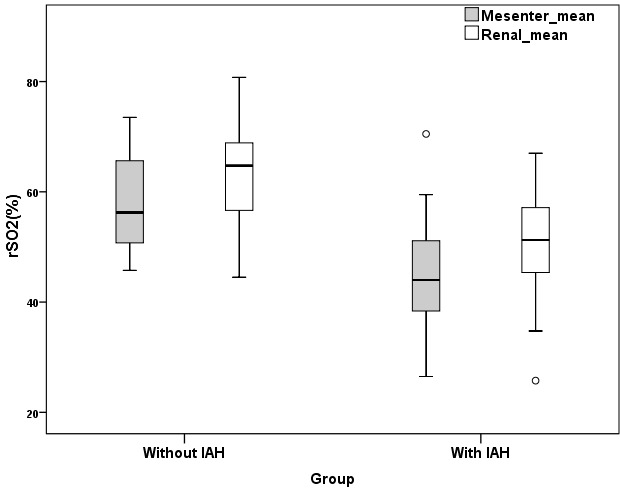
In this prospective observational cohort study in a tertiary pediatric intensive care unit in Çukurova University Faculty of Medicine, a total of 31 patients who were admitted between May 2017 and May 2018 with a risk of intraabdominal hypertension were included. Mesenteric and renal rSO2 measurements were taken and correlations with other tissue perfusion markers including mean arterial pressure, pH, lactate, intraabdominal pressure, abdominal perfusion pressure, mixed venous oxygen saturation, vasoactive inotropic score were assessed. Intraabdominal pressure was measured as ≥10 mmHg in 15 patients (48.3%) and these patients were defined as the group with intraabdominal hypertension.
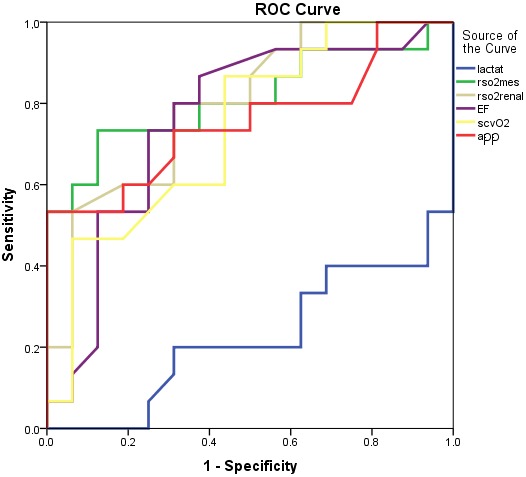
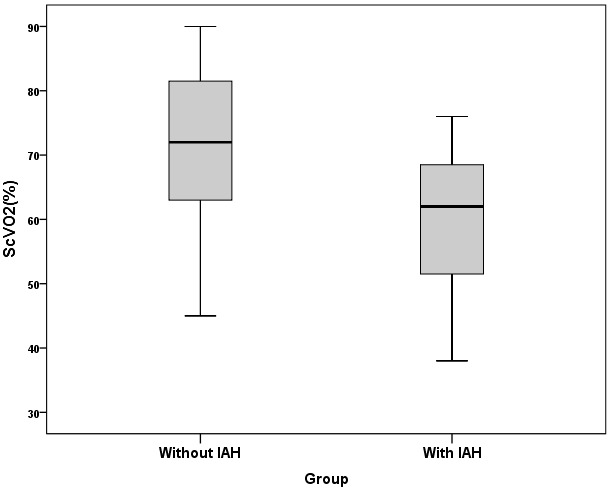
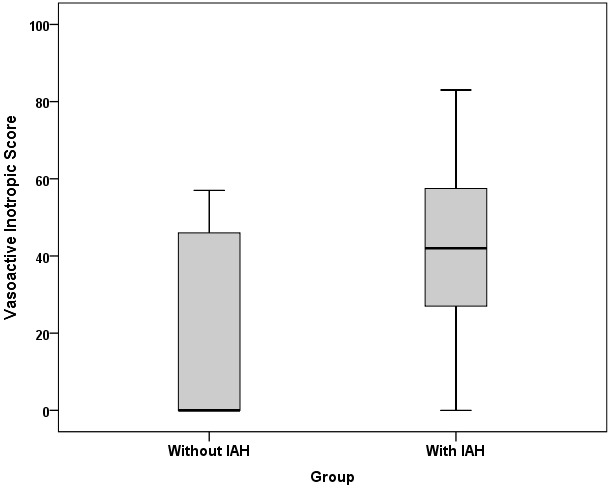
In the group with intraabdominal hypertension, mixed venous oxygen saturation was lower (P = 0.024), vasoactive inotropic score was higher (P = 0.024) and the mean abdominal perfusion pressure value was lower (P = 0.014). In the ROC analysis, the mesenteric rSO2 measurement was the best parameter to predict intraabdominal hypertension with area under the curve of 0.812 (P = 0.003) 95% CI [0.652–0.973].
Monitoring of mesenteric rSO2 is feasible in patients at risk for intraabdominal hypertension. Moreover, both mesenteric regional oxygen and perfusion markers may be used to identify pediatric patients at risk for intraabdominal hypertension.
背景/目的:腹腔内高压是儿科重症监护病房中一种常见的具有高病死率和发病率的临床情况。本研究的目的是测试使用近红外光谱法测量局部组织氧合(rSO2)的可行性,并评估 rSO2 与高危儿科患者腹腔内高压的灌注标志物之间的相关性。
在Çukurova 大学医学院的三级儿科重症监护病房进行的这项前瞻性观察队列研究中,共纳入了 2017 年 5 月至 2018 年 5 月期间因腹腔内高压风险而入院的 31 名患者。测量肠系膜和肾脏 rSO2,并评估其与其他组织灌注标志物(包括平均动脉压、pH 值、乳酸、腹腔内压、腹主动脉灌注压、混合静脉血氧饱和度、血管活性正性肌力评分)之间的相关性。15 名患者(48.3%)的腹腔内压≥10mmHg,将这些患者定义为腹腔内高压组。
在腹腔内高压组中,混合静脉血氧饱和度较低(P=0.024),血管活性正性肌力评分较高(P=0.024),平均腹主动脉灌注压值较低(P=0.014)。在 ROC 分析中,肠系膜 rSO2 测量是预测腹腔内高压的最佳参数,曲线下面积为 0.812(P=0.003)[0.652-0.973]。
在有腹腔内高压风险的患者中监测肠系膜 rSO2 是可行的。此外,肠系膜局部氧和灌注标志物均可用于识别有腹腔内高压风险的儿科患者。