Malik Aaqib H, Zaid Syed, Ahmad Hasan, Goldberg Joshua, Dutta Tanya, Undemir Cenap, Cohen Martin, Aronow Wilbert S, Lansman Steven L
Department of Medicine, Westchester Medical Center and New York Medical College, Valhalla, NY, USA.
Department of Cardiology, Westchester Medical Center and New York Medical College, Valhalla, NY, USA.
J Geriatr Cardiol. 2020 Jan;17(1):43-50. doi: 10.11909/j.issn.1671-5411.2020.01.005.
Transcatheter aortic valve replacement (TAVR) for the treatment symptomatic severe aortic stenosis (AS) is indicated in patients with intermediate or higher surgical risk. Latest trials showed TAVR, and surgical aortic valve replacement (SAVR) perform similarly at 1-year for the composite outcomes of mortality, stroke and rehospitalization. We performed a comprehensive meta-analysis to compare individual outcomes at 1-year for TAVR compared to SAVR in low-risk patients.
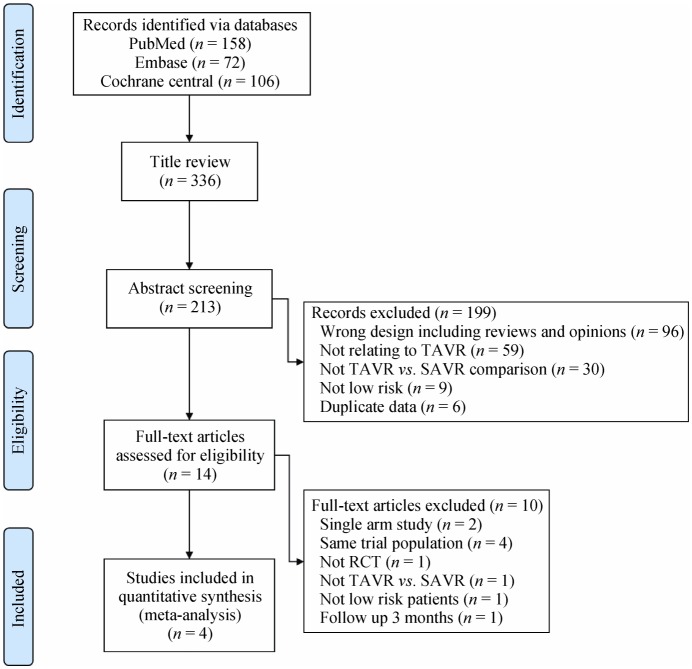
PubMed, Embase, and Cochrane central were searched for all the randomized controlled trials (RCTs) that reported 1-year comparative outcomes of TAVR and surgical aortic valve replacement (SAVR). Our conclusions are based upon the random-effects model using DerSimonian-Laird estimator.
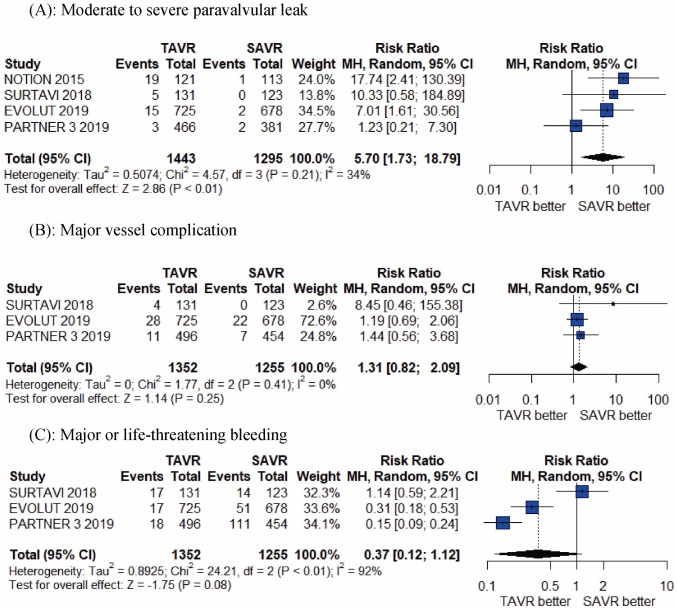
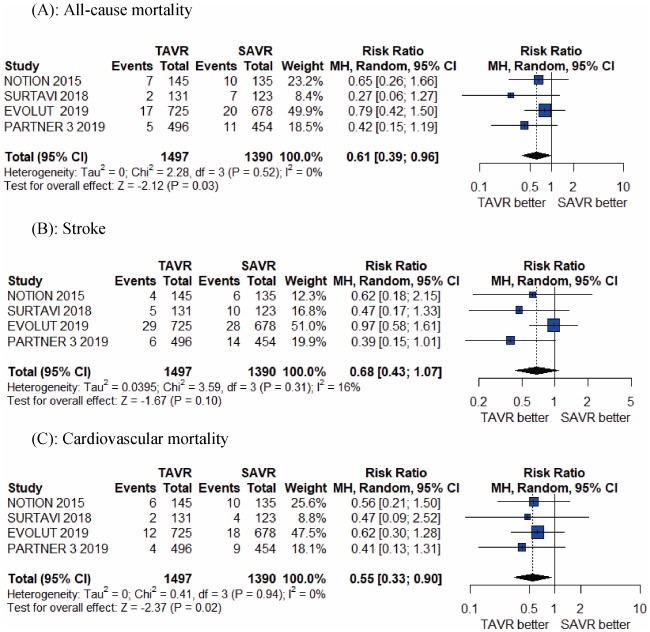
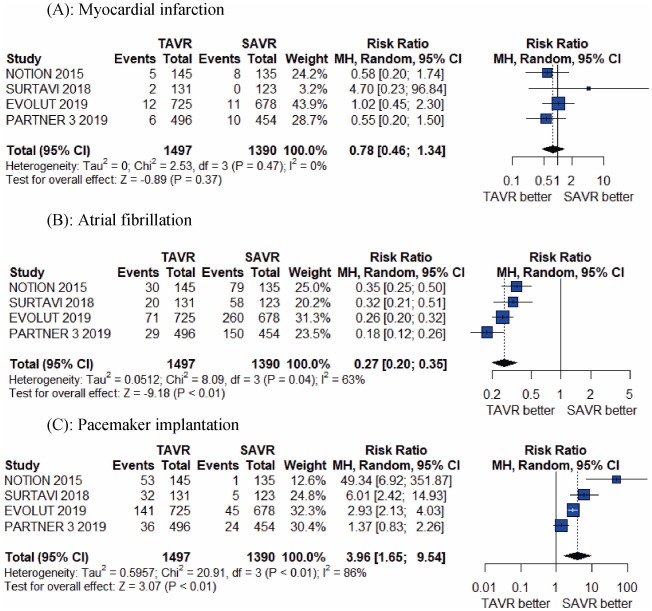
Data from 4 trials and 2887 randomized patients showed that TAVR had lower rates of all-cause mortality, cardiovascular mortality, and atrial fibrillation compared to SAVR at 1-year follow-up ( < 0.05 for all). Also, TAVR was also associated with a significantly higher risk of permanent pacemaker implantation and moderate-severe paravalvular leak ( < 0.05).
The latest randomised trial data demonstrates that in short-term, TAVR is safe and effective in reducing all-cause mortality or stroke. Longer follow-up of RCTs is needed to determine the durability of clinical benefits in TAVR over SAVR in low-risk patients.
经导管主动脉瓣置换术(TAVR)用于治疗有症状的严重主动脉瓣狭窄(AS),适用于手术风险中等或较高的患者。最新试验表明,在1年时,TAVR与外科主动脉瓣置换术(SAVR)在死亡率、中风和再住院的综合结局方面表现相似。我们进行了一项全面的荟萃分析,以比较低风险患者中TAVR与SAVR在1年时的个体结局。
检索PubMed、Embase和Cochrane中心,查找所有报告TAVR与外科主动脉瓣置换术(SAVR)1年比较结局的随机对照试验(RCT)。我们的结论基于使用DerSimonian-Laird估计器的随机效应模型。
来自4项试验和2887名随机分组患者的数据显示,在1年随访时,与SAVR相比,TAVR的全因死亡率、心血管死亡率和房颤发生率更低(所有P<0.05)。此外,TAVR还与永久起搏器植入和中重度瓣周漏的风险显著更高相关(P<0.05)。
最新的随机试验数据表明,短期内,TAVR在降低全因死亡率或中风方面是安全有效的。需要对RCT进行更长时间的随访,以确定低风险患者中TAVR相对于SAVR临床获益的持久性。