Yum Sun Kyoung, Yum Sun Young, Kim Tak
Department Obstetrics and Gynecology, Korea University Anam Hospital, Seoul 02841, Korea.
Department Psychiatry, New Jersey Medical School, UMDNJ, NJ, USA.
Transl Clin Pharmacol. 2019 Dec;27(4):127-133. doi: 10.12793/tcp.2019.27.4.127. Epub 2019 Dec 31.
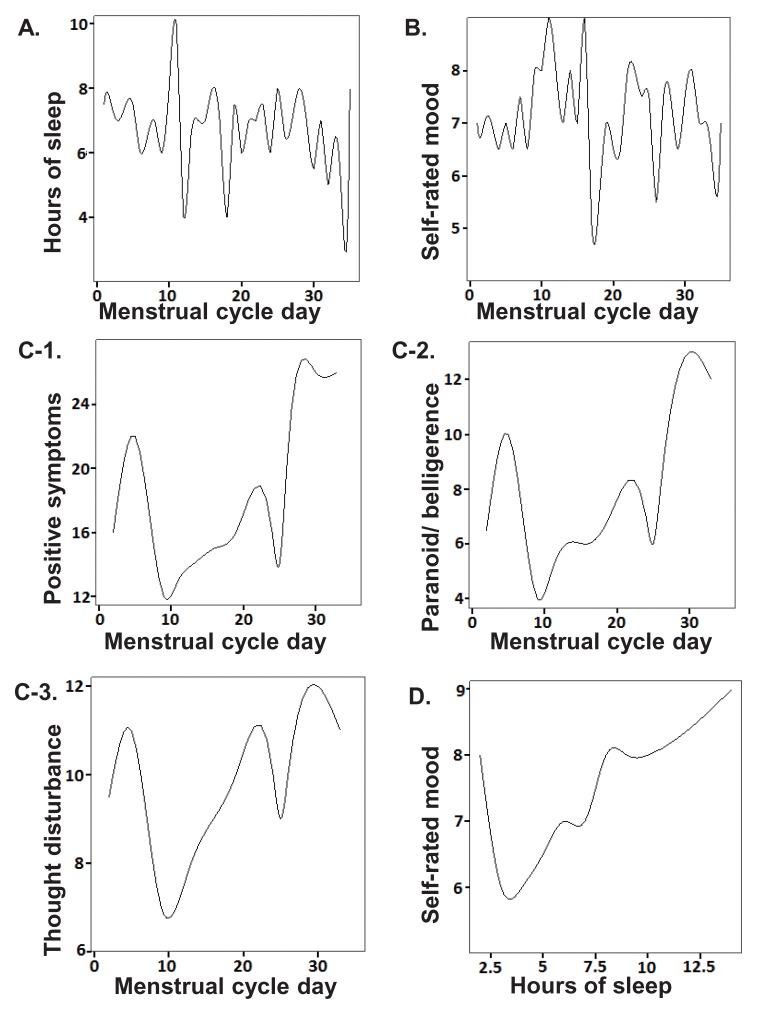
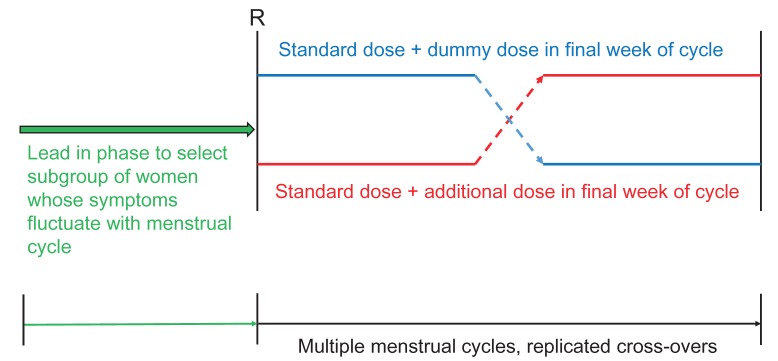
While hormonal changes during the ovulatory cycles affect multiple body systems, medical management, including medication dosing remains largely uniform between the sexes. Little is known about sex-specific pharmacology in women. Although hormonal fluctuations of the normal menstruating process alters women's physiology and brain biochemistry, medication dosing does not consider such cyclical changes. Using schizophrenia as an example, this paper illustrates how a woman's clinical symptoms can change throughout the ovulatory cycle, leading to fluctuations in medication responses. Effects of sex steroids on the brain, clinical pharmacology are discussed. Effective medication dose may be different at different phases of the menstrual cycle. Further research is needed to better understand optimal treatment strategies in reproductive women; we present a potential clinical trial design for examining optimal medication dosing strategies for conditions that have menstruation related clinical fluctuations.
虽然排卵周期中的激素变化会影响多个身体系统,但包括药物剂量在内的医疗管理在两性之间基本保持一致。人们对女性特异性药理学知之甚少。尽管正常月经周期的激素波动会改变女性的生理和大脑生物化学,但药物剂量并未考虑这种周期性变化。以精神分裂症为例,本文阐述了女性的临床症状在整个排卵周期中如何变化,从而导致药物反应的波动。讨论了性类固醇对大脑的影响及临床药理学。在月经周期的不同阶段,有效药物剂量可能有所不同。需要进一步研究以更好地理解育龄女性的最佳治疗策略;我们提出了一种潜在的临床试验设计,用于研究针对有与月经相关临床波动情况的最佳药物剂量策略。