From the Division of Plastic Surgery, Department of Surgery, and the Department of Orthopedic Surgery, University of Pennsylvania.
Plast Reconstr Surg. 2020 Mar;145(3):813-822. doi: 10.1097/PRS.0000000000006609.
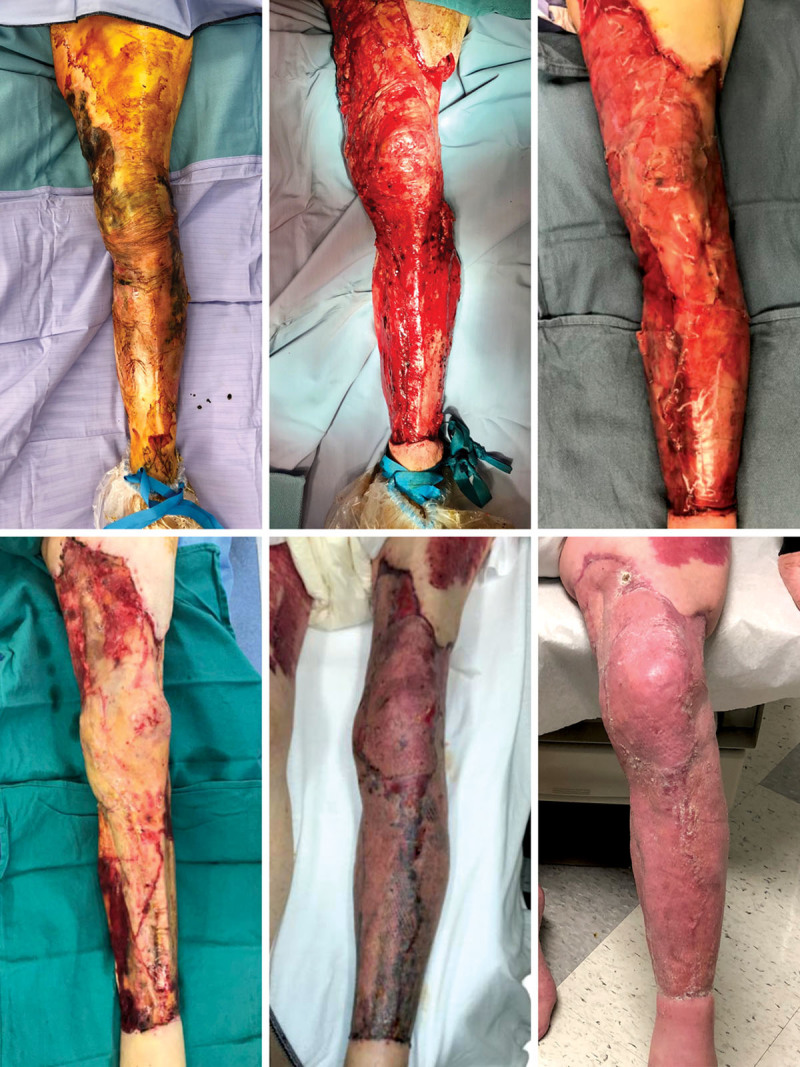
Little is known about the efficacy of newer skin substitute scaffolds to reconstruct complex lower extremity wounds. The investigators present a multihospital experience of reconstructive surgeons utilizing collagen-GAG bilayer wound matrix in lower extremity soft-tissue reconstruction with the goals to (1) characterize a suitable patient population, (2) categorize failures to optimize patient selection, and (3) determine wound factors affecting success.
Subjects underwent collagen-GAG-based lower extremity wound reconstruction from May of 2010 to June of 2017. The primary outcome variable was 180-day graft success, defined as eventual split-thickness skin grafting after bilayer wound matrix application; failure was defined as inadequate wound bed for split-thickness skin grafting, requirement for vascularized tissue transfer, or eventual amputation. Eligible subjects had at least one lower extremity wound and were at least 18 years old. Exclusion criteria included third-degree burn wounds or failure to follow up for at least 60 days postoperatively. Predictor variables included demographics, medical comorbidities, perioperative characteristics, postoperative complications, and cost-related data for each hospitalization.
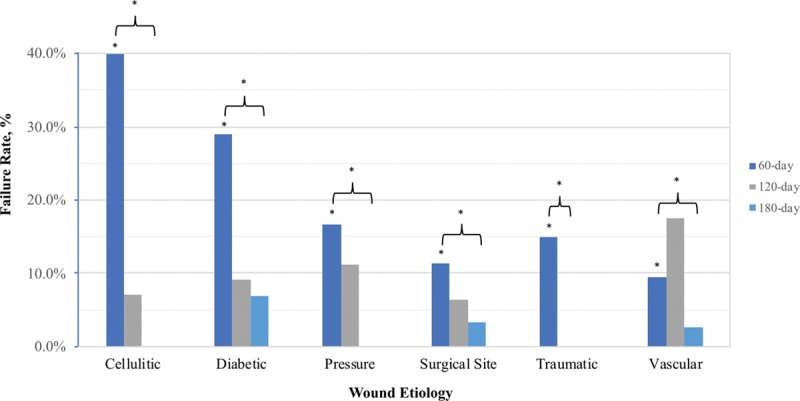
There were 147 subjects with 191 wounds. Mean patient age was 60.1 years (range, 21.0 to 95.6 years), and mean body mass index was 30.5 kg/m (range, 14.4 to 64.7 kg/m). Average wound size was 73.1 ± 137.7 cm, with 49.0 percent of subjects receiving adjunct postoperative negative-pressure wound therapy. Seventy percent of wounds were successfully healed at 180 days. Most were localized between the knee and ankle (50.8 percent) or foot (46.1 percent). Tendon exposure (p < 0.05), bone exposure (p < 0.01), and bone excision (p < 0.04) were associated with reconstructive failure.
The authors present the largest reported multihospital, multidisciplinary experience with collagen-GAG wound matrix for lower extremity reconstruction. Tendon and/or bone exposure and socioeconomic factors were associated with failure.
CLINICAL QUESTION/LEVEL OF EVIDENCE: Risk, III.
对于新型皮肤替代物支架在重建下肢复杂创面中的疗效,人们知之甚少。研究人员报告了多中心经验,展示了重建外科医生使用胶原-糖胺聚糖双层创面基质进行下肢软组织重建的情况,目的是:(1) 描述合适的患者人群;(2) 对失败病例进行分类,以优化患者选择;(3) 确定影响手术成功率的创面因素。
2010 年 5 月至 2017 年 6 月,受试者接受基于胶原-糖胺聚糖的下肢创面重建。主要结局变量是 180 天移植物成功率,定义为双层创面基质应用后最终行刃厚皮片移植;失败定义为创面床不适合行刃厚皮片移植、需要行血管化组织转移或最终截肢。纳入标准为至少有一个下肢创面且年龄至少 18 岁。排除标准包括三度烧伤创面或术后随访时间少于 60 天。预测变量包括人口统计学资料、合并症、围手术期特征、术后并发症和每次住院的费用相关数据。
共纳入 147 例患者,191 处创面。患者平均年龄为 60.1 岁(21.095.6 岁),平均 BMI 为 30.5 kg/m(14.464.7 kg/m)。平均创面面积为 73.1 ± 137.7 cm,49.0%的患者术后接受辅助性负压创面治疗。70.0%的创面在 180 天内愈合。创面最常见的部位是膝关节和踝关节之间(50.8%)或足部(46.1%)。腱膜外露(p < 0.05)、骨外露(p < 0.01)和骨切除(p < 0.04)与重建失败相关。
作者报告了最大规模的多中心、多学科使用胶原-糖胺聚糖创面基质进行下肢重建的经验。腱膜和/或骨外露及社会经济因素与失败相关。
临床问题/证据水平:风险,III 级。