Institute of Medicinal Plant Development, Chinese Academy of Medical Sciences and Peking Union Medical College, Beijing 100193, China.
Int J Mol Sci. 2020 Feb 21;21(4):1460. doi: 10.3390/ijms21041460.
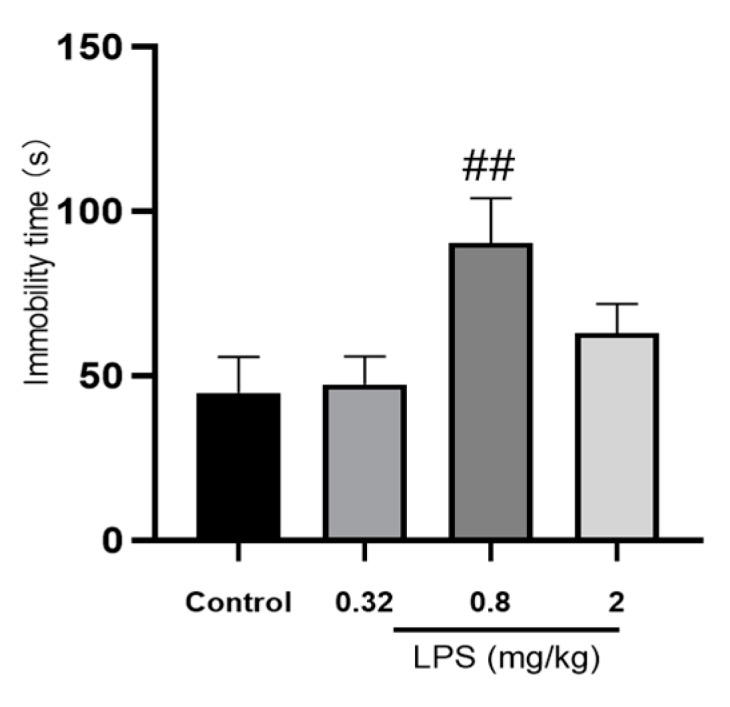
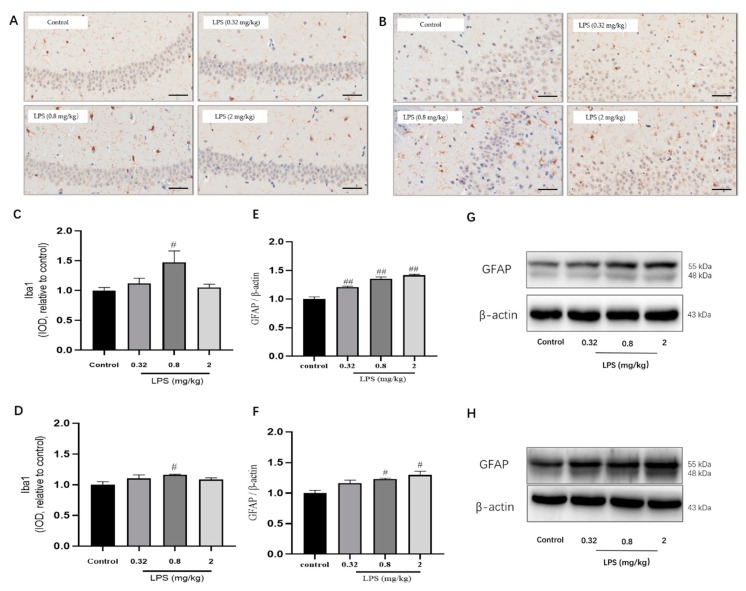
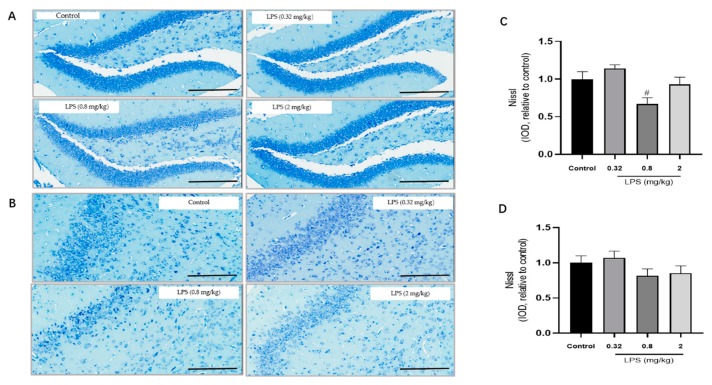
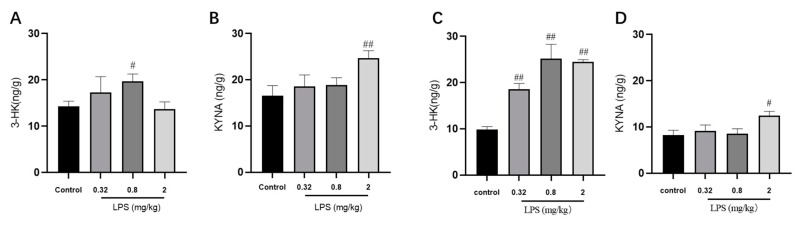
In the pathology-oriented study of depression, inflammation hypothesis has received increasing attention for recent years. To mimic the depressive state caused by inflammation, rodents injected intraperitoneally with lipopolysaccharide (LPS) are usually used to stimulate an immune response. However, the dose of LPS that causes depressive-like behavior varies widely across many literatures. Previous study has uncovered the non-linearity in the dose-effect relationship for the depressive-like behavior induced by LPS administration, while the reason for this is still unclear. The present study aims to investigate the underlying mechanisms of this non-linear dose-dependent relationship. Four groups of mice were injected intraperitoneally with different doses of LPS (0, 0.32, 0.8, and 2 mg/kg). The tail suspension test was conducted to evaluate the depressive-like behavior within 23-25 h after the LPS administration. The neuroplasticity was assessed by the levels of related proteins, TrkB and PSD-95, and by the quantification of neurons using Nissl staining. The levels of the two metabolites of the kynurenine (KYN) pathway, 3-hydroxykynurenine (3-HK) and kynurenic acid (KYNA), in the brain were analyzed by LC-MS/MS. Activation of microglia and astrocytes in the brain were also determined by immunohistochemistry and western blotting, respectively. The results showed that, compared with the control group, the mice in the 0.8 mg/kg LPS-treated group exhibited a remarkable increase of immobility time in the tail suspension test. The neuroplasticity of mice in the 0.8 mg/kg LPS-treated group was also significantly reduced. The neurotoxic metabolite, 3-HK, was accumulated significantly in the hippocampus of the 0.8 mg/kg LPS-treated mice. Surprisingly, the 2 mg/kg LPS-treated mice did not exhibit a remarkable change of 3-HK but expressed increased KYNA significantly, which is neuroprotective. Furthermore, the activation of microglia and astrocytes, which were recognized as the primary source of 3-HK and KYNA, respectively, corresponded to the content of these two metabolites of the KYN pathway in each group. Consequently, it was speculated that the homeostasis of different glial cells could lead to a non-linear dose-dependent behavior by regulating the KYN pathway in the LPS-induced depressive-like mice.
在以病理学为导向的抑郁症研究中,炎症假说近年来受到越来越多的关注。为了模拟炎症引起的抑郁状态,通常向腹膜内注射脂多糖(LPS)的啮齿动物来刺激免疫反应。然而,在许多文献中,引起类似抑郁行为的 LPS 剂量差异很大。先前的研究揭示了 LPS 给药引起的类似抑郁行为的剂量-效应关系的非线性,但其原因尚不清楚。本研究旨在探讨这种非线性剂量依赖性关系的潜在机制。将四组小鼠分别腹膜内注射不同剂量的 LPS(0、0.32、0.8 和 2 mg/kg)。在 LPS 给药后 23-25 小时内进行悬尾测试以评估类似抑郁的行为。通过相关蛋白 TrkB 和 PSD-95 的水平以及尼氏染色定量神经元来评估神经可塑性。通过 LC-MS/MS 分析脑内色氨酸(KYN)途径的两种代谢物 3-羟基犬尿氨酸(3-HK)和犬尿氨酸(KYNA)的水平。通过免疫组织化学和 Western blot 分别测定脑内小胶质细胞和星形胶质细胞的激活。结果表明,与对照组相比,0.8 mg/kg LPS 处理组的小鼠在悬尾测试中的不动时间显著增加。0.8 mg/kg LPS 处理组小鼠的神经可塑性也明显降低。0.8 mg/kg LPS 处理组小鼠的海马中神经毒性代谢物 3-HK 明显积累。令人惊讶的是,2 mg/kg LPS 处理组小鼠的 3-HK 没有明显变化,但 KYNA 显著增加,这具有神经保护作用。此外,小胶质细胞和星形胶质细胞的激活,分别被认为是 3-HK 和 KYNA 的主要来源,与各组中 KYN 途径的这两种代谢物的含量相对应。因此,推测不同神经胶质细胞的内稳态通过调节 LPS 诱导的类似抑郁小鼠中的 KYN 途径可以导致非线性剂量依赖性行为。