Department of Anatomy, School of Biomedical Sciences, and the Brain Health Research Centre, University of Otago, Dunedin 9054, New Zealand.
Int J Mol Sci. 2020 Feb 21;21(4):1487. doi: 10.3390/ijms21041487.
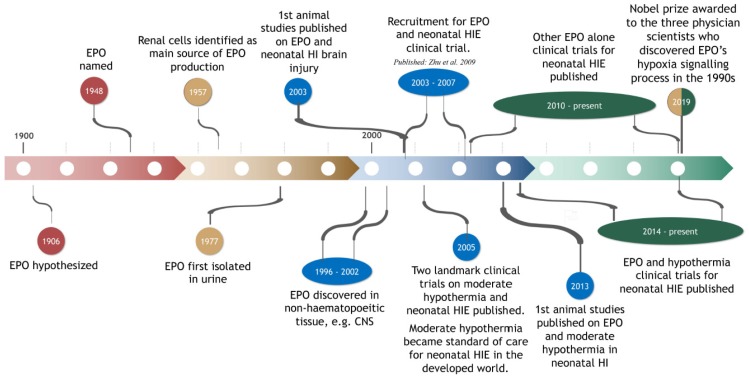
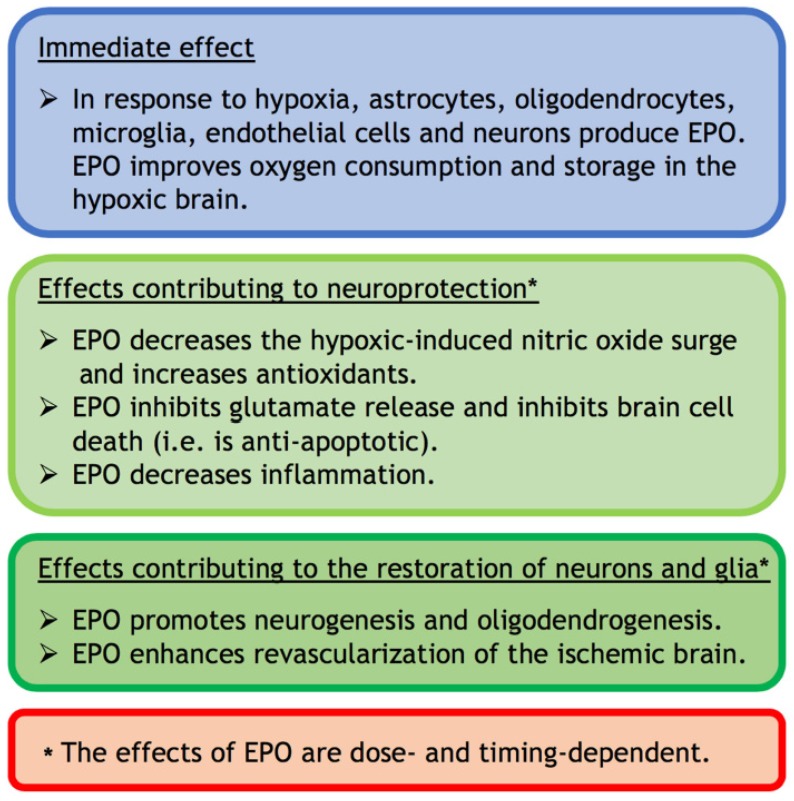
Perinatal hypoxic-ischemic encephalopathy (HIE) remains a major cause of morbidity and mortality. Moderate hypothermia (33.5 °C) is currently the sole established standard treatment. However, there are a large number of infants for whom this therapy is ineffective. This inspired global research to find neuroprotectants to potentiate the effect of moderate hypothermia. Here we examine erythropoietin (EPO) as a prominent candidate. Neonatal animal studies show that immediate, as well as delayed, treatment with EPO post-injury, can be neuroprotective and/or neurorestorative. The observed improvements of EPO therapy were generally not to the level of control uninjured animals, however. This suggested that combining EPO treatment with an adjunct therapeutic strategy should be researched. Treatment with EPO plus hypothermia led to less cerebral palsy in a non-human primate model of perinatal asphyxia, leading to clinical trials. A recent Phase II clinical trial on neonatal infants with HIE reported better 12-month motor outcomes for treatment with EPO plus hypothermia compared to hypothermia alone. Hence, the effectiveness of combined treatment with moderate hypothermia and EPO for neonatal HIE currently looks promising. The outcomes of two current clinical trials on neurological outcomes at 18-24 months-of-age, and at older ages, are now required. Further research on the optimal dose, onset, and duration of treatment with EPO, and critical consideration of the effect of injury severity and of gender, are also required.
围产期缺氧缺血性脑病 (HIE) 仍然是发病率和死亡率的主要原因。目前,亚低温(33.5°C)是唯一公认的标准治疗方法。然而,有大量婴儿对这种治疗方法无效。这激发了全球研究寻找神经保护剂来增强亚低温的效果。在这里,我们研究了促红细胞生成素 (EPO) 作为一个突出的候选药物。新生儿动物研究表明,EPO 立即和延迟治疗损伤后,可以起到神经保护和/或神经修复作用。然而,EPO 治疗观察到的改善程度通常达不到未受伤动物的水平。这表明应该研究将 EPO 治疗与辅助治疗策略相结合。在围产期窒息的非人灵长类动物模型中,EPO 加低温治疗导致脑瘫的发生率降低,从而开展了临床试验。最近一项关于患有 HIE 的新生儿的 II 期临床试验报告称,与单独低温治疗相比,EPO 加低温治疗的 12 个月运动结果更好。因此,目前看来,联合使用亚低温和 EPO 治疗新生儿 HIE 是有效的。现在需要两项关于 18-24 个月和更大年龄的神经发育结局的临床试验的结果。还需要进一步研究 EPO 的最佳剂量、起始时间和治疗持续时间,以及仔细考虑损伤严重程度和性别对 EPO 的影响。