Department of Plant Sciences and Plant Pathology, Montana State University, Bozeman, MT 59717, USA.
Department of Microbiology and Immunology, Montana State University, Bozeman, MT 59717, USA.
Viruses. 2020 Feb 22;12(2):245. doi: 10.3390/v12020245.
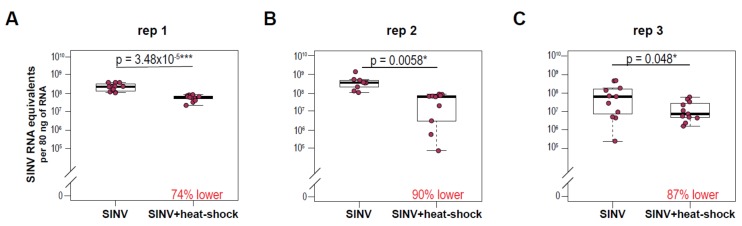
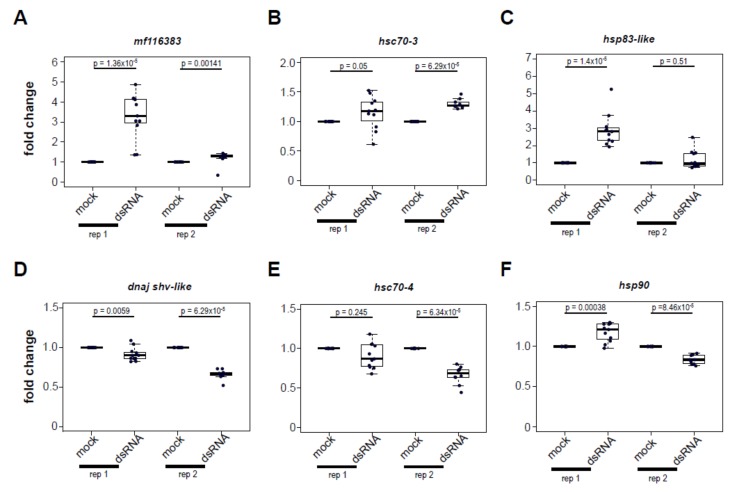
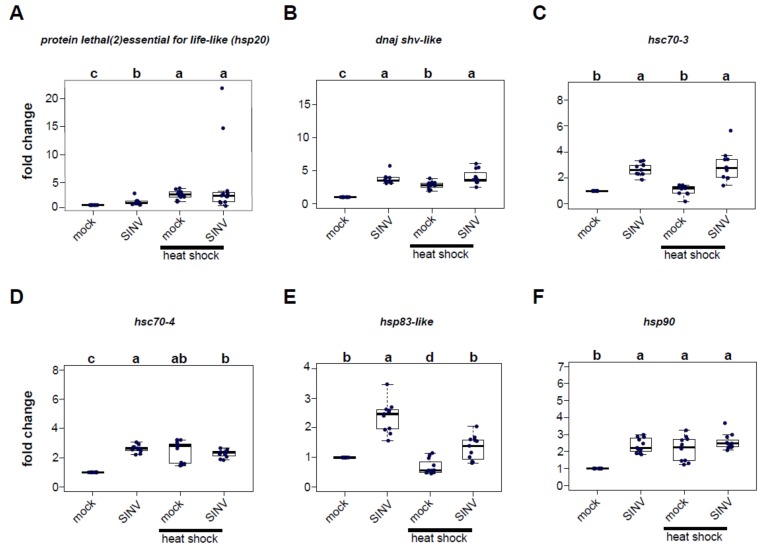
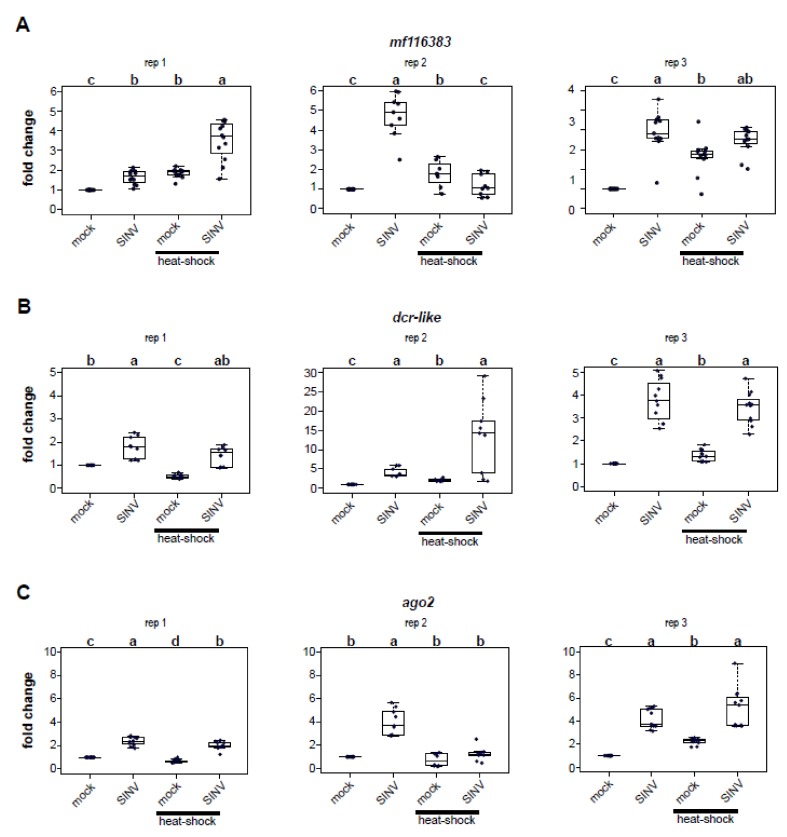
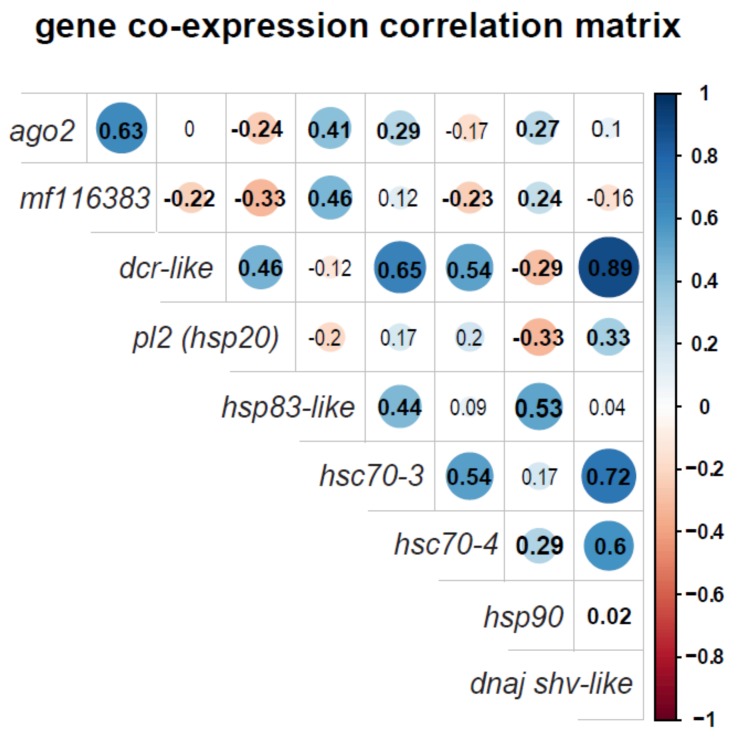
Honey bees () are an agriculturally important pollinator species that live in easily managed social groups (i.e., colonies). Unfortunately, annual losses of honey bee colonies in many parts of the world have reached unsustainable levels. Multiple abiotic and biotic stressors, including viruses, are associated with individual honey bee and colony mortality. Honey bees have evolved several antiviral defense mechanisms including conserved immune pathways (e.g., Toll, Imd, JAK/STAT) and dsRNA-triggered responses including RNA interference and a non-sequence specific dsRNA-mediated response. In addition, transcriptome analyses of virus-infected honey bees implicate an antiviral role of stress response pathways, including the heat shock response. Herein, we demonstrate that the heat shock response is antiviral in honey bees. Specifically, heat-shocked honey bees (i.e., 42 °C for 4 h) had reduced levels of the model virus, Sindbis-GFP, compared with bees maintained at a constant temperature. Virus-infection and/or heat shock resulted in differential expression of six heat shock protein encoding genes and three immune genes, many of which are positively correlated. The heat shock protein encoding and immune gene transcriptional responses observed in virus-infected bees were not completely recapitulated by administration of double stranded RNA (dsRNA), a virus-associated molecular pattern, indicating that additional virus-host interactions are involved in triggering antiviral stress response pathways.
蜜蜂是农业中重要的传粉者,生活在易于管理的社会群体(即蜂群)中。不幸的是,世界上许多地方的蜜蜂群每年都有大量死亡,达到了不可持续的水平。包括病毒在内的多种非生物和生物胁迫因子与单个蜜蜂和蜂群的死亡率有关。蜜蜂已经进化出几种抗病毒防御机制,包括保守的免疫途径(如 Toll、Imd、JAK/STAT)和 dsRNA 触发的反应,包括 RNA 干扰和非序列特异性 dsRNA 介导的反应。此外,对感染病毒的蜜蜂的转录组分析表明,应激反应途径(包括热休克反应)具有抗病毒作用。在此,我们证明热休克反应在蜜蜂中具有抗病毒作用。具体来说,与保持在恒定温度的蜜蜂相比,热休克处理的蜜蜂(即 42°C 处理 4 小时)中模型病毒 Sindbis-GFP 的水平降低。病毒感染和/或热休克导致六种热休克蛋白编码基因和三种免疫基因的差异表达,其中许多基因呈正相关。在感染病毒的蜜蜂中观察到的热休克蛋白编码基因和免疫基因的转录反应不能完全通过双链 RNA(dsRNA)(一种与病毒相关的分子模式)的给药来重现,这表明其他病毒-宿主相互作用参与触发抗病毒应激反应途径。