Bos Kelly, Dongelmans Dave A, Greuters Sjoerd, Kamps Gert-Jan, van der Laan Maarten J
Department of Surgery, Amsterdam UMC-Locatie AMC, Amsterdam, North Holland, The Netherlands
Department of Intensive Care Medicine, Amsterdam UMC-Location AMC, Amsterdam, North Holland, The Netherlands.
BMJ Open Qual. 2020 Feb;9(1). doi: 10.1136/bmjoq-2019-000739.
The aim of this study was to evaluate the current status of handling and learning from sentinel events (SEs) in Dutch academic hospitals and to develop a basis for the first steps in a joint and transparent approach to improve learning from SEs.
Survey by the Netherlands Federation of University Medical Centres (NFU) as part of the project 'Quality-based Governance'.
All eight Dutch University Medical Centres (UMCs).
Three methods are used to identify the root cause of SEs: the Systematic Incident Reconstruction and Evaluation, Prevention and Recovery Information System for Monitoring and Analysis or TRIPOD method. Experts with different backgrounds are involved in the analysis of SEs. UMCs have different policies regarding the selection of recommendations for implementation. Some UMCs implement all recommendations formulated by the analysis team and in some UMCs the head of the involved department selects recommendations for implementation. No predetermined criteria have been established for this selection. Most UMCs confirm that similar SEs reoccur, which might be due to the quality of the analysis of the SEs or the quality of the recommendations.
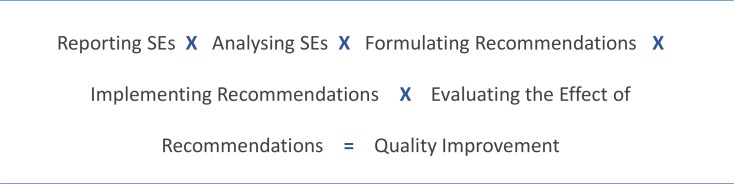
There is a large variety in handling SEs in Dutch academic hospitals and standards for the selection of recommendations are lacking. A next step to decrease the number of (similar) SEs lies in a joint and transparent approach to objectively assess recommendations and further define strategies for successful implementation. Selecting high-quality recommendations for implementation has the potential to lead to a decrease in the number of (similar) SEs and increase in the quality and safety of Dutch healthcare.
本研究旨在评估荷兰学术医院对警讯事件(SEs)的处理现状以及从中学习的情况,并为采取联合且透明的方法来改进从警讯事件中学习奠定基础,以迈出第一步。
荷兰大学医学中心联合会(NFU)开展的一项调查,作为“基于质量的治理”项目的一部分。
荷兰所有八所大学医学中心(UMCs)。
采用三种方法来确定警讯事件的根本原因:系统事件重建与评估、预防及恢复监测与分析信息系统(PRISMA)或TRIPOD方法。不同背景的专家参与警讯事件分析。各大学医学中心在选择实施建议方面有不同政策。一些大学医学中心实施分析团队制定的所有建议,而在一些大学医学中心,相关部门负责人选择实施建议。在选择建议时未设定预先确定的标准。大多数大学医学中心确认类似的警讯事件会再次发生,这可能是由于警讯事件分析的质量或建议的质量所致。
荷兰学术医院在处理警讯事件方面存在很大差异,且缺乏选择建议的标准。减少(类似)警讯事件数量的下一步在于采取联合且透明的方法,以客观评估建议并进一步确定成功实施的策略。选择高质量的建议予以实施有可能减少(类似)警讯事件的数量,并提高荷兰医疗保健的质量和安全性。