Institute of Biological, Environmental and Rural Sciences (IBERS), Aberystwyth University, Plas Gogerddan, Aberystwyth, UK.
Department of Plant Biotechnology and Genetics, Ghent University, Ghent, Belgium.
J Exp Bot. 2020 Apr 23;71(8):2451-2463. doi: 10.1093/jxb/eraa092.
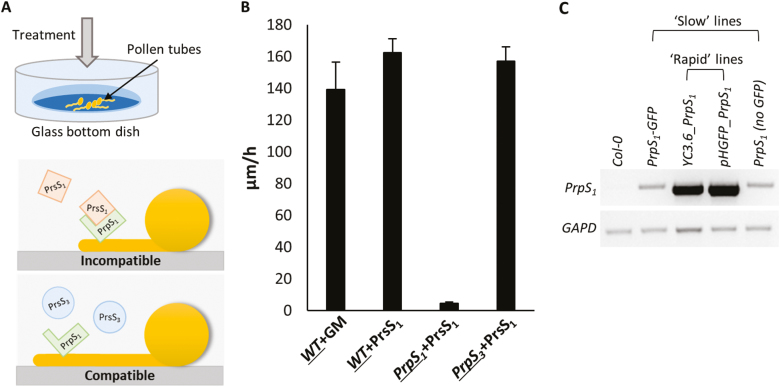
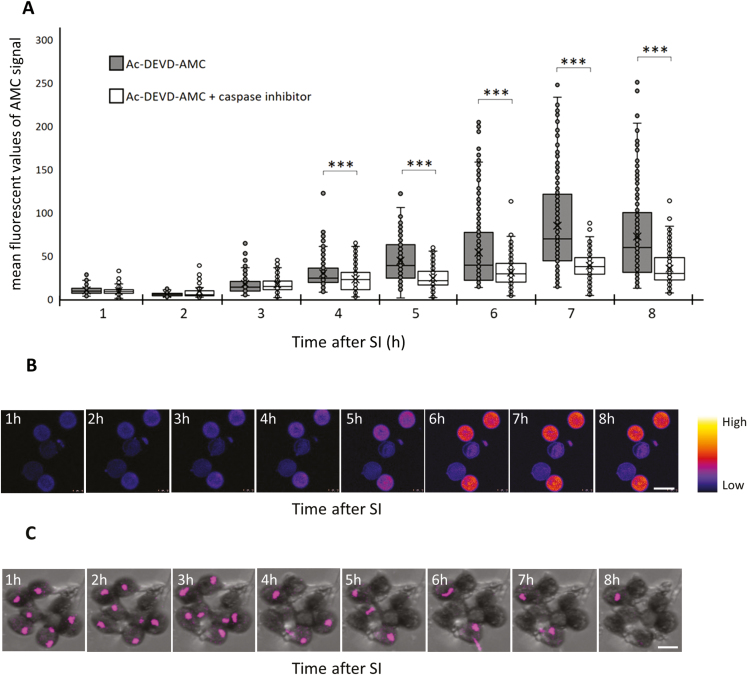
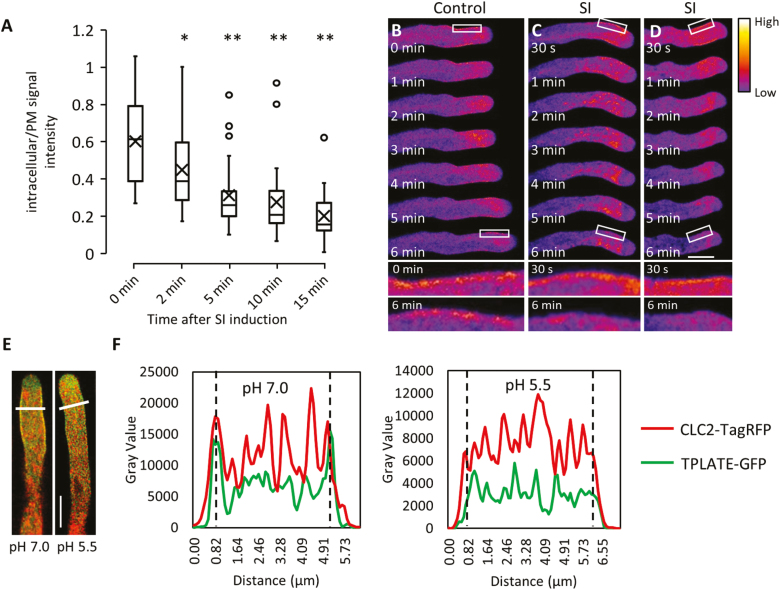
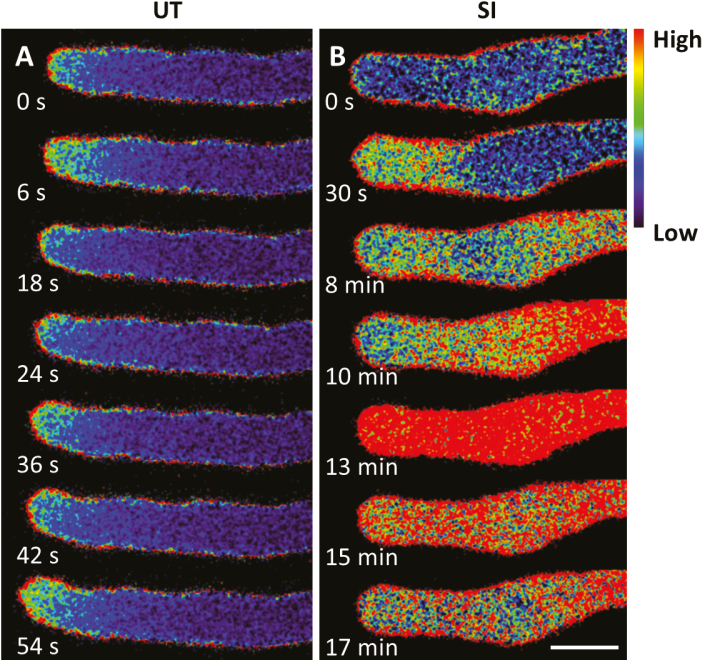
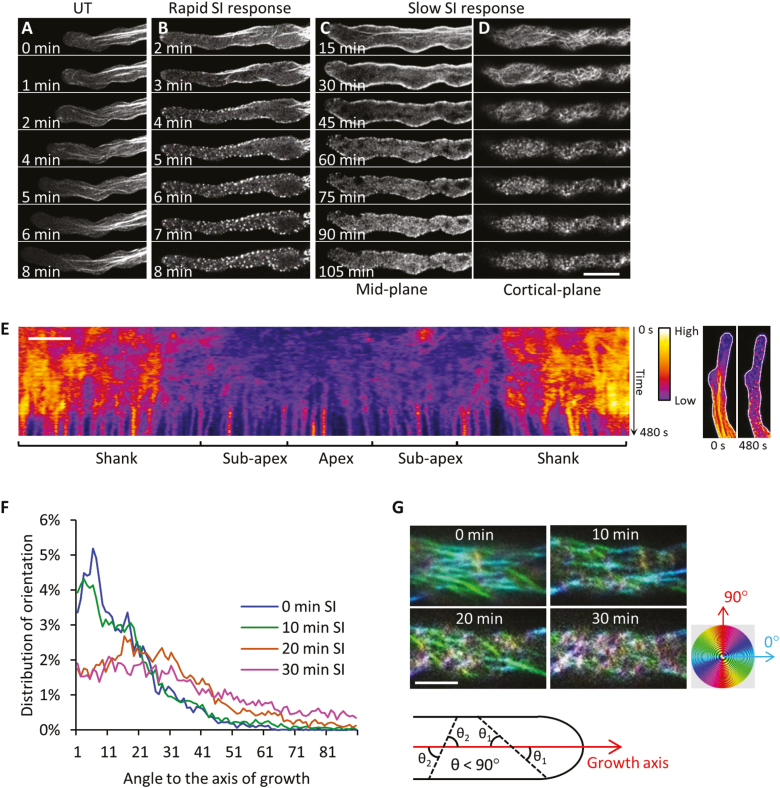
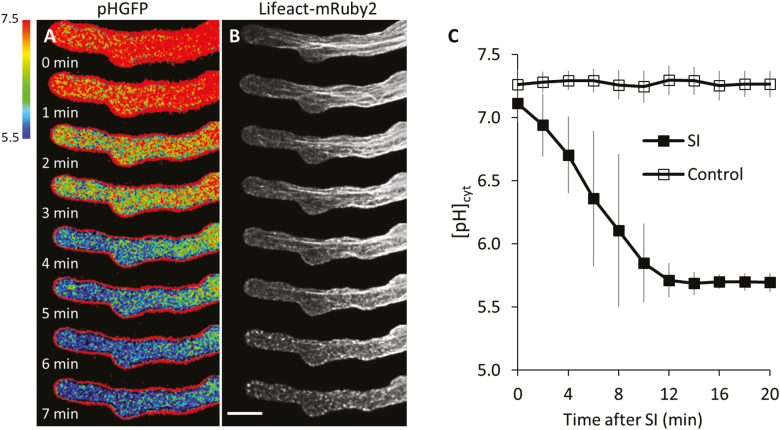
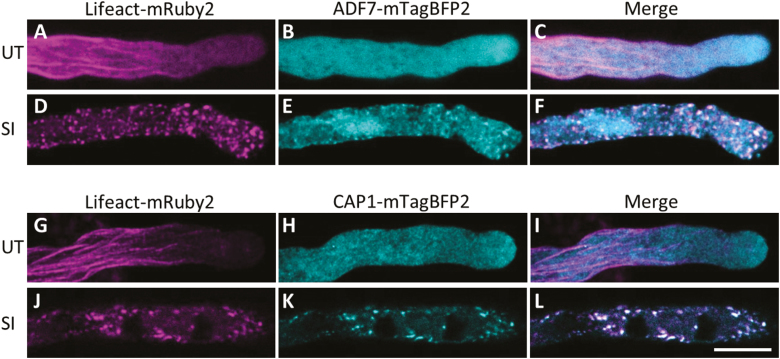
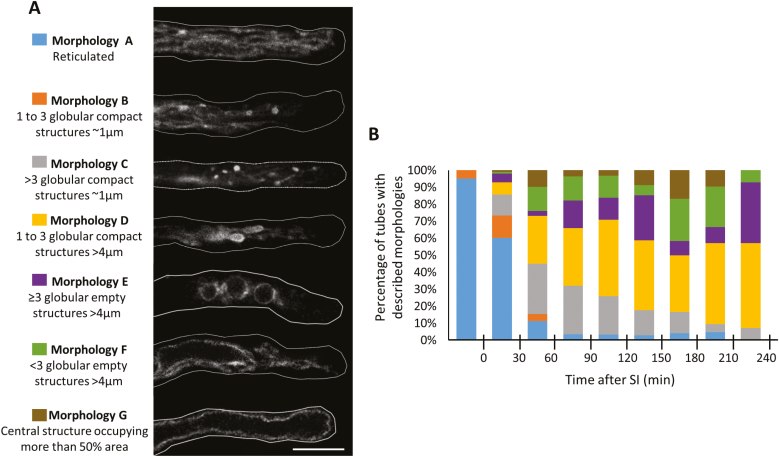
Pollen tube growth is essential for plant reproduction. Their rapid extension using polarized tip growth provides an exciting system for studying this specialized type of growth. Self-incompatibility (SI) is a genetically controlled mechanism to prevent self-fertilization. Mechanistically, one of the best-studied SI systems is that of Papaver rhoeas (poppy). This utilizes two S-determinants: stigma-expressed PrsS and pollen-expressed PrpS. Interaction of cognate PrpS-PrsS triggers a signalling network, causing rapid growth arrest and programmed cell death (PCD) in incompatible pollen. We previously demonstrated that transgenic Arabidopsis thaliana pollen expressing PrpS-green fluorescent protein (GFP) can respond to Papaver PrsS with remarkably similar responses to those observed in incompatible Papaver pollen. Here we describe recent advances using these transgenic plants combined with genetically encoded fluorescent probes to monitor SI-induced cellular alterations, including cytosolic calcium, pH, the actin cytoskeleton, clathrin-mediated endocytosis (CME), and the vacuole. This approach has allowed us to study the SI response in depth, using multiparameter live-cell imaging approaches that were not possible in Papaver. This lays the foundations for new opportunities to elucidate key mechanisms involved in SI. Here we establish that CME is disrupted in self-incompatible pollen. Moreover, we reveal new detailed information about F-actin remodelling in pollen tubes after SI.
花粉管的生长对于植物繁殖至关重要。它们利用极化的顶端生长进行快速延伸,为研究这种特殊类型的生长提供了一个令人兴奋的系统。自交不亲和(SI)是一种遗传控制的机制,可防止自花授粉。从机制上讲,研究得最好的 SI 系统之一是罂粟(poppy)。它利用两个 S 决定因素:柱头表达的 PrsS 和花粉表达的 PrpS。同源 PrpS-PrsS 的相互作用触发信号网络,导致不亲和花粉中快速生长停止和程序性细胞死亡(PCD)。我们之前证明,表达 PrpS-绿色荧光蛋白(GFP)的转基因拟南芥花粉可以响应罂粟 PrsS,并表现出与不亲和罂粟花粉中观察到的非常相似的反应。在这里,我们描述了使用这些转基因植物结合遗传编码荧光探针的最新进展,以监测 SI 诱导的细胞变化,包括细胞质钙、pH 值、肌动蛋白细胞骨架、网格蛋白介导的内吞作用(CME)和液泡。这种方法使我们能够使用多参数活细胞成像方法深入研究 SI 反应,而在罂粟中这是不可能的。这为阐明 SI 中涉及的关键机制提供了新的机会。在这里,我们确定 CME 在自交不亲和花粉中被破坏。此外,我们揭示了 SI 后花粉管中 F-肌动蛋白重塑的新详细信息。