Lu Yuwei, Dong Lili, Zhang Tong, Xu Wenhai
School of Information Science & Technology, Dalian Maritime University,1 Linghai Road, Ganjingzi District, Dalian 116033, China.
Sensors (Basel). 2020 Feb 24;20(4):1237. doi: 10.3390/s20041237.
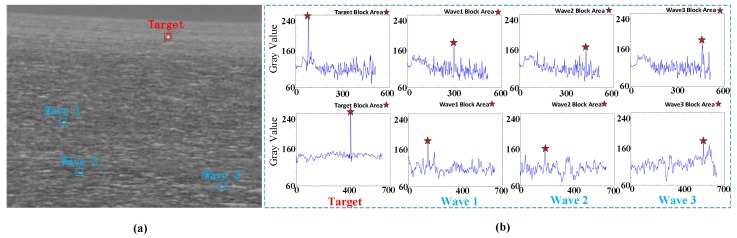
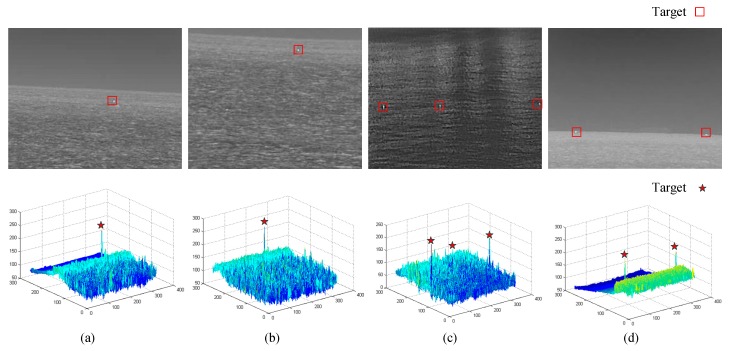
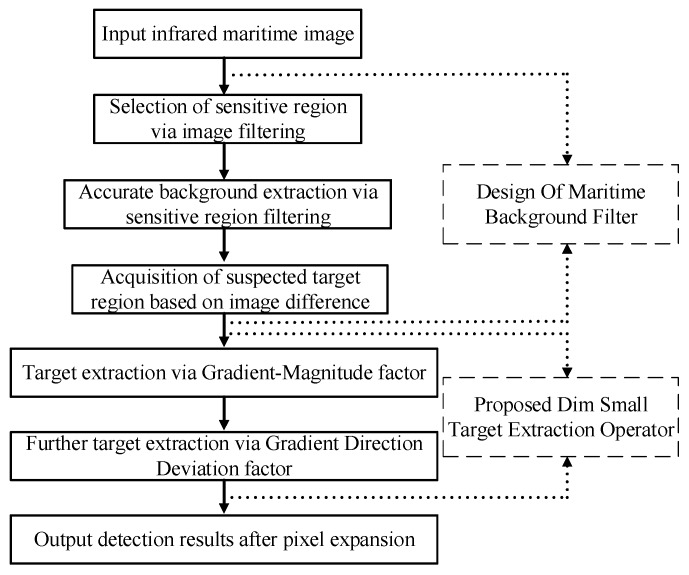
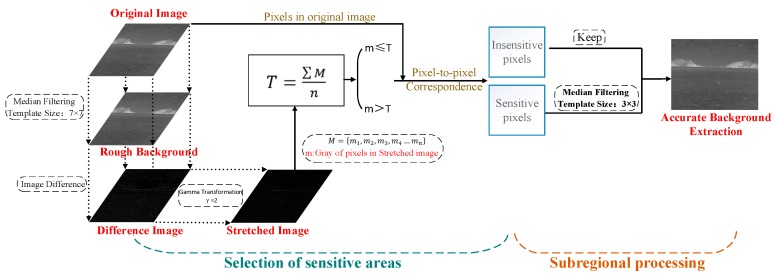
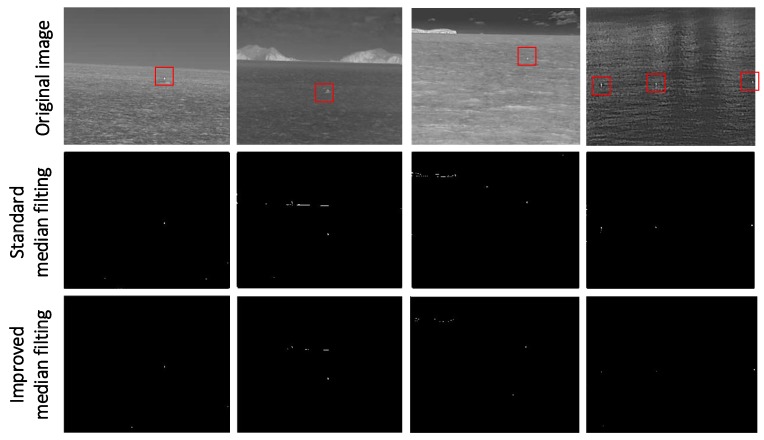
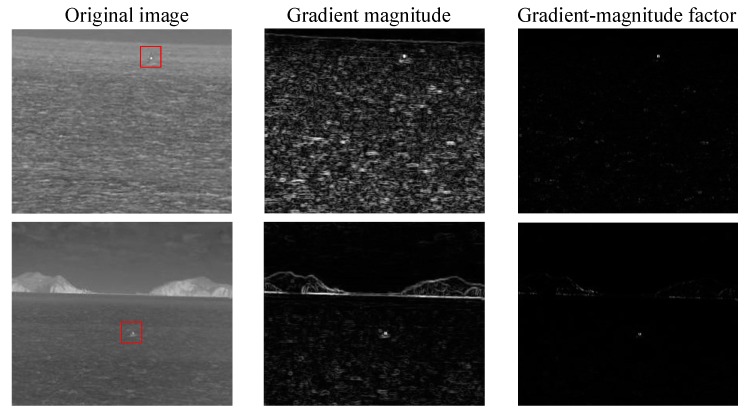
Infrared maritime target detection is the key technology of maritime target search systems. However, infrared images generally have the defects of low signal-to-noise ratio and low resolution. At the same time, the maritime environment is complicated and changeable. Under the interference of islands, waves and other disturbances, the brightness of small dim targets is easily obscured, which makes them difficult to distinguish. This is difficult for traditional target detection algorithms to deal with. In order to solve these problems, through the analysis of infrared maritime images under a variety of sea conditions including small dim targets, this paper concludes that in infrared maritime images, small targets occupy very few pixels, often do not have any edge contour information, and the gray value and contrast values are very low. The background such as island and strong sea wave occupies a large number of pixels, with obvious texture features, and often has a high gray value. By deeply analyzing the difference between the target and the background, this paper proposes a detection algorithm (SRGM) for infrared small dim targets under different maritime background. Firstly, this algorithm proposes an efficient maritime background filter for the common background in the infrared maritime image. Firstly, the median filter based on the sensitive region selection is used to extract the image background accurately, and then the background is eliminated by image difference with the original image. In addition, this article analyzes the differences in gradient features between strong interference caused by the background and targets, proposes a small dim target extraction operator with two analysis factors that fit the target features perfectly and combines the adaptive threshold segmentation to realize the accurate extraction of the small dim target. The experimental results show that compared with the current popular small dim target detection algorithms, this paper has better performance for target detection in various maritime environments.
红外海面目标检测是海面目标搜索系统的关键技术。然而,红外图像一般存在信噪比低、分辨率低的缺陷。同时,海洋环境复杂多变。在岛屿、海浪等干扰因素的影响下,弱小目标的亮度很容易被掩盖,难以区分。这给传统目标检测算法带来了难题。为了解决这些问题,通过对包含弱小目标的多种海况下的红外海面图像进行分析,本文得出在红外海面图像中,小目标占据的像素极少,通常没有任何边缘轮廓信息,灰度值和对比度都很低。岛屿和强海浪等背景占据大量像素,具有明显的纹理特征,且灰度值通常较高。通过深入分析目标与背景的差异,本文提出了一种针对不同海面背景下红外弱小目标的检测算法(SRGM)。首先,该算法针对红外海面图像中的常见背景提出了一种高效的海面背景滤波器。首先,基于敏感区域选择的中值滤波器被用于精确提取图像背景,然后通过与原始图像的图像差分来消除背景。此外,本文分析了背景造成的强干扰与目标之间梯度特征的差异,提出了一种具有两个分析因子的弱小目标提取算子,该算子与目标特征完美契合,并结合自适应阈值分割实现了弱小目标的准确提取。实验结果表明,与当前流行的弱小目标检测算法相比,本文算法在各种海洋环境下的目标检测中具有更好的性能。