Anwar Sumadi Lukman, Tanjung Dewi Sahfitri, Fitria Meutia Srikandi, Kartika Aprilia Indra, Sari Dwi Nur Indah, Rakhmina Dinna, Wardana Tirta, Astuti Indwiani, Haryana Sofia Mubarika, Aryandono Teguh
Division of Surgical Oncology - Department of Surgery, Faculty of Medicine, Public Health, and Nursing, Universitas Gadjah Mada, Yogyakarta, Indonesia.
Graduate Program, Faculty of Medicine, Public Health, and Nursing, Universitas Gadjah Mada, Yogyakarta, Indonesia.
Asian Pac J Cancer Prev. 2020 Feb 1;21(2):491-497. doi: 10.31557/APJCP.2020.21.2.491.
Breast cancer incidence rates have been continuously increasing in majority nations with significant higher portion of cancer-related mortality in low- and middle-income countries. Developing new biomarker is an emerging field in the breast cancer research. Application of a promising minimally invasive biomarker, circulating microRNA, for additional improvement of diagnosis, prognosis, and therapeutic monitoring in breast cancer is not well corroborated.
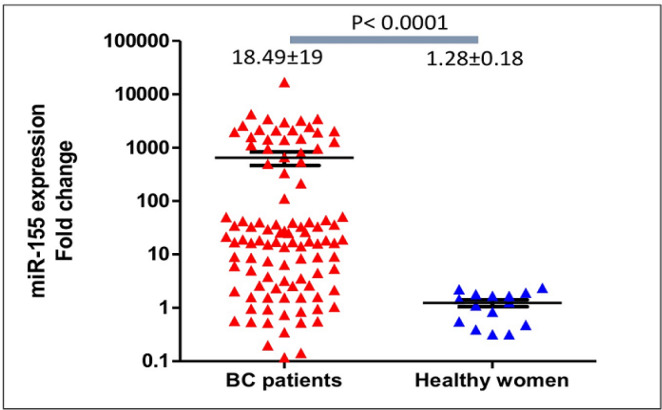
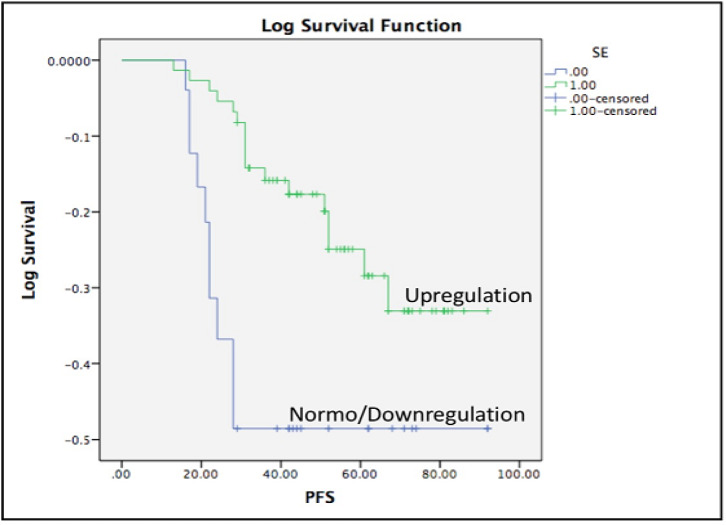
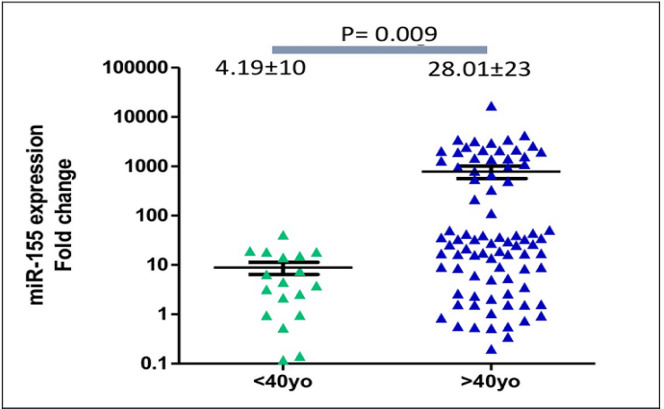
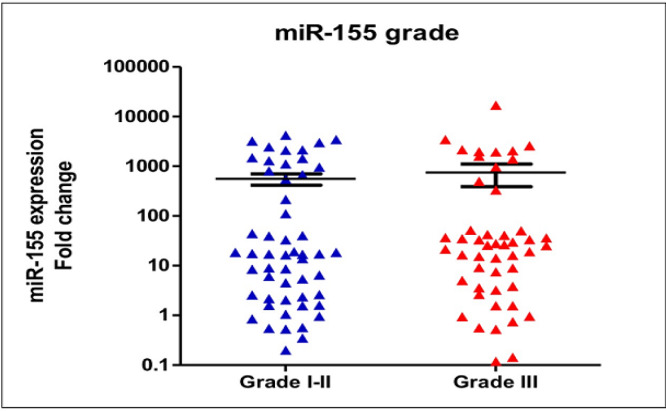
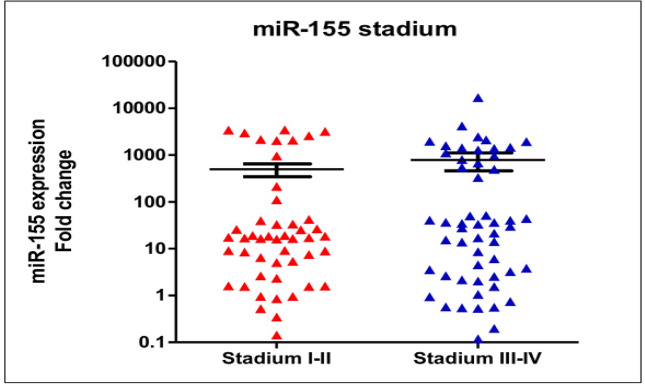
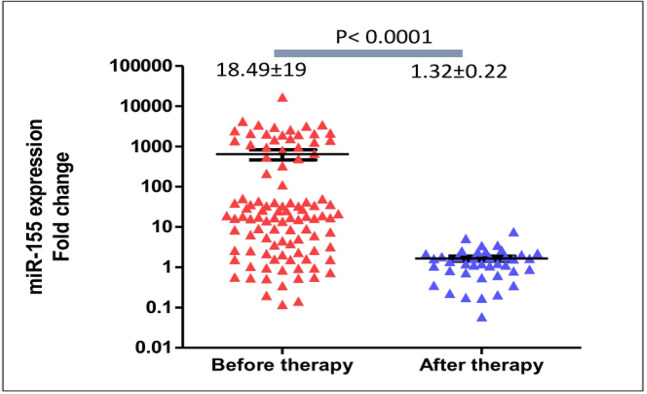
To uncover the potential use of circulating miR-155 expression as a clinical biomarker in breast cancer, we analyzed 102 breast cancer patients at diagnosis and after treatment as well as 15 healthy women. Total RNA was isolated from patient's plasma and expression of circulating miR-155 was measured with quantitative reverse transcription polymerase chain reaction (qRT-PCR). The expression levels of circulating miR-155 were compared according to the effect of treatment, clinicopathological variables, and progression-free survival. Results: In comparison to the healthy women, expression of circulating miR-155 levels were significantly higher (medians were 18.49±19 and 1.28±0.18, respectively; p<0.0001). The expression levels of miR-155 were significantly diminished after patients completed surgery and chemotherapy (medians were 18.49±19 at diagnosis and 1.32±0.22 after treatment, respectively; p<0.0001). Patients older than 40 years old expressed higher circulating miR-155 than those younger than 40 years-old (medians were 28.92±22 and 4.19±2.49, respectively; p<0.0001). Circulating miR-155 was significantly higher in patients with tumors larger than 5 cm (44.27±2.6 vs 9.17±6.9, p=0.03). MiR-155 expression levels were not significantly different according to various tumor grades, subtypes, and clinical stages. Although longer follow-up is required, progression-free survivals of patients with upregulation of circulating miR-155 were significantly longer (mean survivals were 77 and 65 weeks, Log-rank (Mantel-Cox) test p=0.038).
Expression of circulating miR-155 expression was significantly elevated in breast cancer patients and was decreased after treatment. Therefore, circulating miR-155 is potentially applicable as diagnostic therapeutic monitoring marker in breast cancer.
.
在大多数国家,乳腺癌发病率持续上升,在低收入和中等收入国家,癌症相关死亡率所占比例显著更高。开发新的生物标志物是乳腺癌研究中的一个新兴领域。一种有前景的微创生物标志物——循环微RNA,在乳腺癌诊断、预后及治疗监测方面进一步改善的应用尚未得到充分证实。
为揭示循环miR-155表达作为乳腺癌临床生物标志物的潜在用途,我们分析了102例乳腺癌患者诊断时及治疗后的情况,以及15名健康女性。从患者血浆中分离总RNA,采用定量逆转录聚合酶链反应(qRT-PCR)检测循环miR-155的表达。根据治疗效果、临床病理变量和无进展生存期比较循环miR-155的表达水平。结果:与健康女性相比,循环miR-155水平的表达显著更高(中位数分别为18.49±19和1.28±0.18;p<0.0001)。患者完成手术和化疗后,miR-155的表达水平显著降低(诊断时中位数为18.49±19,治疗后为1.32±0.22;p<0.0001)。40岁以上患者循环miR-155的表达高于40岁以下患者(中位数分别为28.92±22和4.19±2.49;p<0.0001)。肿瘤大于5 cm的患者循环miR-155显著更高(44.27±2.6对9.17±6.9,p=0.03)。根据不同的肿瘤分级、亚型和临床分期,miR-155表达水平无显著差异。虽然需要更长时间的随访,但循环miR-155上调患者的无进展生存期显著更长(平均生存期分别为77周和65周,对数秩(Mantel-Cox)检验p=0.038)。
乳腺癌患者循环miR-155表达显著升高,治疗后降低。因此,循环miR-155有可能作为乳腺癌诊断治疗监测标志物。