Institute of Anatomy and Experimental Morphology, University Medical Center Hamburg-Eppendorf, Martinistrasse 52, 20246 Hamburg, Germany.
Institute of Clinical Biochemistry, Hannover Medical School, Carl-Neuberg-Str. 1, 30625 Hannover, Germany.
Glycobiology. 2020 Aug 20;30(9):695-709. doi: 10.1093/glycob/cwaa019.
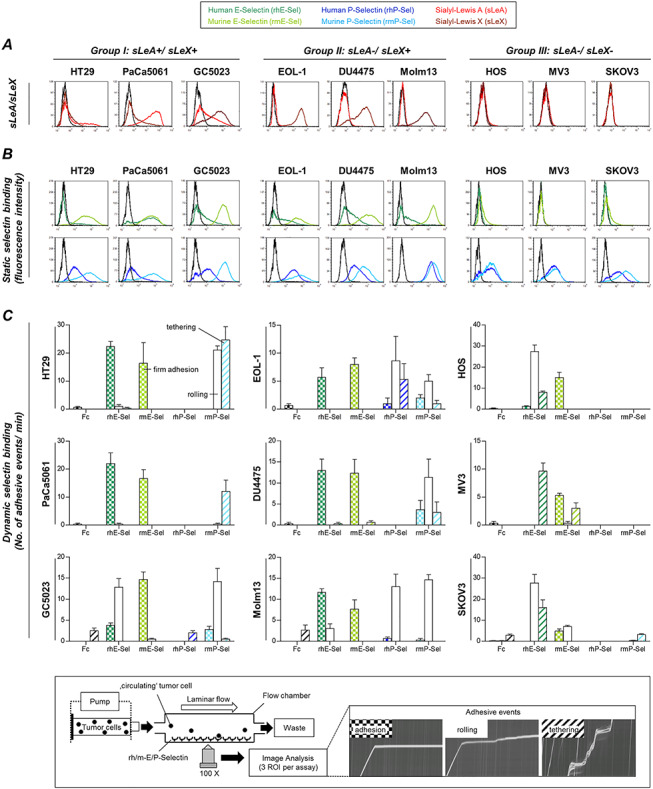
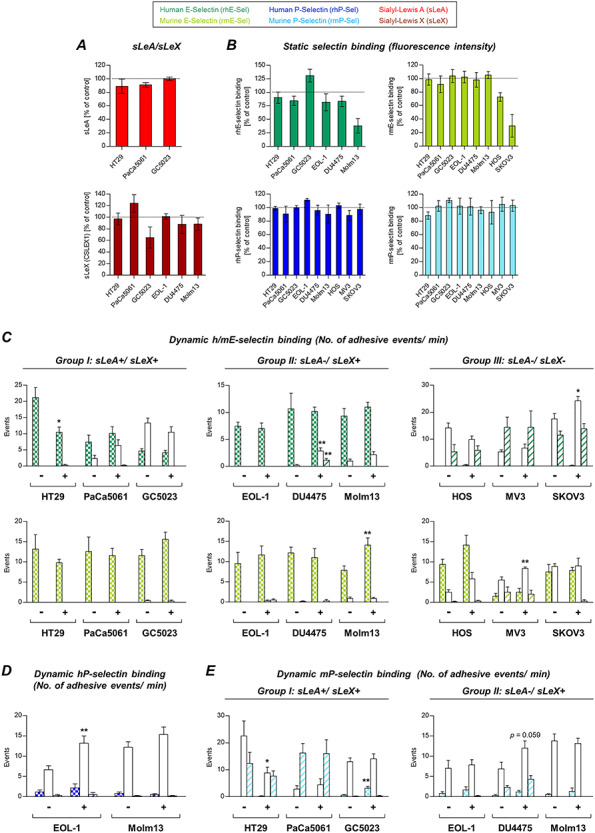
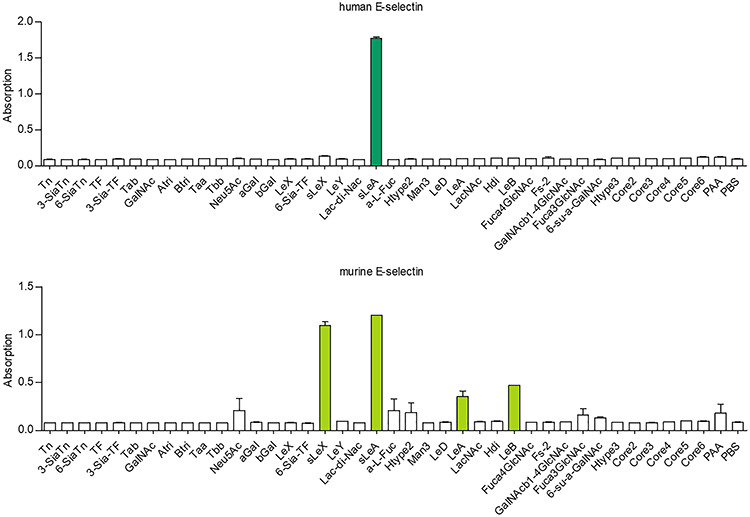
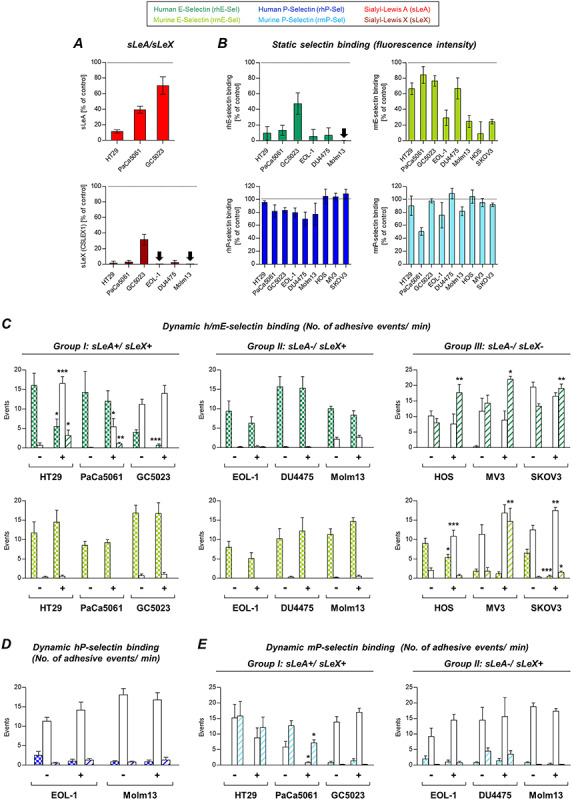
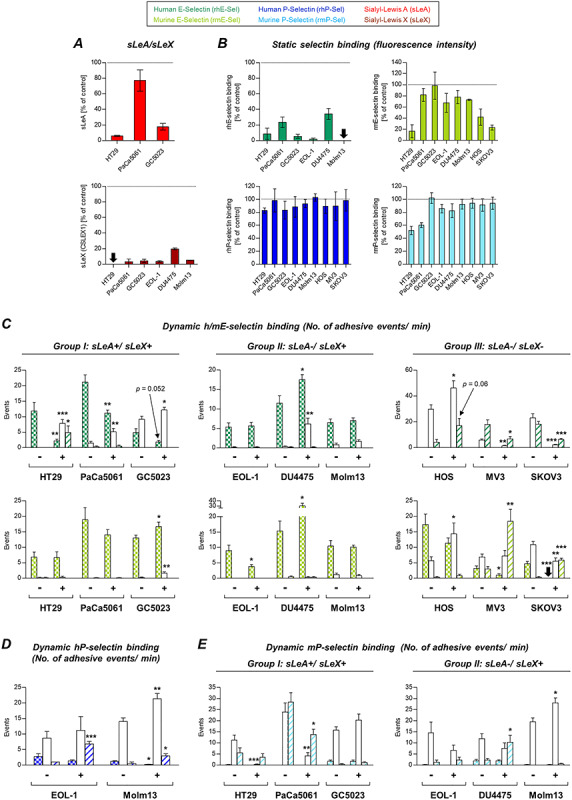
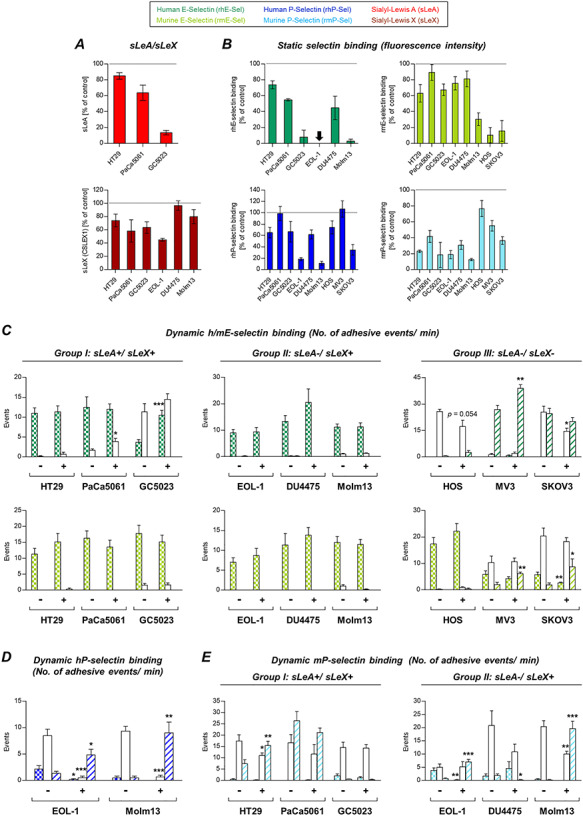
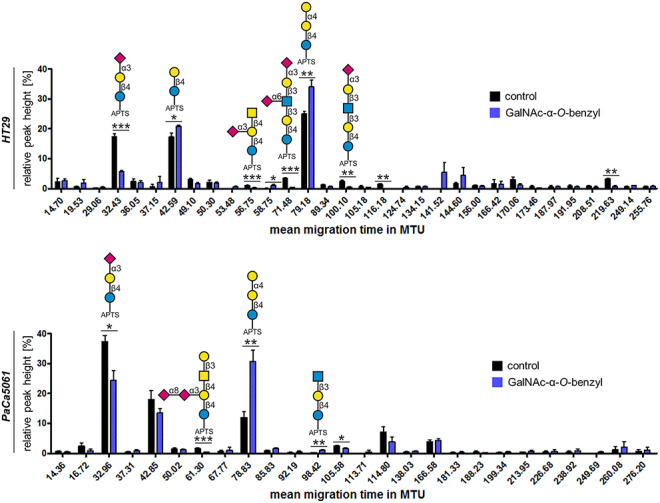
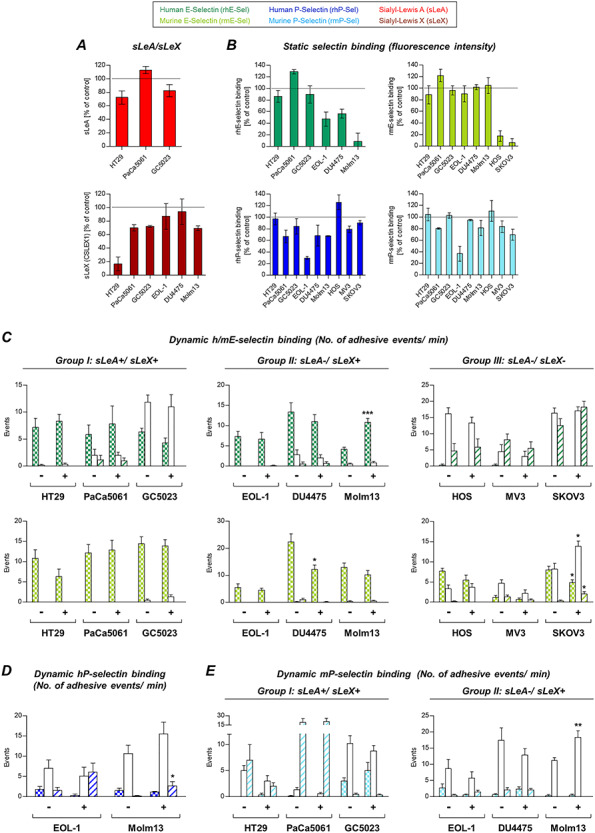
Endothelial E- and P-selectins promote metastasis formation by interacting with sialyl-Lewis X and A (sLeX/sLeA) on circulating tumor cells. This interaction precedes extravasation and can take place under dynamic and static conditions. Metastasis formation is often studied in xenograft models. However, it is unclear whether species differences exist in the ligand specificity of human (h) vs. murine (m) selectins and whether different ligands are functional under dynamic vs. static conditions. We systematically compared the h vs. m E- and P-selectin (ESel/PSel) binding of a range of human tumor cells under dynamic vs. static conditions. The tumor cells were categorized by their sLeA/X status (sLeA+/sLeX+, sLeA-/sLeX+ and sLeA-/sLeX-). The general biological nature of the tumor-selectin interaction was analyzed by applying several tumor cell treatments (anti-sLeA/X blockade, neuraminidase, pronase and inhibition of O/N-glycosylation). We observed remarkable differences in the static vs. dynamic interaction of tumor cells with h vs. m ESel/PSel depending on their sLeA/X status. The tumor cell treatments mostly affected either static or dynamic as well as either h- or m-selectin interaction. mESel showed a higher diversity of potential ligands than hESel. Inhibition of O-GalNAc-glycosylation also affected glycosphingolipid synthesis. Summarized, different ligands on human tumor cells are functional under static vs. dynamic conditions and for the interaction with human vs. murine ESel/PSel. Non-canonical selectin ligands lacking the sLeA/X glycan epitopes exist on human tumor cells. These findings have important implications for the current development of glycomimetic, antimetastatic drugs and encourage the development of immunodeficient mice with humanized selectins.
内皮细胞 E- 和 P- 选择素通过与循环肿瘤细胞上的唾液酸化路易斯 X 和 A(sLeX/sLeA)相互作用促进转移形成。这种相互作用发生在血管外渗之前,可以在动态和静态条件下发生。转移形成通常在异种移植模型中进行研究。然而,人类(h)与鼠(m)选择素的配体特异性是否存在种间差异,以及不同的配体在动态与静态条件下是否具有功能尚不清楚。我们系统地比较了动态与静态条件下一系列人肿瘤细胞与 h 与 m E- 和 P- 选择素(ESel/PSel)的结合情况。根据 sLeA/X 状态(sLeA+/sLeX+、sLeA-/sLeX+和 sLeA-/sLeX-)对肿瘤细胞进行分类。通过应用几种肿瘤细胞处理方法(抗 sLeA/X 阻断、神经氨酸酶、蛋白酶和 O/N-糖基化抑制)分析肿瘤-选择素相互作用的一般生物学性质。我们观察到,根据 sLeA/X 状态,肿瘤细胞与 h 与 m ESel/PSel 的静态与动态相互作用存在显著差异。肿瘤细胞处理方法主要影响静态或动态以及 h 或 m 选择素相互作用。mESel 比 hESel 显示出更高多样性的潜在配体。O-GalNAc 糖基化抑制也影响糖脂合成。总之,人肿瘤细胞上的不同配体在静态与动态条件下以及与人类与鼠 E- 和 P- 选择素相互作用中具有功能。人肿瘤细胞上存在缺乏 sLeA/X 聚糖表位的非经典选择素配体。这些发现对当前糖模拟物、抗转移药物的开发具有重要意义,并鼓励开发具有人源化选择素的免疫缺陷小鼠。