Thapa Prakash, Choi Du Hyung, Kim Min Soo, Jeong Seong Hoon
College of Pharmacy, Dongguk University, Gyeonggi 10326, Republic of Korea.
Department of Pharmaceutical Engineering, Inje University, Gyeongnam 50834, Republic of Korea.
Asian J Pharm Sci. 2019 May;14(3):287-304. doi: 10.1016/j.ajps.2018.08.006. Epub 2018 Sep 18.
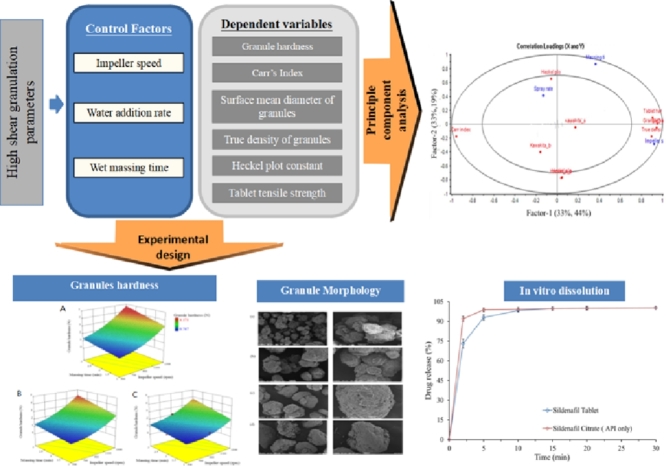
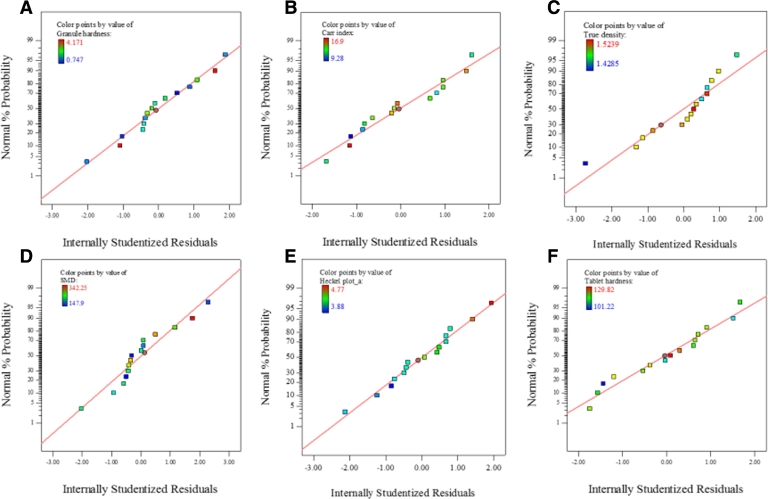
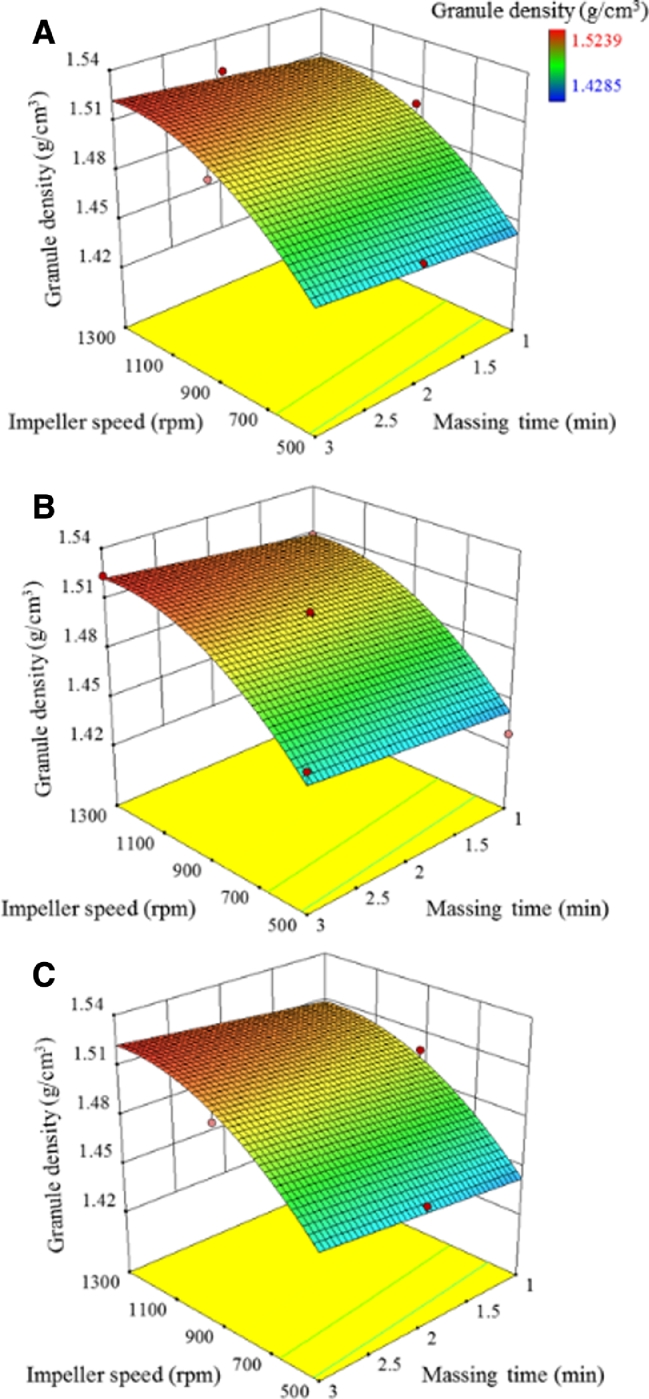
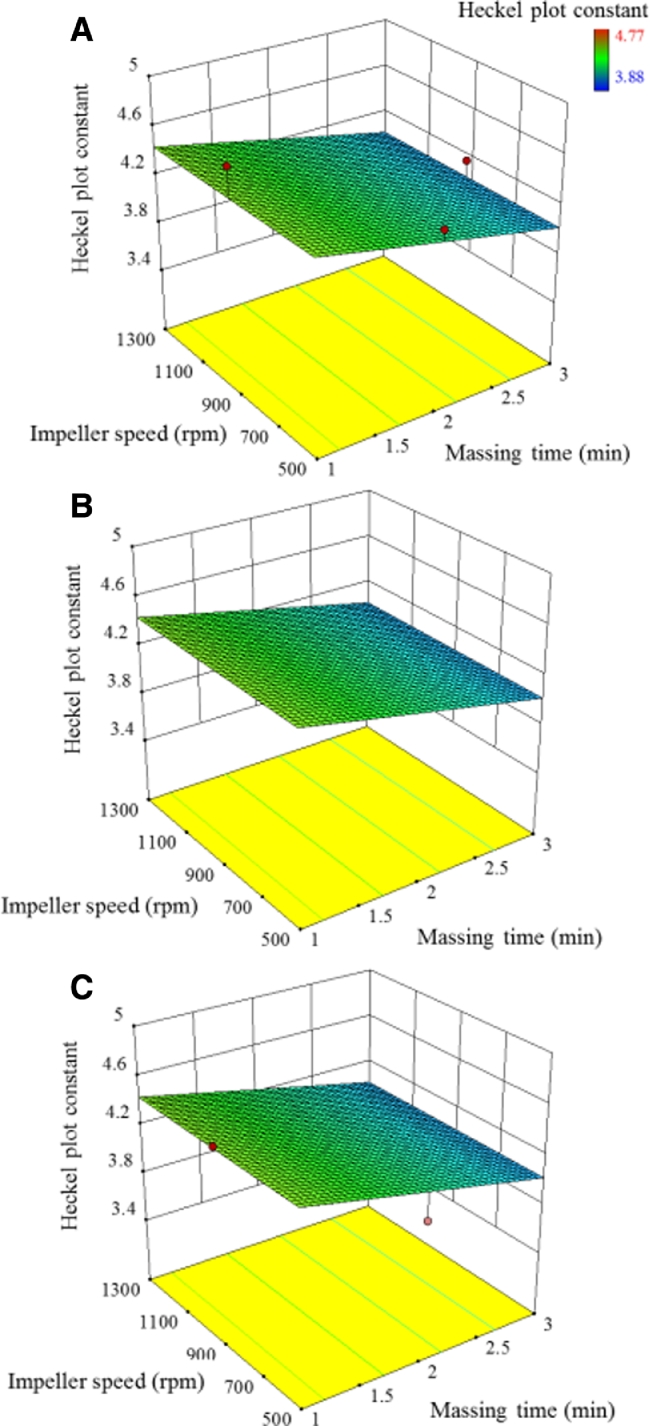
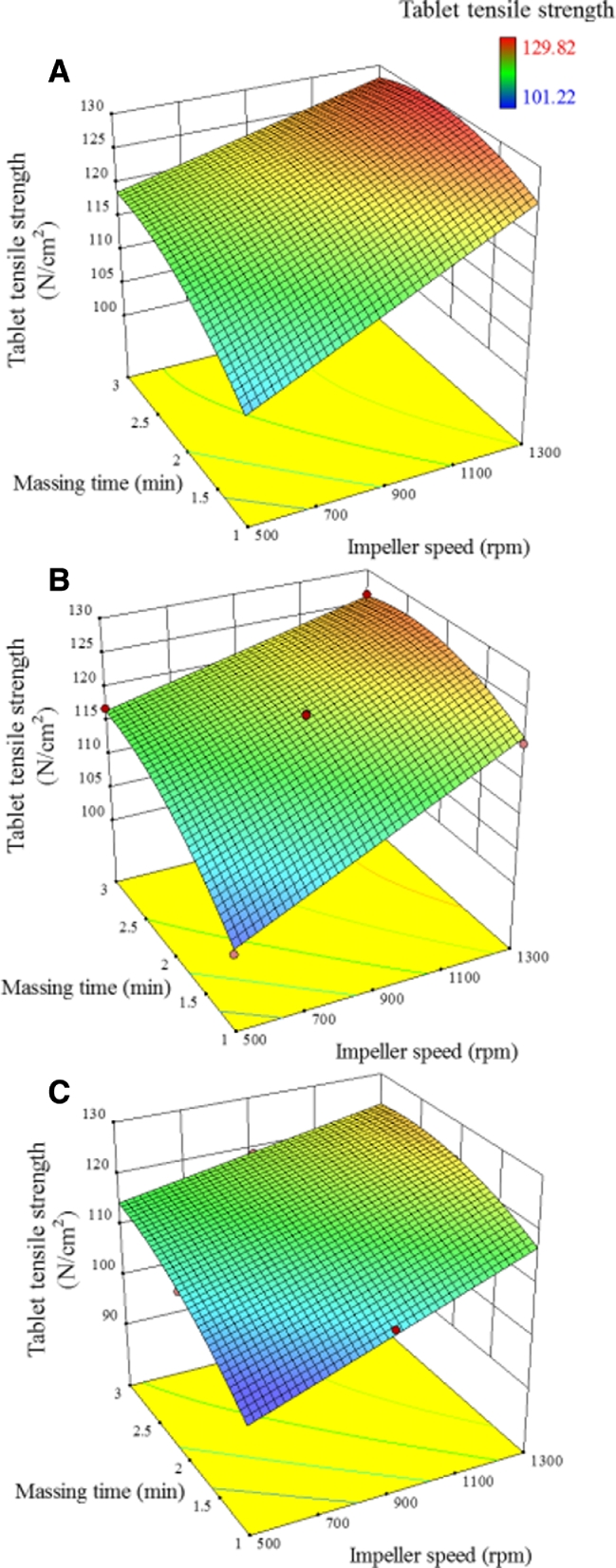
The current study was to understand how process variables of high shear wet granulations affect physical properties of granules and tablets. The knowledge gained was intended to be used for Quality-by-Design based process design and optimization. The variables were selected based on the risk assessment as impeller speed, liquid addition rate, and wet massing time. Formulation compositions were kept constant to minimize their influence on granules properties. Multiple linear regression models were built providing understanding of the impact of each variable on granule hardness, Carr's index, tablet tensile strength, surface mean diameter of granules, and compression behavior. The experimental results showed that the impact of impeller speed was more dominant compared to wet massing time and water addition rate. The results also revealed that quality of granules and tablets could be optimized by adjusting specific process variables (impeller speed 1193 rpm, water spray rate 3.7 ml/min, and wet massing time 2.84 min). Overall desirability was 0.84 suggesting that the response values were closer to the target one. The SEM image of granules showed that spherical and smooth granules produced at higher impeller speed, whereas rough and irregular shape granules at lower speed. Moreover, multivariate data analysis demonstrated that impeller speed and massing time had strong correlation with the granule and tablet properties. In overall, the combined experimental design and principal component analysis approach allowed to better understand the correlation between process variables and granules and tablet attributes.
本研究旨在了解高剪切湿法制粒的工艺变量如何影响颗粒剂和片剂的物理性质。所获得的知识旨在用于基于质量源于设计的工艺设计和优化。基于风险评估选择了叶轮转速、液体添加速率和湿混时间作为变量。保持配方组成恒定以尽量减少其对颗粒性质的影响。建立了多元线性回归模型,以了解每个变量对颗粒硬度、卡尔指数、片剂抗张强度、颗粒表面平均直径和压缩行为的影响。实验结果表明,与湿混时间和加水速率相比,叶轮转速的影响更为显著。结果还表明,通过调整特定工艺变量(叶轮转速1193转/分钟、喷水速率3.7毫升/分钟和湿混时间2.84分钟),可以优化颗粒剂和片剂的质量。总体可取性为0.84,表明响应值更接近目标值。颗粒的扫描电子显微镜图像显示,在较高叶轮转速下产生的颗粒呈球形且表面光滑,而在较低转速下产生的颗粒粗糙且形状不规则。此外,多变量数据分析表明,叶轮转速和湿混时间与颗粒剂和片剂的性质密切相关。总体而言,联合实验设计和主成分分析方法有助于更好地理解工艺变量与颗粒剂和片剂属性之间的相关性。