Food Microbiology, Wageningen University & Research, P.O. Box 17, 6700 AA, Wageningen, The Netherlands.
Dpto. Ingeniería Agronómica, Instituto de Biotecnología Vegetal, Campus de Excelencia Internacional Regional "Campus Mare Nostrum", Escuela Técnica Superior de Ingeniería Agronómica, Universidad Politécnica de Cartagena, Cartagena, Spain.
Sci Rep. 2020 Feb 27;10(1):3656. doi: 10.1038/s41598-020-60571-9.
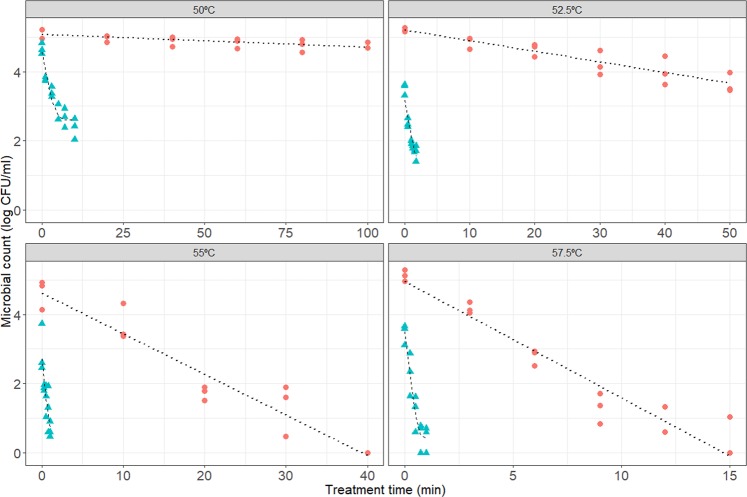
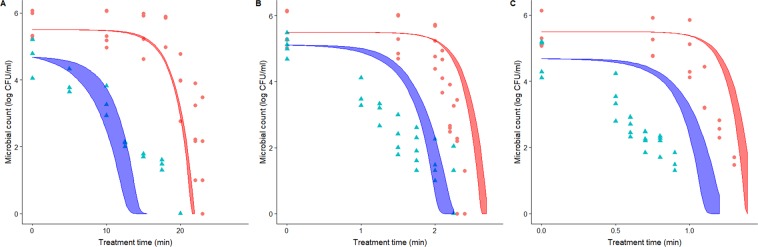
Consumers' demands for ready-to-eat, fresh-like products are on the rise during the last years. This type of products have minimal processing conditions that can enable the survival and replication of pathogenic microorganisms. Among them, Listeria monocytogenes is of special concern, due to its relatively high mortality rate and its ability to replicate under refrigeration conditions. Previous research works have shown that nanoemulsified essential oils in combination with thermal treatments are effective for inactivating L. monocytogenes. However, previous research works were limited to isothermal conditions, whereas actual processing conditions in industry are dynamic. Under dynamic conditions, microorganism can respond unexpectedly to the thermal stress (e.g. adaptation, acclimation or increased sensitivity). In this work, we assess the combination of nanoemulsified D-limonene with thermal treatments under isothermal and dynamic conditions. The nanoemulsion was prepared following an innovative methodology using soya lecithin, a natural compound as well as the essential oil. Under isothermal heating conditions, the addition of the antimicrobial enables a reduction of the treatment time by a factor of 25. For time-varying treatments, dynamic effects were relevant. Treatments with a high heating rate (20 °C/min) are more effective than those with a slow heating rate (1 °C/min). This investigation demonstrates that the addition of nanoemulsified D-limonene can greatly reduce the intensity of the thermal treatments currently applied in the food industry. Hence, it can improve the product quality without impacting its safety.
近年来,消费者对即食、新鲜类产品的需求不断增长。这类产品的加工条件有限,可能导致病原微生物存活和繁殖。其中,单增李斯特菌尤其值得关注,因为它的死亡率相对较高,而且能够在冷藏条件下复制。先前的研究表明,纳米乳状精油与热处理相结合可有效灭活单增李斯特菌。然而,先前的研究仅限于等温条件,而实际的工业加工条件是动态的。在动态条件下,微生物可能会对热应激做出意想不到的反应(例如适应、驯化或敏感性增加)。在这项工作中,我们评估了纳米乳状 D-柠檬烯与等温条件和动态条件下的热处理相结合的效果。纳米乳液是通过一种创新的方法制备的,使用大豆卵磷脂、天然化合物和精油。在等温加热条件下,添加抗菌剂可将处理时间缩短 25 倍。对于时变处理,动态效应很重要。采用较高加热速率(20°C/min)的处理比采用较慢加热速率(1°C/min)的处理更有效。这项研究表明,添加纳米乳状 D-柠檬烯可以大大降低食品工业目前应用的热处理强度。因此,在不影响食品安全的情况下,可以提高产品质量。