Hasib Annie
Division of Systems Medicine, School of Medicine, University of Dundee, Dundee, UK.
Clin Med Insights Endocrinol Diabetes. 2020 Feb 14;13:1179551420905844. doi: 10.1177/1179551420905844. eCollection 2020.
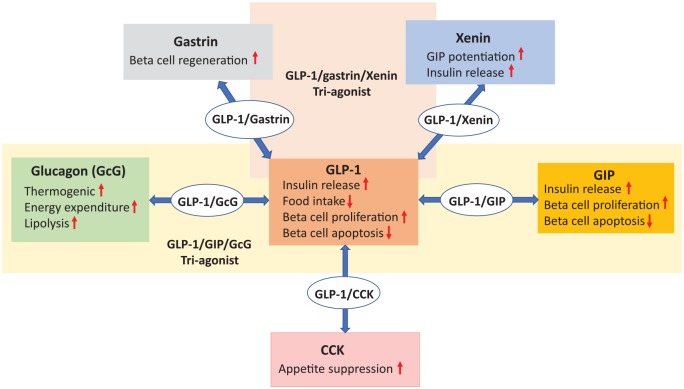
The ever-increasing prevalence of obesity and Type 2 diabetes has necessitated the development of newer and more effective approaches for achieving efficient glycemic control and weight loss. Conventional treatment methods often result in weight gain, further deteriorating the already impaired metabolic control in people with obesity/Type 2 diabetes. Alleviation of obesity and diabetes achieved after bariatric surgeries highlight the therapeutic importance of gut-brain axis and entails development of more patient-friendly approaches replicating the positive metabolic effects of bariatric surgery. Given the potential involvement of several gut hormones in the success of bariatric surgery, the therapeutic importance of synergistic interaction between these hormones for improved metabolism cannot be ignored. Many unimolecular multiagonist peptides are in preclinical and clinical trials as they maximize the combinatorial metabolic efficacy by concurrent activation of multiple gut hormone receptors. This review summarizes the ongoing developments of multiagonist peptides as novel therapeutic approaches against obesity-diabetes.
肥胖症和2型糖尿病的患病率不断上升,因此需要开发更新、更有效的方法来实现有效的血糖控制和体重减轻。传统治疗方法往往导致体重增加,进一步恶化肥胖症/2型糖尿病患者本已受损的代谢控制。减肥手术后肥胖症和糖尿病的缓解突出了肠-脑轴的治疗重要性,并需要开发更有利于患者的方法,以复制减肥手术的积极代谢作用。鉴于几种肠道激素可能参与减肥手术的成功,这些激素之间协同相互作用对改善新陈代谢的治疗重要性不容忽视。许多单分子多激动剂肽正处于临床前和临床试验阶段,因为它们通过同时激活多个肠道激素受体来最大化组合代谢功效。本综述总结了多激动剂肽作为治疗肥胖-糖尿病新方法的最新进展。