Sim Yonnette E, Nwajiobi Ogonna, Mahesh Sriram, Cohen Ryan D, Reibarkh Mikhail Y, Raj Monika
Department of Chemistry and Biochemistry , Seton Hall University , South Orange , New Jersey 07079 , USA.
Department of Chemistry and Biochemistry , Auburn University , Auburn , Alabama 36830 , United States . Email:
Chem Sci. 2019 Nov 7;11(1):53-61. doi: 10.1039/c9sc04697f. eCollection 2020 Jan 7.
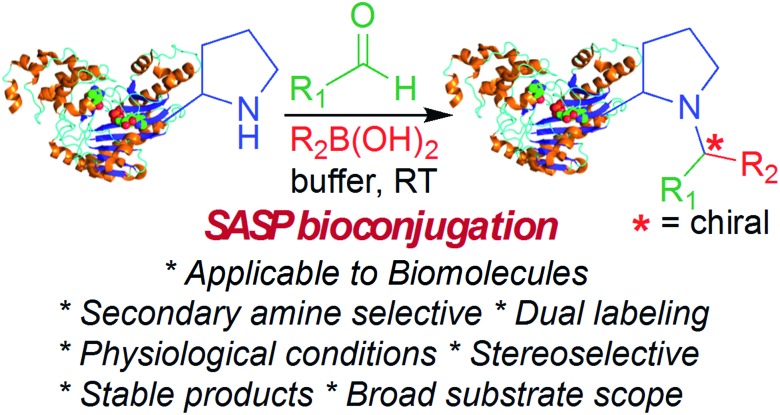
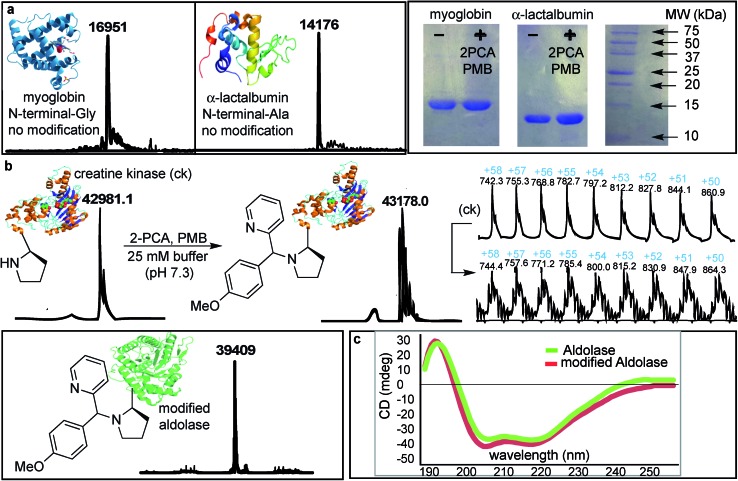
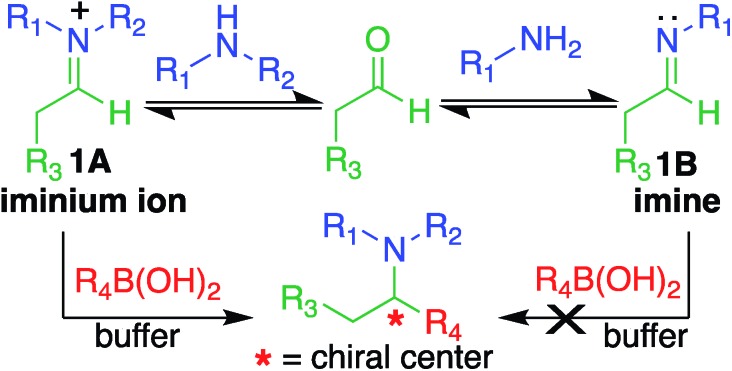
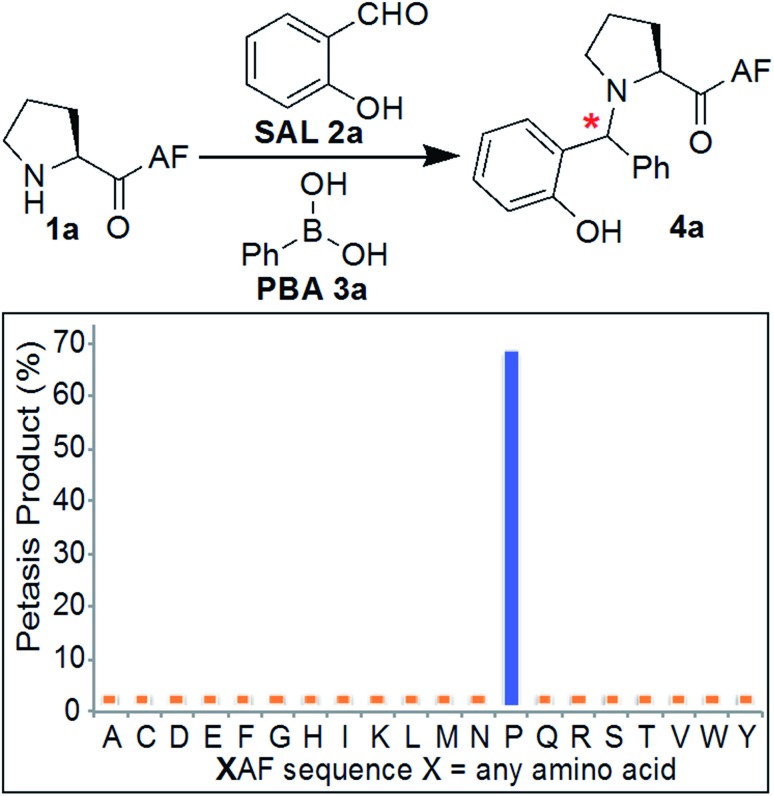
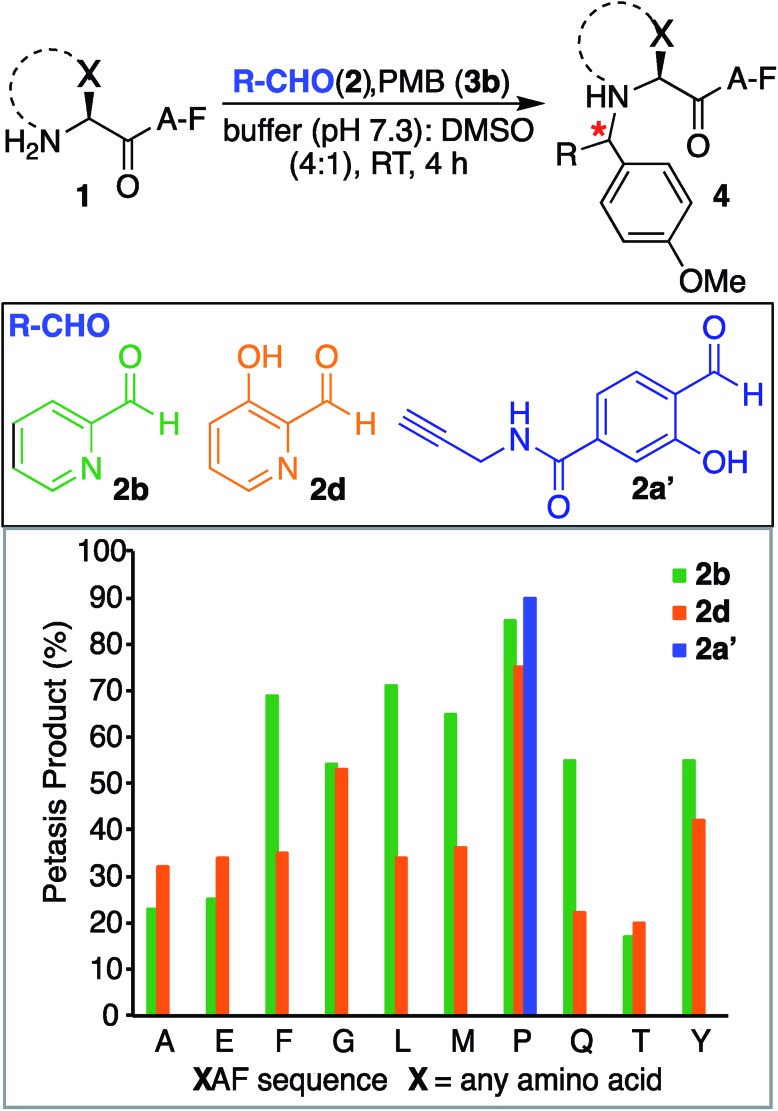
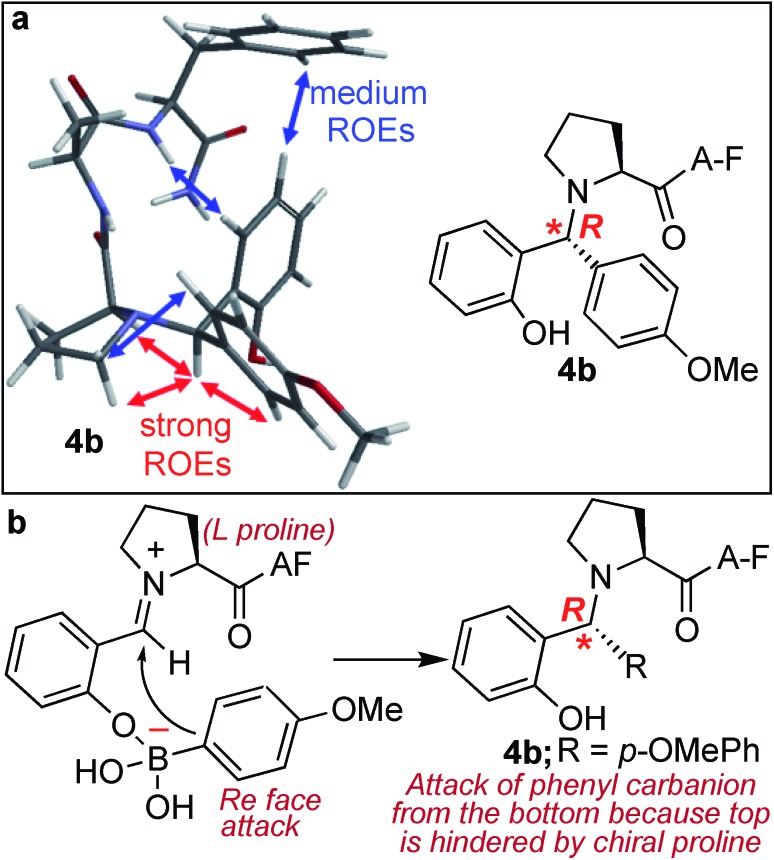
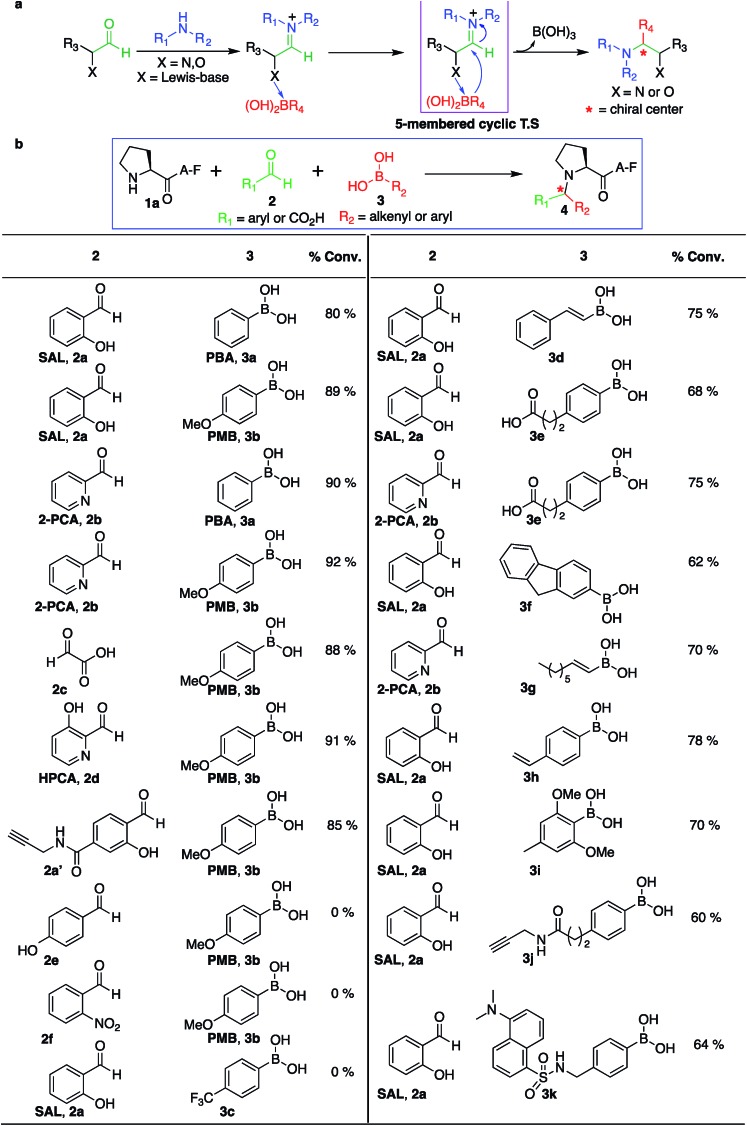
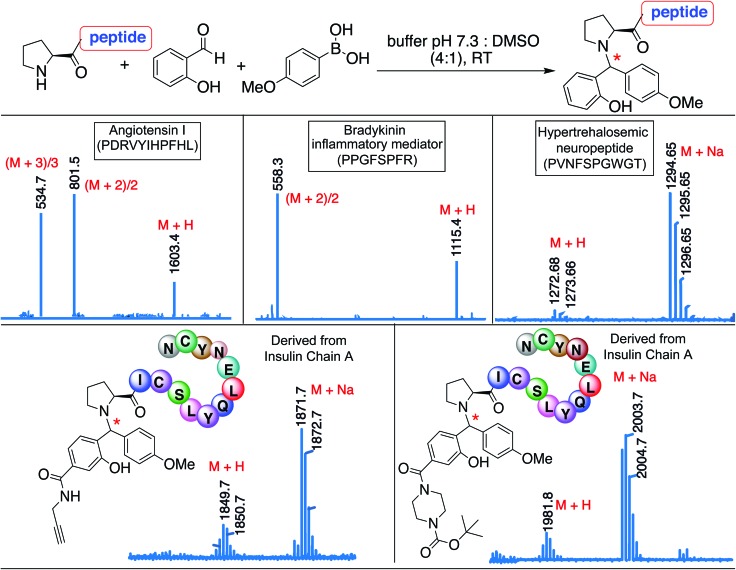
Selective modification of proteins enables synthesis of antibody-drug conjugates, cellular drug delivery and construction of new materials. Many groups have developed methods for selective N-terminal modification without affecting the side chain of lysine by judicious pH control. This is due to lower basicity of the N-terminus relative to lysine side chains. But none of the methods are capable of selective modification of secondary amines or N-terminal proline, which has similar basicity as lysine. Here, we report a secondary amine selective Petasis (SASP) reaction for selective bioconjugation at N-terminal proline. We exploited the ability of secondary amines to form highly electrophilic iminium ions with aldehydes, which rapidly reacted with nucleophilic organoboronates, resulting in robust labeling of N-terminal proline under biocompatible conditions. This is the first time the Petasis reaction has been utilized for selective modification of secondary amines on completely unprotected peptides and proteins under physiological conditions. Peptide screening results showed that the reaction is highly selective for N-terminal proline. There are no other chemical methods reported in literature that are selective for N-terminal proline in both peptides and proteins. This is a multicomponent reaction leading to the synthesis of doubly functionalized bioconjugates in one step that can be difficult to achieve using other methods. The key advantage of the SASP reaction includes its high chemoselective and stereoselective (>99% de) nature, and it affords dual labeled proteins in one pot. The broad utility of this bioconjugation is highlighted for a variety of peptides and proteins, including aldolase and creatine kinase.
蛋白质的选择性修饰能够实现抗体 - 药物偶联物的合成、细胞药物递送以及新材料的构建。许多研究团队已经开发出通过合理控制pH来实现选择性N端修饰而不影响赖氨酸侧链的方法。这是因为N端的碱性低于赖氨酸侧链。但是,目前还没有一种方法能够对仲胺或N端脯氨酸进行选择性修饰,因为它们的碱性与赖氨酸相似。在此,我们报道了一种用于在N端脯氨酸处进行选择性生物共轭的仲胺选择性Petasis(SASP)反应。我们利用仲胺与醛形成高亲电亚胺离子的能力,该离子能迅速与亲核有机硼酸酯反应,从而在生物相容的条件下对N端脯氨酸进行稳定标记。这是首次在生理条件下将Petasis反应用于对完全未保护的肽和蛋白质上的仲胺进行选择性修饰。肽筛选结果表明,该反应对N端脯氨酸具有高度选择性。文献中尚未报道其他对肽和蛋白质中的N端脯氨酸具有选择性的化学方法。这是一个多组分反应,一步就能合成双功能化的生物共轭物,而使用其他方法则很难实现。SASP反应的关键优势包括其高化学选择性和立体选择性(>99%的非对映体过量),并且能在一锅反应中得到双标记的蛋白质。这种生物共轭反应在多种肽和蛋白质(包括醛缩酶和肌酸激酶)中都具有广泛的应用。