State Key Laboratory of Molecular Oncology, National Cancer Center/National Clinical Research Center for Cancer/Cancer Hospital, Chinese Academy of Medical Sciences and Peking Union Medical College, Beijing 100021, China; State Key Laboratory of Membrane Biology, Institute of Zoology, Chinese Academy of Sciences & University of Chinese Academy of Sciences, Beijing 100101, China; Cancer Institute, Xuzhou Medical University, 84 West Huaihai Road, Xuzhou 221002, China.
State Key Laboratory of Molecular Oncology, National Cancer Center/National Clinical Research Center for Cancer/Cancer Hospital, Chinese Academy of Medical Sciences and Peking Union Medical College, Beijing 100021, China; State Key Laboratory of Membrane Biology, Institute of Zoology, Chinese Academy of Sciences & University of Chinese Academy of Sciences, Beijing 100101, China.
EBioMedicine. 2020 Mar;53:102689. doi: 10.1016/j.ebiom.2020.102689. Epub 2020 Feb 27.
How the oncoprotein epidermal growth factor receptor (EGFR) evades proteolytic degradation and accumulates in non-small cell lung cancer (NSCLC) remains unclear, and ubiquitin pathway genes (UPGs) that are critical to NSCLC needs to be systematically identified.
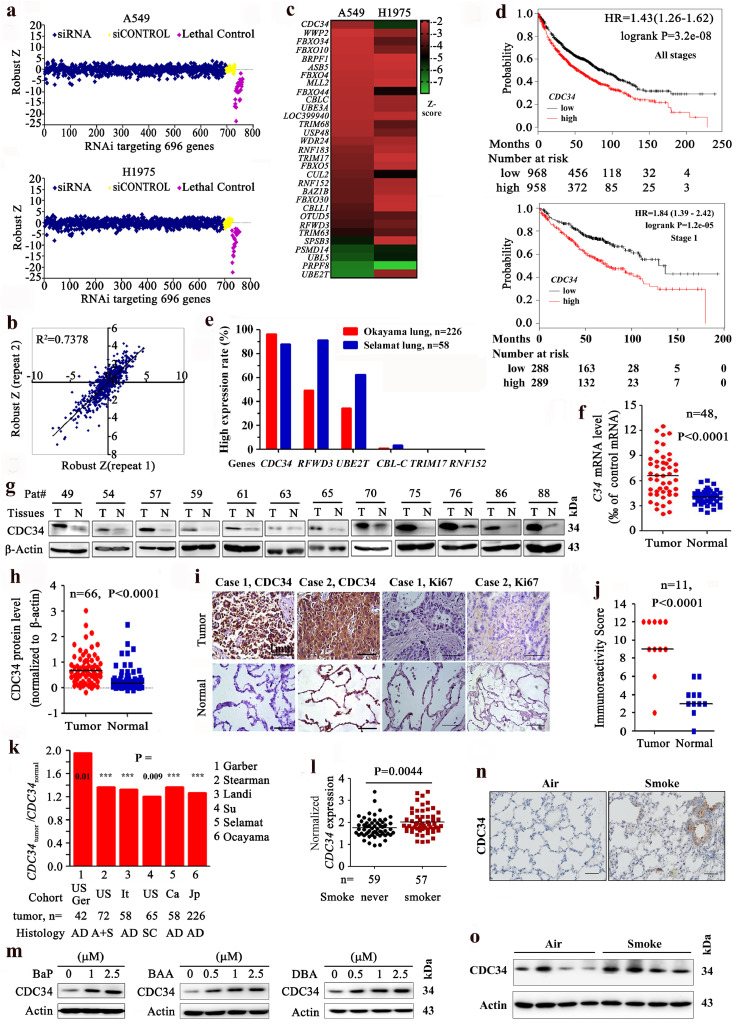
A total of 696 UPGs (including E1, E2, E3, and deubiquitinases) were silenced by small interfering RNA (siRNA) library in NSCLC cells, the candidates were verified, and their significance was evaluated in patients with NSCLC. The effects of a candidate gene on EGFR were investigated in vitro and in vivo.
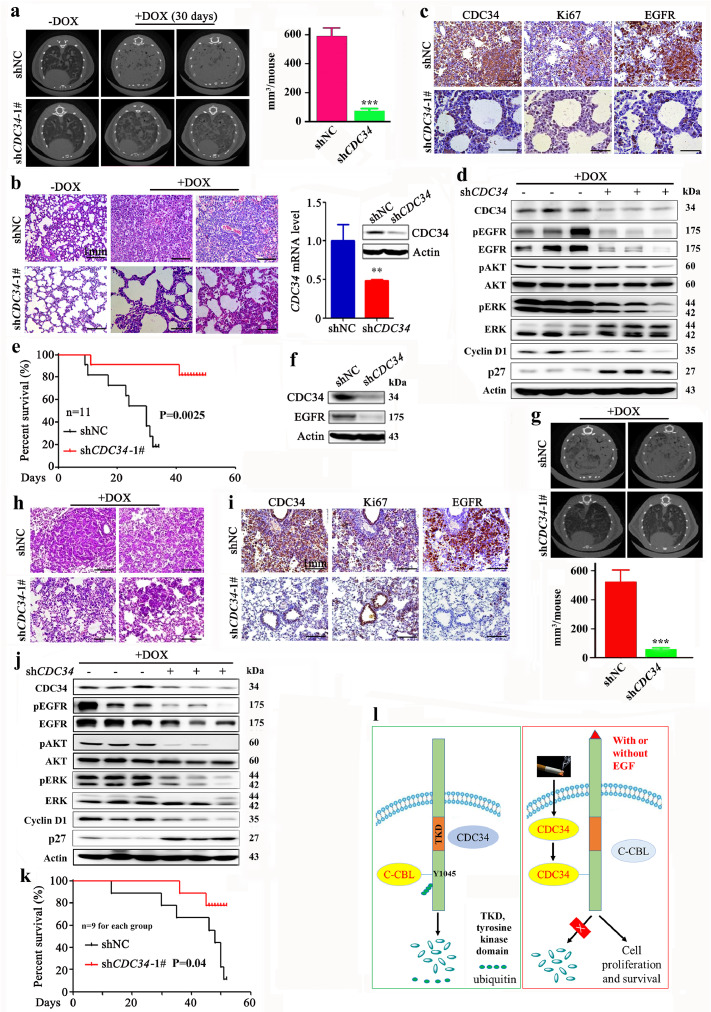
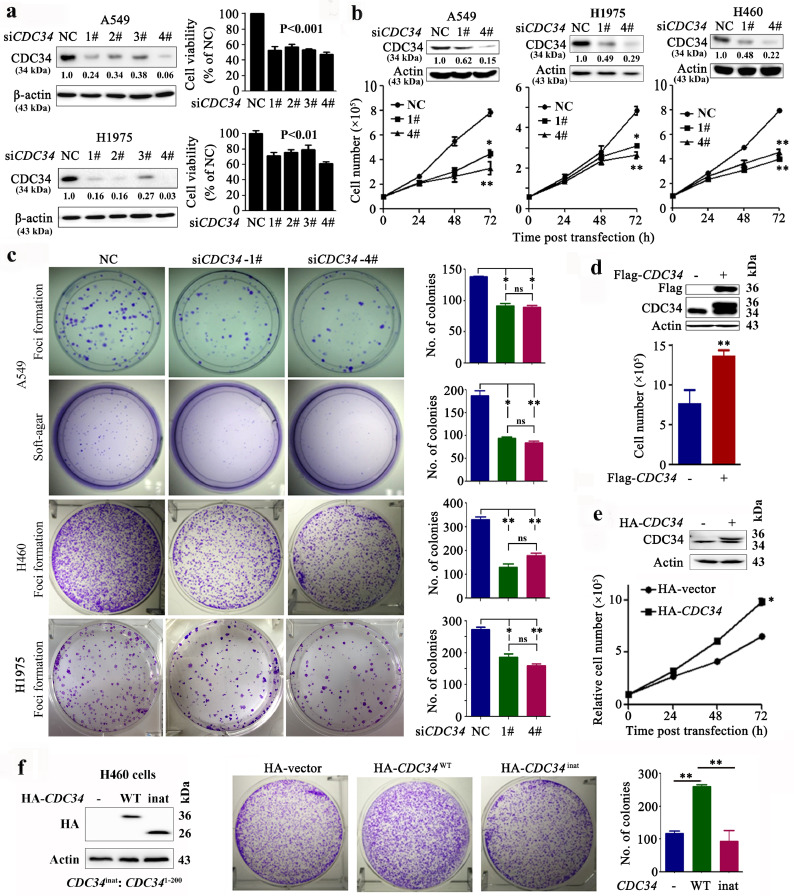
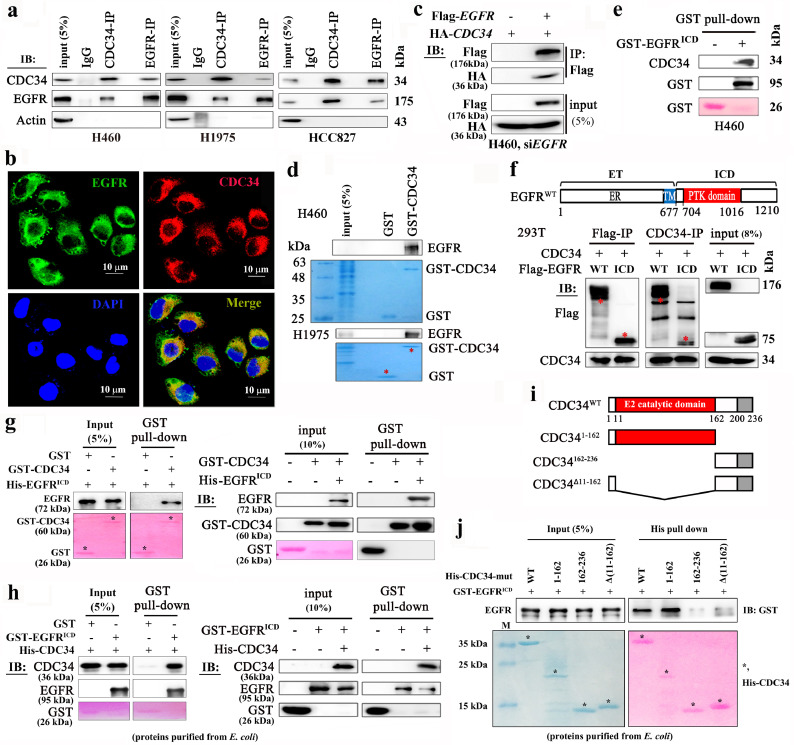
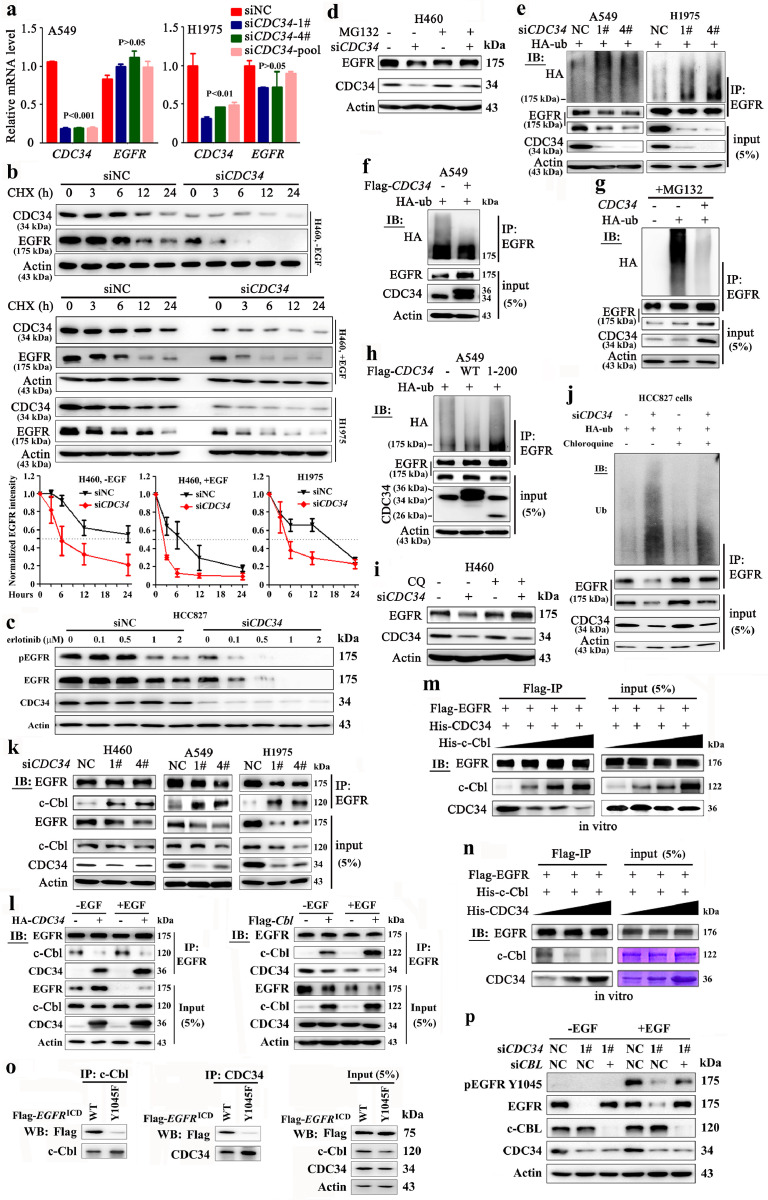
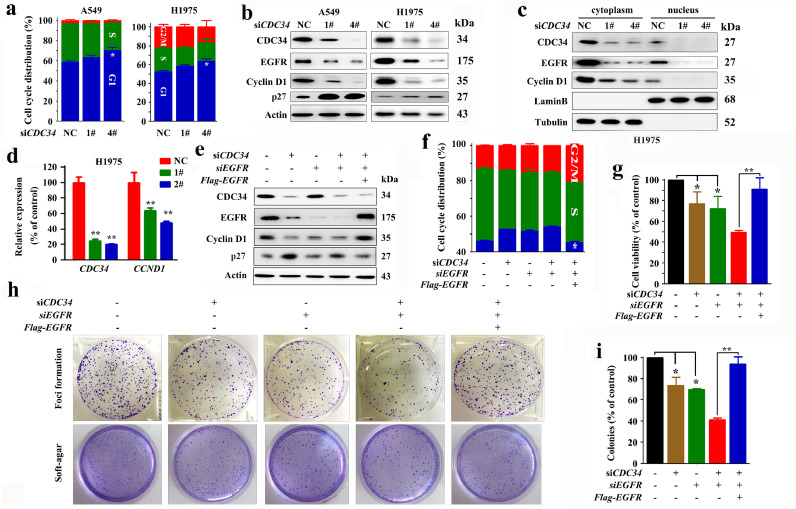
We report 31 candidates that are required for cell proliferation, with the E2 ubiquitin conjugase CDC34 as the most significant one. CDC34 is elevated in tumor tissues in 76 of 114 (66.7%) NSCLCs and inversely associated with prognosis, is higher in smoker patients than nonsmoker patients, and is induced by tobacco carcinogens in normal human lung epithelial cells. Forced expression of CDC34 promotes, whereas knockdown of CDC34 inhibits, NSCLC cell proliferation in vitro and in vivo. CDC34 competes with c-Cbl to bind Y1045 to inhibit polyubiquitination and degradation of EGFR. In EGFR-L858R and EGFR-T790M/Del (exon 19)-driven lung tumor growth in mouse models, knockdown of CDC34 significantly inhibits tumor formation.
These results demonstrate that an E2 enzyme is capable of competing with E3 ligase to stabilize substrates, and CDC34 represents an attractive therapeutic target for NSCLCs.
National Key Research and Development Program of China, National Natural Science Foundation of China, and the CAMS Innovation Fund for Medical Sciences.
致癌蛋白表皮生长因子受体(EGFR)如何逃避蛋白水解降解并在非小细胞肺癌(NSCLC)中积累仍不清楚,需要系统地鉴定对 NSCLC 至关重要的泛素途径基因(UPGs)。
通过 NSCLC 细胞中的小干扰 RNA(siRNA)文库沉默了总共 696 个 UPGs(包括 E1、E2、E3 和去泛素化酶),对候选物进行了验证,并在 NSCLC 患者中评估了它们的重要性。在体外和体内研究了候选基因对 EGFR 的影响。
我们报告了 31 个候选基因,这些基因对细胞增殖是必需的,其中 E2 泛素缀合酶 CDC34 最为重要。CDC34 在 114 例 NSCLC 肿瘤组织中的 76 例(66.7%)中升高,与预后呈负相关,在吸烟者中高于非吸烟者,并且在正常人肺上皮细胞中被烟草致癌物诱导。CDC34 的强制表达促进,而 CDC34 的敲低抑制 NSCLC 细胞的体外和体内增殖。CDC34 与 c-Cbl 竞争结合 Y1045 以抑制 EGFR 的多泛素化和降解。在 EGFR-L858R 和 EGFR-T790M/Del(外显子 19)驱动的小鼠模型中的肺肿瘤生长中,CDC34 的敲低显著抑制肿瘤形成。
这些结果表明,一种 E2 酶能够与 E3 连接酶竞争以稳定底物,CDC34 代表 NSCLC 的一个有吸引力的治疗靶点。
国家重点研发计划、国家自然科学基金和中国医学科学院创新基金。