Oladeinde Oladapo, Mabetha Denny, Twine Rhian, Hove Jennifer, Van Der Merwe Maria, Byass Peter, Witter Sophie, Kahn Kathleen, D'Ambruoso Lucia
Aberdeen Centre for Health Data Science (ACHDS) Institute of Applied Health Sciences, School of Medicine, Medical Sciences and Nutrition, University of Aberdeen, Aberdeen, Scotland, UK.
MRC/Wits Rural Public Health and Health Transitions Research Unit (Agincourt), School of Public Health, Faculty of Health Sciences, University of the Witwatersrand, Johannesburg, South Africa.
Glob Health Action. 2020;13(1):1726722. doi: 10.1080/16549716.2020.1726722.
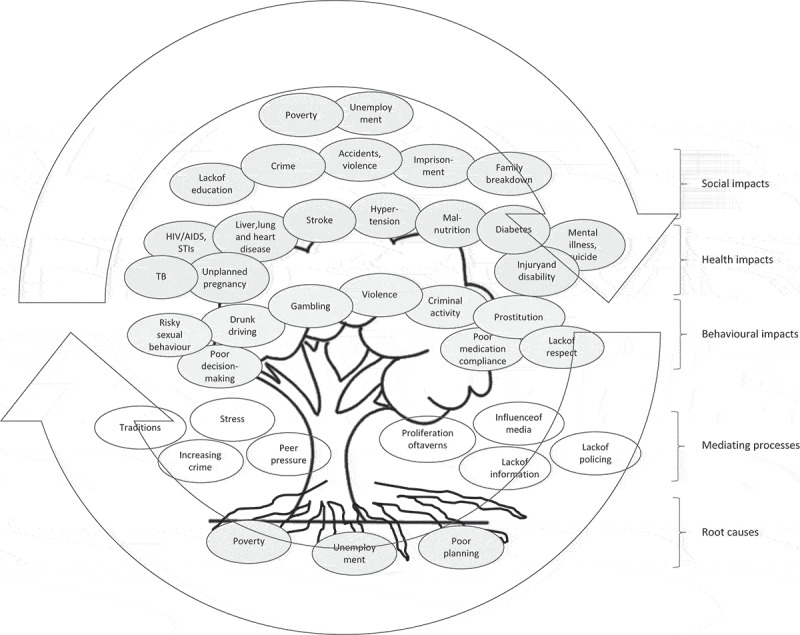
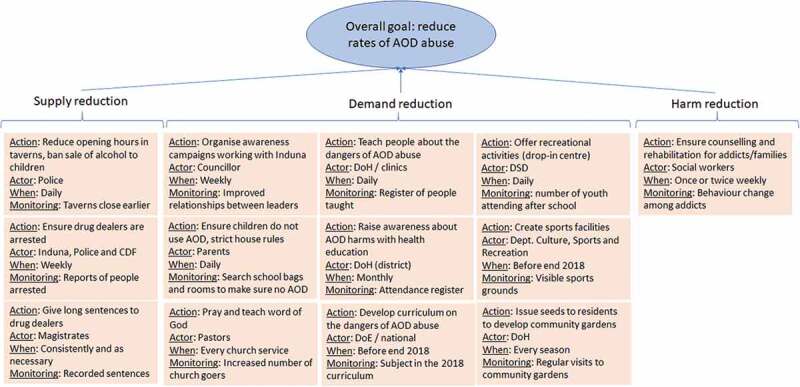
: Alcohol and other drug (AOD) abuse is a major public health challenge disproportionately affecting marginalised communities. Involving communities in the development of responses can contribute to acceptable solutions.: To: (1) document forms, processes, and contexts of engaging communities to nominate health concerns and generate new knowledge for action; (2) further build participation in the local health system by reflecting on and adapting the process.: PAR was progressed with 48 community stakeholders across three rural villages in the MRC/Wits Agincourt Health and Socio Demographic Surveillance System (HDSS) in Mpumalanga, South Africa. A series of workshops explored community-nominated topics, systematised lived experience into shared accounts and considered actions to address problems identified. Photovoice was also used to generate visual evidence. Narrative and visual data were thematically analysed, situated within practice frameworks, and learning and adaption elicited.: AOD abuse was identified as a topic of high priority. It was understood as an entrenched social problem with destructive effects. Biopsychosocial impacts were mapped and related to unemployment, poverty, stress, peer pressure, criminal activity, corruption, and a proliferating number of taverns. Integrated action agendas were developed focussed on demand, supply, and harm reduction underpinned by shared responsibility among community, state, and non-state actors. Community stakeholders appreciated systematising and sharing knowledge, taking active roles, developing new skills in planning and public speaking, and progressing shared accountability processes. Expectations required sensitive management, however.: There is significant willingness and capacity among community stakeholders to work in partnership with authorities to address priority health concerns. As a process, participation can help to raise and frame issues, which may help to better inform action and encourage shared responsibility. Broader understandings of participation require reference to, and ultimately transfer of power towards, those most directly affected, developing community voice as continuous processes within social and political environments.
酒精和其他药物滥用是一项重大的公共卫生挑战,对边缘化社区的影响尤为严重。让社区参与应对措施的制定有助于找到可接受的解决方案。目的:(1)记录让社区参与提名健康问题并生成行动新知识的形式、过程和背景;(2)通过反思和调整过程,进一步促进对当地卫生系统的参与。在南非姆普马兰加省MRC/威特阿金库尔健康与社会人口监测系统(HDSS)的三个乡村,与48名社区利益相关者共同推进了参与式行动研究(PAR)。一系列研讨会探讨了社区提名的主题,将生活经验系统化形成共同的描述,并考虑了应对已发现问题的行动。还使用了照片声音法来生成视觉证据。对叙述性和视觉数据进行了主题分析,置于实践框架内,并引发了学习和调整。酒精和其他药物滥用被确定为高度优先的主题。它被视为一个根深蒂固的社会问题,具有破坏性影响。绘制了生物心理社会影响图,并将其与失业、贫困、压力、同伴压力、犯罪活动、腐败以及酒馆数量的激增联系起来。制定了综合行动议程,重点关注需求、供应和减少危害,以社区、国家和非国家行为体之间的共同责任为基础。社区利益相关者赞赏将知识系统化和分享、发挥积极作用、培养规划和公开演讲方面的新技能以及推进共同问责过程。然而,期望需要进行敏感管理。社区利益相关者有很大的意愿和能力与当局合作解决优先健康问题。作为一个过程,参与有助于提出和界定问题,这可能有助于更好地为行动提供信息并鼓励共同责任。对参与的更广泛理解需要参考并最终将权力转移给受影响最直接的人,将社区声音发展为社会和政治环境中的持续过程。