Accorsi Anthony, Cramer Megan L, Girgenrath Mahasweta
Fulcrum Therapeutics, Cambridge, MA, United States.
Rare Disease Research Unit, Pfizer Inc., Cambridge, MA, United States.
Front Mol Neurosci. 2020 Feb 4;13:3. doi: 10.3389/fnmol.2020.00003. eCollection 2020.
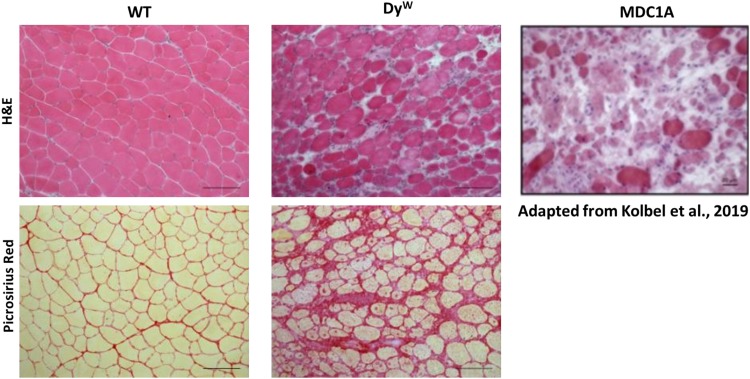
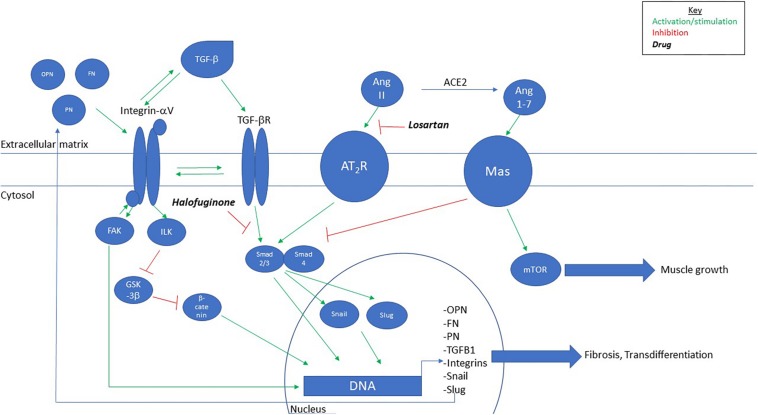
-related congenital muscular dystrophy, also known as MDC1A, is caused by loss-of-function mutations in the alpha2 chain of Laminin-211. Loss of this protein interrupts the connection between the muscle cell and its extracellular environment and results in an aggressive, congenital-onset muscular dystrophy characterized by severe hypotonia, lack of independent ambulation, and early mortality driven by respiratory complications and/or failure to thrive. Of the pathomechanisms of MDC1A, the earliest and most prominent is widespread and rampant fibrosis. Here, we will discuss some of the key drivers of fibrosis including TGF-beta and renin-angiotensin system signaling and consequences of these pathways including myofibroblast transdifferentiation and matrix remodeling. We will also highlight some of the differences in fibrogenesis in congenital muscular dystrophy (CMD) with that seen in Duchenne muscular dystrophy (DMD). Finally, we will connect the key signaling pathways in the pathogenesis of MDC1A to the current status of the therapeutic approaches that have been tested in the preclinical models of MDC1A to treat fibrosis.
相关先天性肌营养不良,也称为MDC1A,由层粘连蛋白-211的α2链功能丧失突变引起。这种蛋白质的缺失中断了肌肉细胞与其细胞外环境之间的联系,导致一种侵袭性的先天性肌营养不良,其特征为严重的肌张力减退、无法独立行走,以及由呼吸并发症和/或生长发育不良导致的早期死亡。在MDC1A的发病机制中,最早且最突出的是广泛且猖獗的纤维化。在此,我们将讨论纤维化的一些关键驱动因素,包括转化生长因子-β和肾素-血管紧张素系统信号传导,以及这些途径的后果,包括肌成纤维细胞转分化和基质重塑。我们还将强调先天性肌营养不良(CMD)与杜氏肌营养不良(DMD)中纤维化形成的一些差异。最后,我们将把MDC1A发病机制中的关键信号通路与在MDC1A临床前模型中测试的治疗纤维化的治疗方法现状联系起来。