Damasceno Samara, Gómez-Nieto Ricardo, Garcia-Cairasco Norberto, Herrero-Turrión Manuel Javier, Marín Faustino, Lopéz Dolores E
Institute of Neurosciences of Castilla y León, University of Salamanca, Salamanca, Spain.
Salamanca Institute for Biomedical Research, Salamanca, Spain.
Front Neurol. 2020 Feb 13;11:33. doi: 10.3389/fneur.2020.00033. eCollection 2020.
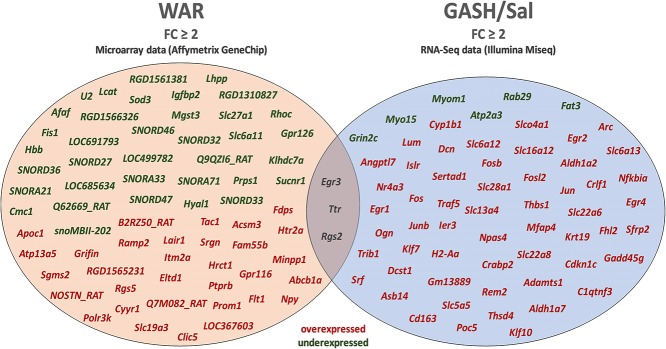
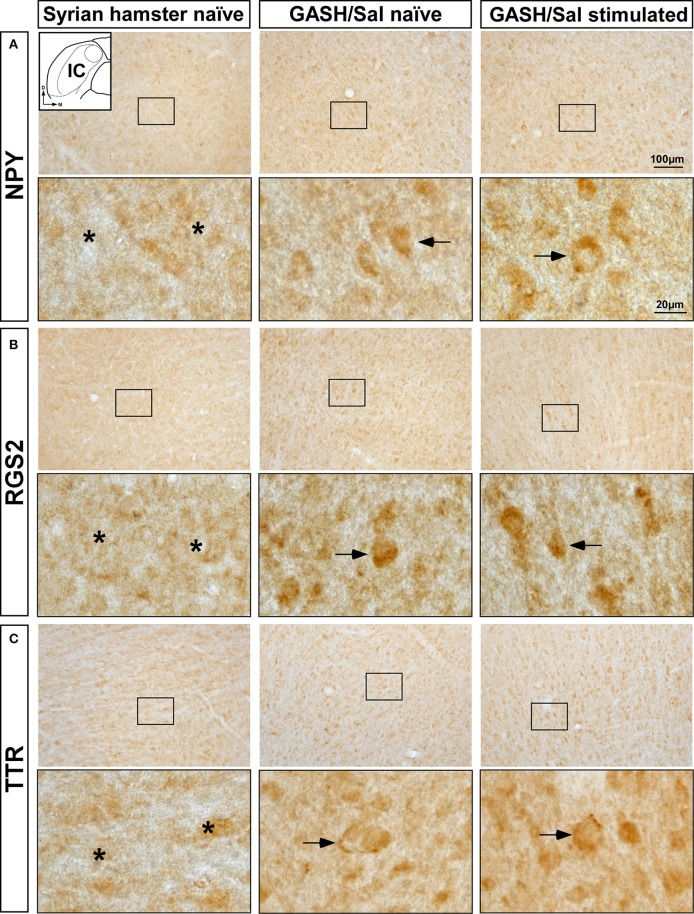
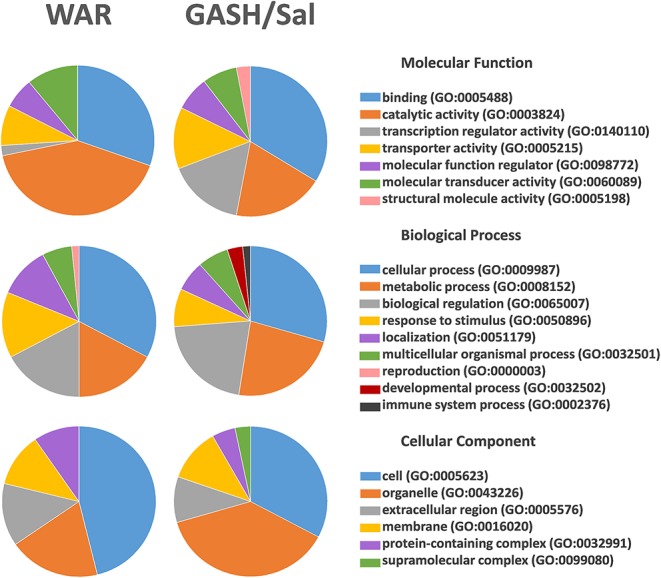
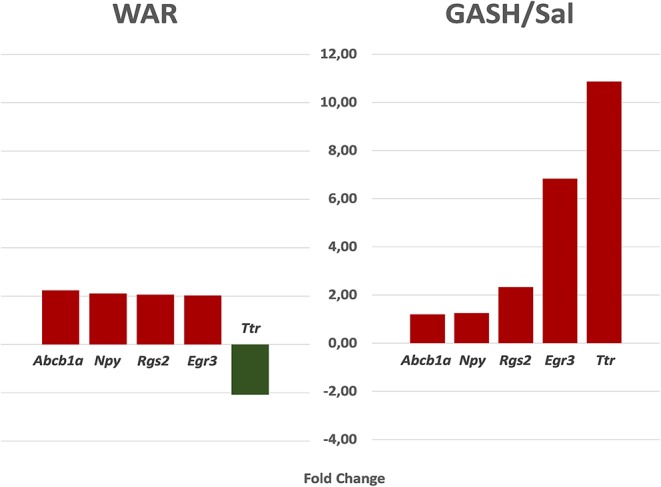
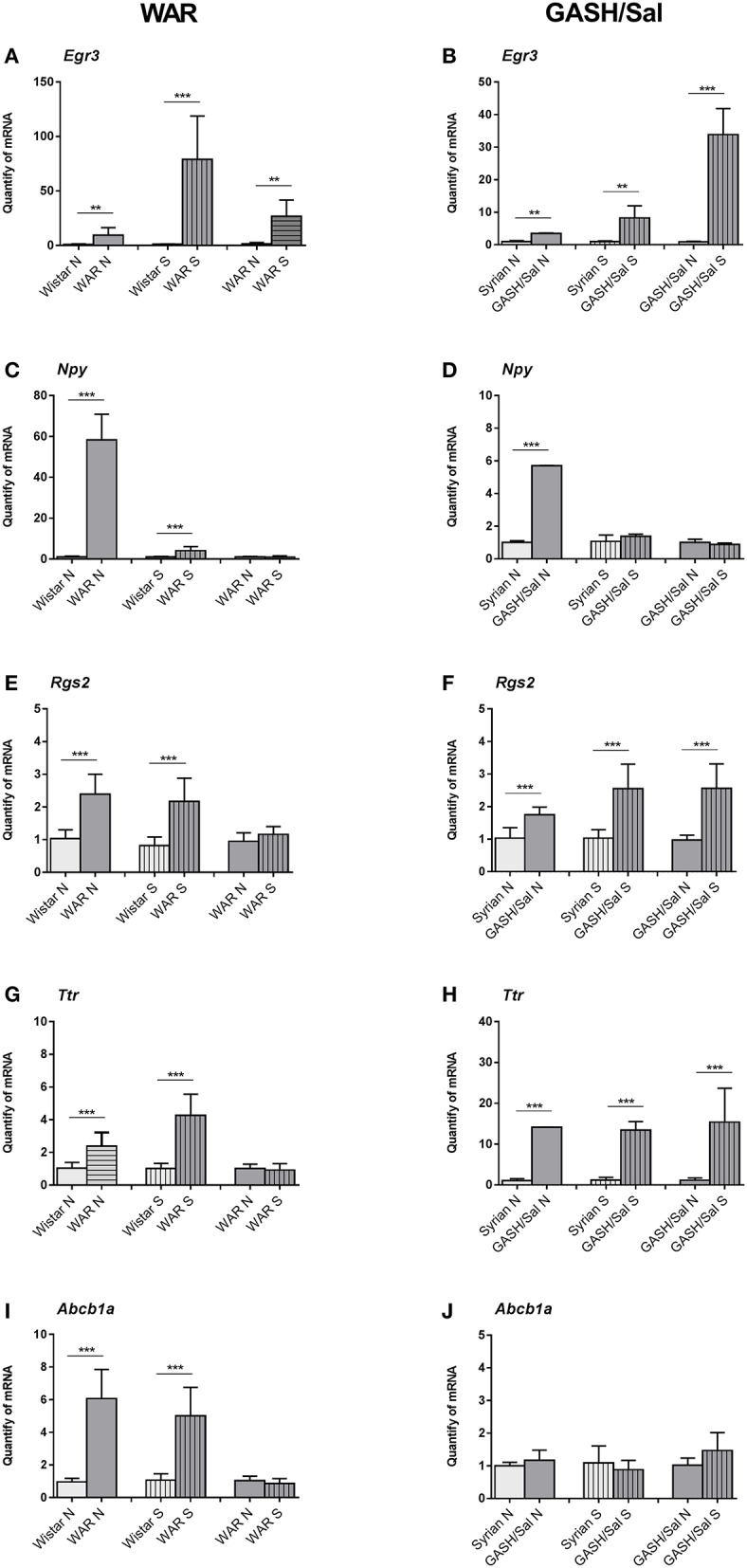
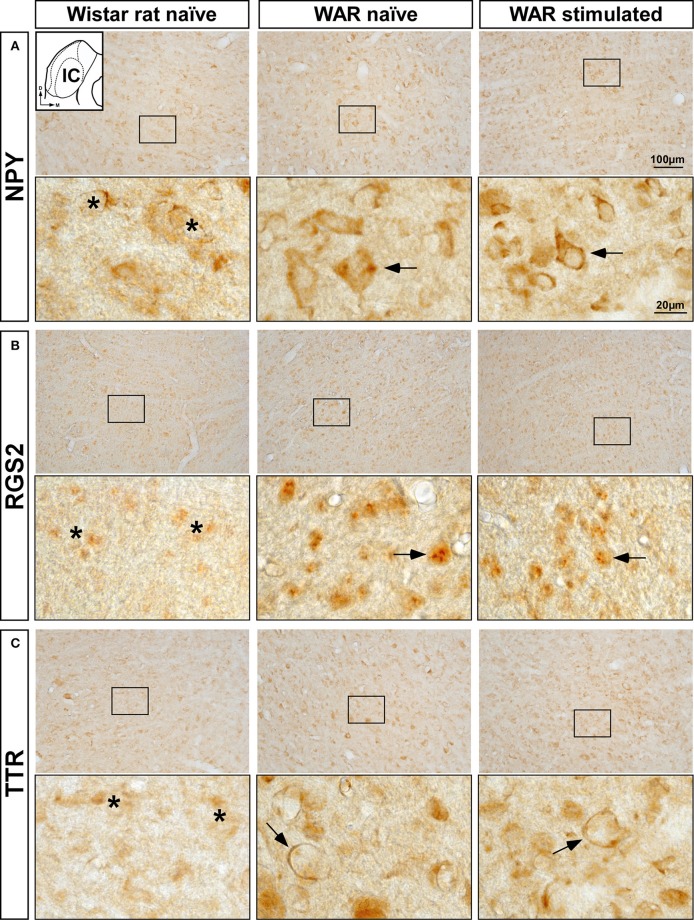
The Wistar Audiogenic Rat (WAR) and the Genetic Audiogenic Seizure Hamster from Salamanca (GASH/Sal) strains are audiogenic epilepsy models, in which seizures are triggered by acoustic stimulation. These strains were developed by selective reproduction and have a genetic background with minimal or no variation. In the current study, we evaluated the transcriptome of the inferior colliculus, the epileptogenic nucleus, of both audiogenic models, in order to get insights into common molecular aspects associated to their epileptic phenotype. Based on GASH/Sal RNA-Seq and WAR microarray data, we performed a comparative analysis that includes selection and functional annotation of differentially regulated genes in each model, transcriptional evaluation by quantitative reverse transcription PCR of common genes identified in both transcriptomes and immunohistochemistry. The microarray data revealed 71 genes with differential expression in WAR, and the RNA-Seq data revealed 64 genes in GASH/Sal, showing common genes in both models. Analysis of transcripts showed that was overexpressed in WAR and GASH/Sal after audiogenic seizures. The , and genes presented the same transcriptional profile in the WAR, being overexpressed in the naïve and stimulated WAR in relation to their controls. appeared overexpressed only in the naïve GASH/Sal compared to its control, while and genes appeared overexpressed in naïve GASH/Sal and overexpressed after audiogenic seizure. No statistical difference was observed in the expression of in the GASH/Sal model. Compared to control animals, the immunohistochemical analysis of the inferior colliculus showed an increased immunoreactivity for NPY, RGS2, and TTR in both audiogenic models. Our data suggest that WAR and GASH/Sal strains have a difference in the timing of gene expression after seizure, in which GASH/Sal seems to respond more quickly. The transcriptional profile of the , and genes under free-seizure conditions in both audiogenic models indicates an intrinsic expression already established in the strains. Our findings suggest that these genes may be causing small changes in different biological processes involved in seizure occurrence and response, and indirectly contributing to the susceptibility of the WAR and GASH/Sal models to audiogenic seizures.
威斯塔听源性大鼠(WAR)和来自萨拉曼卡的遗传性听源性癫痫仓鼠(GASH/Sal)品系是听源性癫痫模型,在这些模型中,癫痫发作由声刺激引发。这些品系通过选择性繁殖培育而成,具有极少或无变异的遗传背景。在本研究中,我们评估了这两种听源性模型的致痫核——下丘的转录组,以便深入了解与其癫痫表型相关的共同分子特征。基于GASH/Sal的RNA测序和WAR的微阵列数据,我们进行了一项比较分析,包括每个模型中差异调节基因的选择和功能注释、通过定量逆转录PCR对两个转录组中鉴定出的共同基因进行转录评估以及免疫组织化学分析。微阵列数据显示WAR中有71个基因表达差异,RNA测序数据显示GASH/Sal中有64个基因表达差异,两个模型中有共同基因。转录本分析表明,听源性癫痫发作后,[具体基因名称1]、[具体基因名称2]和[具体基因名称3]在WAR和GASH/Sal中均过度表达。[具体基因名称4]、[具体基因名称5]和[具体基因名称6]基因在WAR中呈现相同的转录谱,在未发作和受刺激的WAR中相对于其对照均过度表达。与对照相比,[具体基因名称7]仅在未发作的GASH/Sal中过度表达,而[具体基因名称8]和[具体基因名称9]基因在未发作的GASH/Sal中过度表达且在听源性癫痫发作后进一步过度表达。在GASH/Sal模型中,[具体基因名称10]的表达未观察到统计学差异。与对照动物相比,下丘的免疫组织化学分析显示,在两种听源性模型中,神经肽Y(NPY)、RGS2和甲状腺素运载蛋白(TTR)的免疫反应性均增加。我们的数据表明,WAR和GASH/Sal品系在癫痫发作后基因表达的时间上存在差异,其中GASH/Sal似乎反应更快。在两种听源性模型中,自由发作条件下[具体基因名称4]、[具体基因名称5]和[具体基因名称6]基因的转录谱表明这些基因在品系中已经有内在表达。我们的研究结果表明,这些基因可能在癫痫发作发生和反应所涉及的不同生物学过程中引起微小变化,并间接导致WAR和GASH/Sal模型对听源性癫痫发作的易感性。