Similä Minna E, Auranen Mari, Piirilä Päivi Liisa
Clinical Nutrition Unit, Internal Medicine and Rehabilitation, Helsinki University Hospital, University of Helsinki, Helsinki, Finland.
Clinical Neurosciences, Neurology, Helsinki University Hospital, University of Helsinki, Helsinki, Finland.
Front Neurol. 2020 Feb 4;11:57. doi: 10.3389/fneur.2020.00057. eCollection 2020.
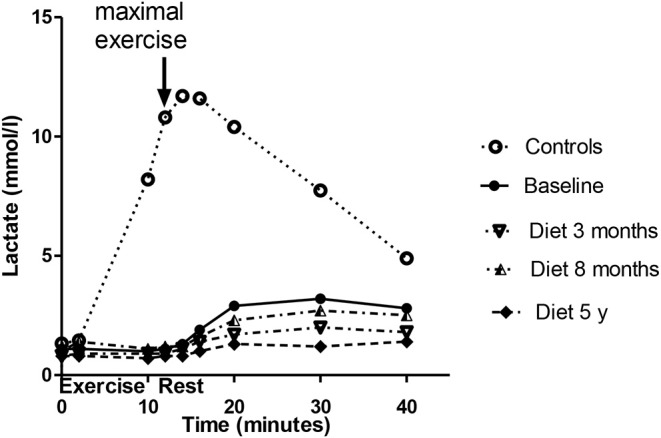
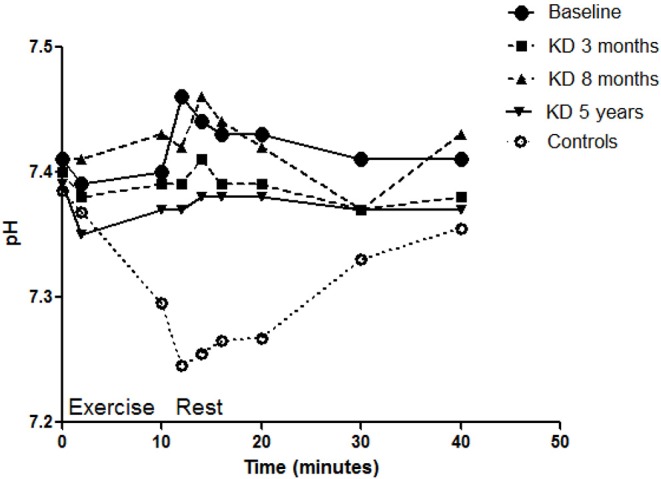
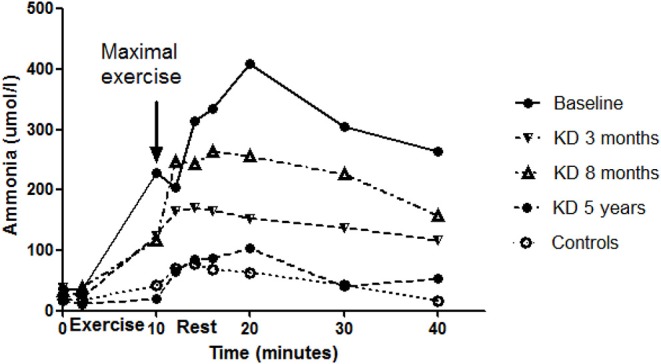
A deficiency of muscle phosphofructokinase (PFKM) causes a rare metabolic muscle disease, the Tarui disease (Glycogen storage disease type VII, GSD VII) characterized by exercise intolerance with myalgia due to an inability to use glucose as an energy resource. No medical treatment for GSD VII currently exists. The aim of this study was to determine whether a dietary intervention with excessive fat intake would benefit GSD VII. A ketogenic diet (KD) intervention implemented as a modified Atkins diet was established for one patient with PFKM deficiency, with a low late lactate response and very high ammonia levels associated with exercise. We recorded the KD intervention for a total of 5 years with clinical and physiotherapeutic evaluations and regular laboratory parameters. Cardiopulmonary exercise testing, including breath gas analysis and venous lactate and ammonia measurements, was performed before KD and at 3, 8 months and 5 years after initiation of KD. During the 5 years on KD, the patient's muscle symptoms had alleviated and exercise tolerance had improved. In exercise testing, venous ammonia had normalized, the lactate profile remained similar, but oxygen uptake and mechanical efficiency had increased and parameters showing ventilation had improved. This study is the first to show a long-term effect of KD in GSD VII with an alleviation of muscle symptoms, beneficial effects on breathing, and improvement in exercise performance and oxygen uptake. Based on these findings, KD can be recommended under medical and nutritional supervision for selected patients with GSD VII, although further research of this rare disease is warranted.
肌肉磷酸果糖激酶(PFKM)缺乏会导致一种罕见的代谢性肌肉疾病——塔瑞氏病(糖原贮积病VII型,GSD VII),其特征为运动不耐受并伴有肌痛,原因是无法利用葡萄糖作为能量来源。目前尚无针对GSD VII的医学治疗方法。本研究的目的是确定高脂肪摄入的饮食干预是否对GSD VII有益。对一名患有PFKM缺乏症、运动后乳酸反应低且氨水平非常高的患者实施了改良阿特金斯饮食形式的生酮饮食(KD)干预。我们通过临床和物理治疗评估以及常规实验室参数对KD干预进行了总共5年的记录。在KD之前以及KD开始后的3个月、8个月和5年进行了心肺运动测试,包括呼气气体分析以及静脉血乳酸和氨测量。在进行KD的5年期间,患者的肌肉症状有所缓解,运动耐量有所提高。在运动测试中,静脉血氨水平恢复正常,乳酸水平保持相似,但摄氧量和机械效率有所提高,且显示通气的参数有所改善。本研究首次表明KD对GSD VII有长期影响,可缓解肌肉症状,对呼吸有有益作用,并改善运动表现和摄氧量。基于这些发现,尽管对这种罕见疾病有必要进行进一步研究,但在医学和营养监督下,KD可推荐给选定的GSD VII患者。