Helal Muath, Allen Kevin J H, van Dijk Bruce, Nosanchuk Joshua D, Snead Elisabeth, Dadachova Ekaterina
College of Pharmacy and Nutrition, University of Saskatchewan, Saskatoon, SK, Canada.
Department of Orthopedics, University Medical Center Utrecht, Utrecht, Netherlands.
Front Microbiol. 2020 Feb 7;11:147. doi: 10.3389/fmicb.2020.00147. eCollection 2020.
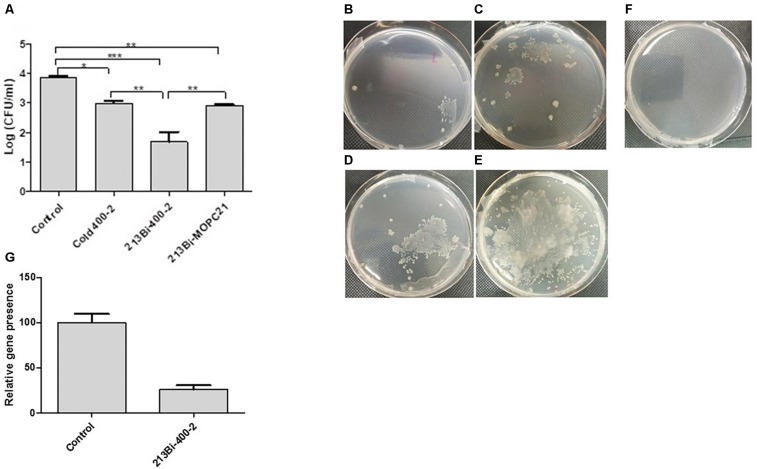
Invasive fungal infections (IFI) cause devastating morbidity and mortality, with the number of IFIs more than tripling since 1979. Our laboratories were the first to demonstrate that radiolabeled microorganism-specific monoclonal antibodies are highly effective for treatment of experimental fungal, bacterial and viral infections. Later we proposed to utilize surface expressed pan-antigens shared by major IFI-causing pathogens such as beta-glucans as RIT targets. Here we evaluated RIT targeting beta-glucan in which causes serious infections in immunocompromised and immunocompetent individuals and in companion dogs. cells were treated with the 400-2 antibody to (1→3)-β-glucans radiolabeled with the beta-emitter 177Lutetium (Lu) and alpha-emitter 213Bismuth (Bi) and the efficacy of cell kill was determined by colony forming units (CFUs). To determine the antigen-specific localization of the 400-2 antibody , C57BL6 mice were infected intratracheally with 2 × 10 cells and given In-400-2 antibody 24 h later. To evaluate the killing of cells with RIT, intratracheally infected mice were treated with 150 μCi Bi-400-2 and their lungs analyzed for CFUs 96 h post-infection. Bi-400-2 proved to be more effective in killing cells than Lu-400-2. Three times more In-400-2 accumulated in the lungs of infected mice, than in the non-infected ones. Bi-400-2 lowered the fungal burden in the lungs of infected mice more than 2 logs in comparison with non-treated infected controls. In conclusion, our results demonstrate the ability of an anti-(1-3)-beta-D-glucan antibody armed with an alpha-emitter Bi to selectively kill cells and . These first results of the effectiveness of RIT targeting pan-antigens on fungal pathogens warrant further investigation.
侵袭性真菌感染(IFI)会导致严重的发病和死亡,自1979年以来IFI的数量增加了两倍多。我们的实验室率先证明,放射性标记的微生物特异性单克隆抗体对治疗实验性真菌、细菌和病毒感染非常有效。后来我们提议利用主要IFI致病病原体共有的表面表达泛抗原,如β-葡聚糖作为放射免疫治疗(RIT)靶点。在此,我们评估了靶向β-葡聚糖的RIT,β-葡聚糖会在免疫功能低下和免疫功能正常的个体以及伴侣犬中引起严重感染。用与β发射体177镥(Lu)和α发射体213铋(Bi)放射性标记的针对(1→3)-β-葡聚糖的400-2抗体处理细胞,并通过菌落形成单位(CFU)确定细胞杀伤效果。为了确定400-2抗体的抗原特异性定位,将C57BL6小鼠经气管内感染2×10个细胞,并在24小时后给予铟-400-2抗体。为了评估RIT对细胞的杀伤作用,对经气管内感染的小鼠用150μCi铋-400-2进行治疗,并在感染后96小时分析其肺部的CFU。结果证明,铋-400-2在杀伤细胞方面比镥-400-2更有效。感染小鼠肺部积累的铟-400-2是未感染小鼠的三倍多。与未治疗的感染对照组相比,铋-400-2使感染小鼠肺部的真菌负荷降低了2个对数以上。总之,我们的结果证明了携带α发射体铋的抗(1-3)-β-D-葡聚糖抗体能够选择性地杀伤细胞。这些关于RIT靶向真菌病原体泛抗原有效性的初步结果值得进一步研究。