Department of Infectious Diseases, St. Jude Children's Research Hospital, Memphis, Tennessee, USA.
Integrated Biomedical Sciences Program, University of Tennessee Health Science Center, Memphis, Tennessee, USA.
mBio. 2020 Mar 3;11(2):e03341-19. doi: 10.1128/mBio.03341-19.
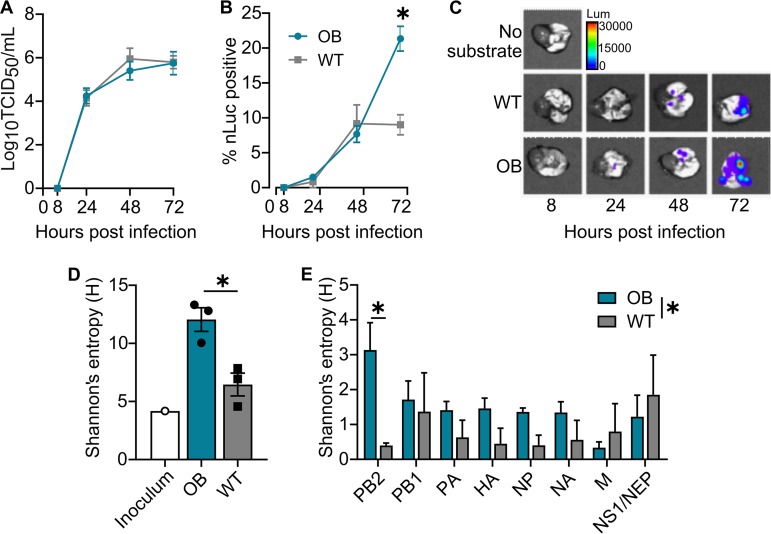
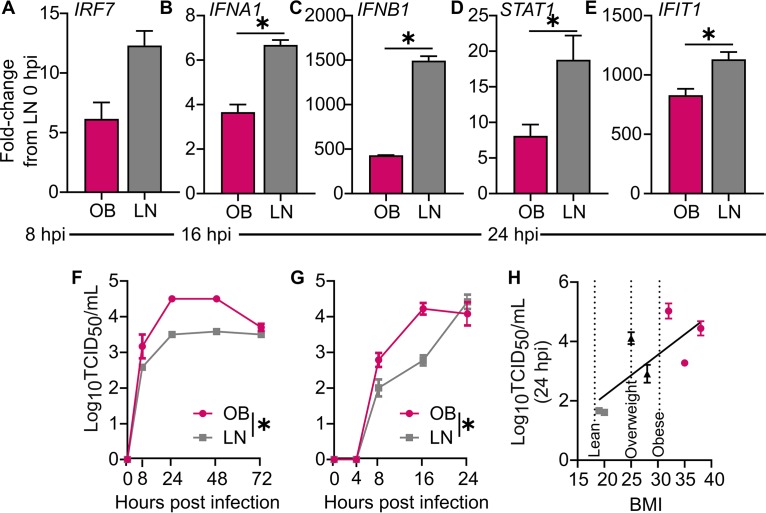
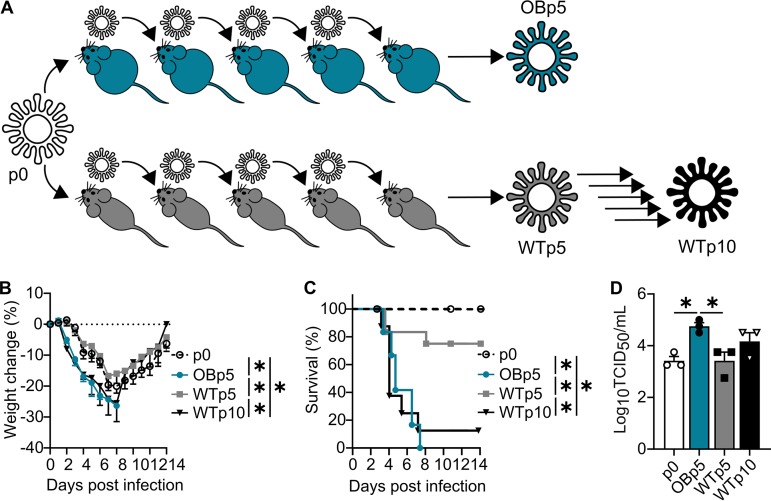
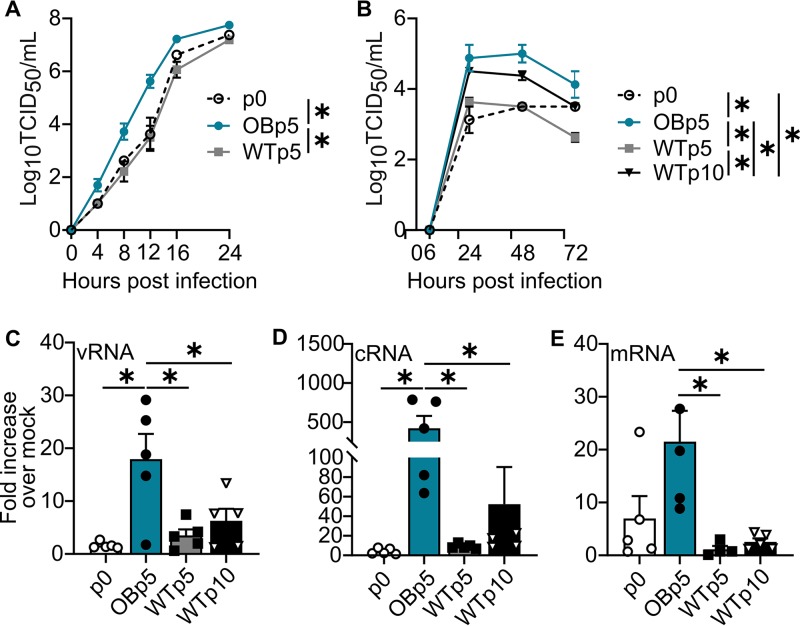
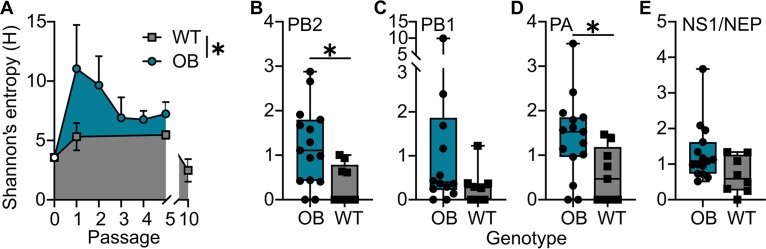
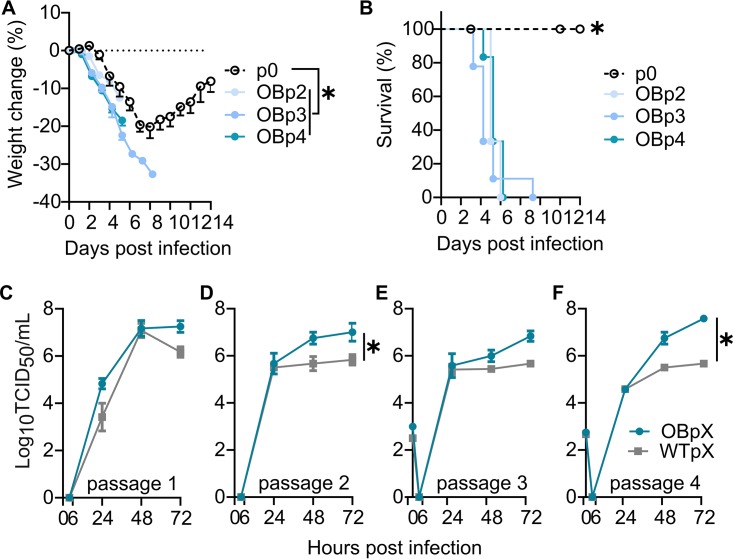
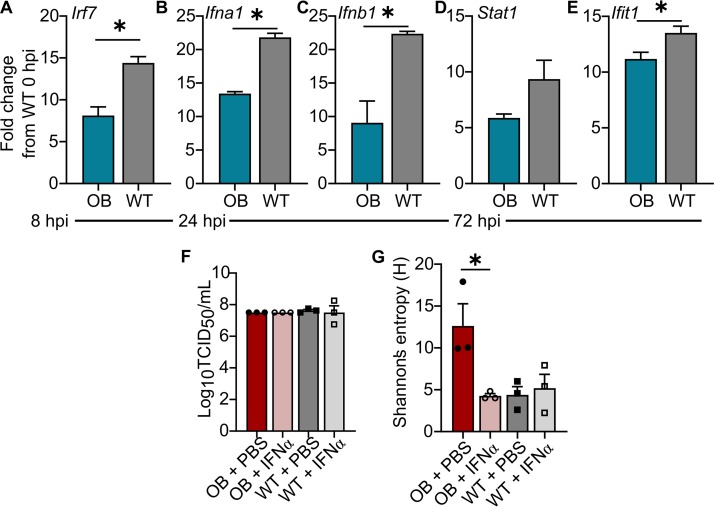
Obesity is associated with increased disease severity, elevated viral titers in exhaled breath, and significantly prolonged viral shed during influenza A virus infection. Due to the mutable nature of RNA viruses, we questioned whether obesity could also influence influenza virus population diversity. Here, we show that minor variants rapidly emerge in obese mice. The variants exhibit increased viral replication, resulting in enhanced virulence in wild-type mice. The increased diversity of the viral population correlated with decreased type I interferon responses, and treatment of obese mice with recombinant interferon reduced viral diversity, suggesting that the delayed antiviral response exhibited in obesity permits the emergence of a more virulent influenza virus population. This is not unique to obese mice. Obesity-derived normal human bronchial epithelial (NHBE) cells also showed decreased interferon responses and increased viral replication, suggesting that viral diversity also was impacted in this increasing population. Currently, 50% of the adult population worldwide is overweight or obese. In these studies, we demonstrate that obesity not only enhances the severity of influenza infection but also impacts viral diversity. The altered microenvironment associated with obesity supports a more diverse viral quasispecies and affords the emergence of potentially pathogenic variants capable of inducing greater disease severity in lean hosts. This is likely due to the impaired interferon response, which is seen in both obese mice and obesity-derived human bronchial epithelial cells, suggesting that obesity, aside from its impact on influenza virus pathogenesis, permits the stochastic accumulation of potentially pathogenic viral variants, raising concerns about its public health impact as the prevalence of obesity continues to rise.
肥胖与疾病严重程度增加、呼出气体中病毒滴度升高以及甲型流感病毒感染期间病毒排出时间显著延长有关。由于 RNA 病毒的多变性,我们质疑肥胖是否也会影响流感病毒种群多样性。在这里,我们表明肥胖小鼠中迅速出现了次要变体。这些变体表现出更高的病毒复制能力,导致野生型小鼠的毒力增强。病毒种群多样性的增加与 I 型干扰素反应的降低相关,肥胖小鼠用重组干扰素治疗可降低病毒多样性,这表明肥胖中表现出的延迟抗病毒反应允许出现更具毒性的流感病毒种群。这不仅在肥胖小鼠中存在。肥胖衍生的正常人支气管上皮(NHBE)细胞也表现出干扰素反应降低和病毒复制增加,这表明病毒多样性也受到了影响。目前,全球有 50%的成年人超重或肥胖。在这些研究中,我们证明肥胖不仅会加重流感感染的严重程度,还会影响病毒多样性。与肥胖相关的微环境改变支持更具多样性的病毒准种,并为潜在致病性变体的出现提供了条件,这些变体能够在瘦宿主中引起更严重的疾病。这可能是由于肥胖小鼠和肥胖衍生的人支气管上皮细胞中都存在干扰素反应受损,这表明肥胖不仅会影响流感病毒的发病机制,还会允许潜在致病性病毒变体的随机积累,这引发了对其公共卫生影响的担忧,因为肥胖的流行率继续上升。