National Heart and Lung Institute, Faculty of Medicine, Imperial College London, London, United Kingdom.
Social, Genetic and Developmental Psychiatry Centre, Institute of Psychiatry, Psychology and Neuroscience, King's College London, London, United Kingdom.
Eur Psychiatry. 2020 Mar 5;63(1):e31. doi: 10.1192/j.eurpsy.2020.28.
Adults with attention deficit hyperactivity disorder (ADHD) frequently suffer from sleep problems and report high levels of daytime sleepiness compared to neurotypical controls, which has detrimental effect on quality of life.
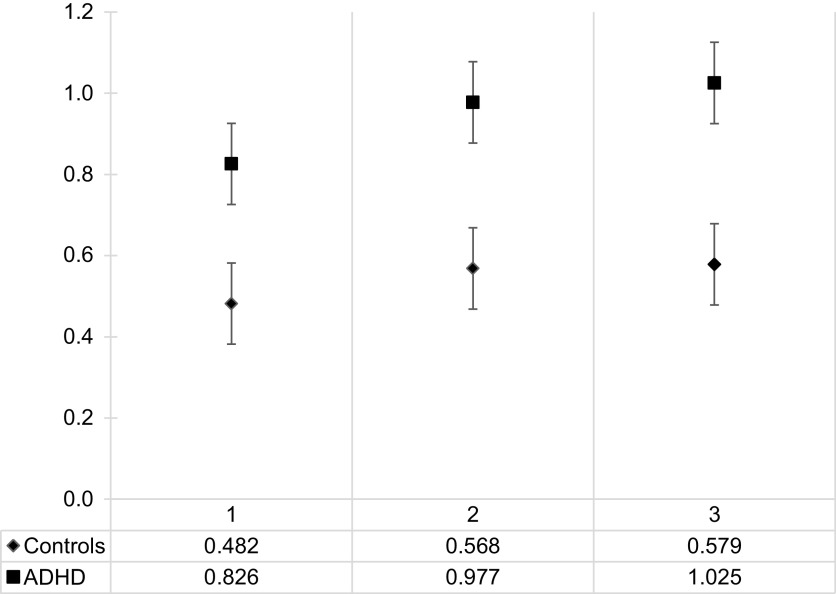
We evaluated daytime sleepiness in adults with ADHD compared to neurotypical controls using an observer-rated sleepiness protocol during the Sustained Attention Response Task as well as electroencephalogram (EEG) slowing, a quantitative electroencephalographic measure collected during a short period of wakeful rest.
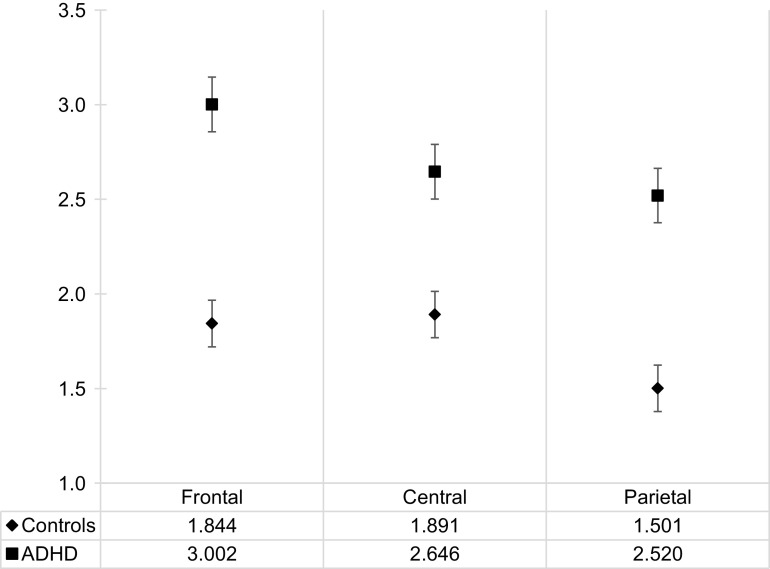
We found that adults with ADHD were significantly sleepier than neurotypical controls during the cognitive task and that this on-task sleepiness contributed to cognitive performance deficits usually attributed to symptoms of ADHD. EEG slowing predicted severity of ADHD symptoms and diagnostic status, and was also related to daytime sleepiness. Frontal EEG slowing as well as increased frontal delta were especially prominent in adults with ADHD. We have validated and adapted an objective observer-rated measure for assessing on-task sleepiness that will contribute to future sleep research in psychology and psychiatry.
These findings indicate that the cognitive performance deficits routinely attributed to ADHD and often conceptualized as cognitive endophenotypes of ADHD are largely due to on-task sleepiness and not exclusively due to ADHD symptom severity. Daytime sleepiness plays a major role in cognitive functioning of adults with ADHD.
与神经典型对照相比,患有注意力缺陷多动障碍(ADHD)的成年人经常遭受睡眠问题困扰,并报告白天嗜睡水平较高,这对生活质量有不利影响。
我们使用持续注意力反应任务期间的观察者评定嗜睡方案以及脑电图(EEG)减慢(在短暂的清醒休息期间收集的定量脑电图测量)来评估 ADHD 成年患者与神经典型对照之间的白天嗜睡。
我们发现,在认知任务期间,ADHD 成年患者比神经典型对照明显更困倦,并且这种任务相关的嗜睡导致通常归因于 ADHD 症状的认知表现缺陷。EEG 减慢预测 ADHD 症状和诊断状态的严重程度,并且与白天嗜睡有关。额叶 EEG 减慢以及额叶 delta 增加在 ADHD 成年患者中尤为突出。我们已经验证并改编了一种用于评估任务相关嗜睡的客观观察者评定测量方法,这将有助于心理学和精神病学中的未来睡眠研究。
这些发现表明,通常归因于 ADHD 且经常被概念化为 ADHD 的认知表型的认知表现缺陷主要是由于任务相关的嗜睡,而不仅仅是由于 ADHD 症状的严重程度。白天嗜睡在 ADHD 成年患者的认知功能中起着重要作用。