Lin Ke, Rong Yi, Chen Dan, Zhao Zizhuo, Bo Huaben, Qiao Aimin, Hao Xiaojuan, Wang Jinquan
Guangdong Province Key Laboratory for Biotechnology Drug Candidates, School of Bioscience and Biopharmaceutics, Guangdong Pharmaceutical University, Guangzhou, China.
Department of Ultrasound, Sun Yat-sen Memorial Hospital, Sun Yat-sen University, Guangzhou, China.
Front Oncol. 2020 Feb 18;10:141. doi: 10.3389/fonc.2020.00141. eCollection 2020.
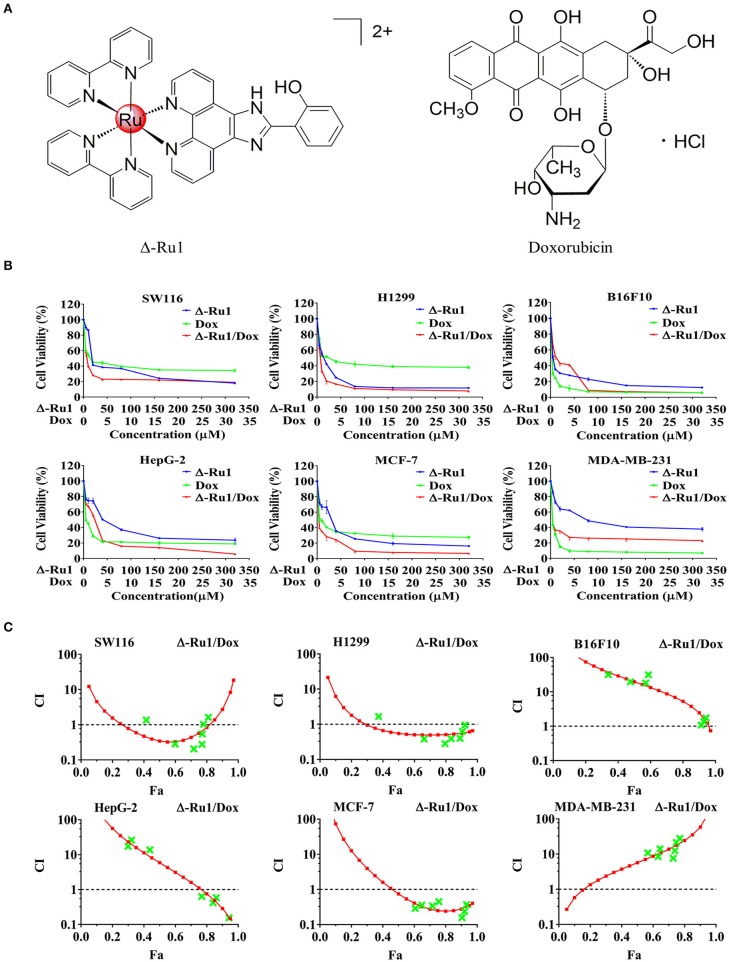
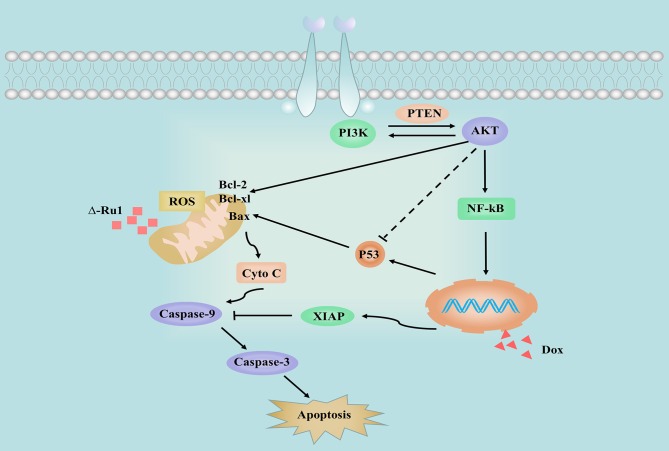
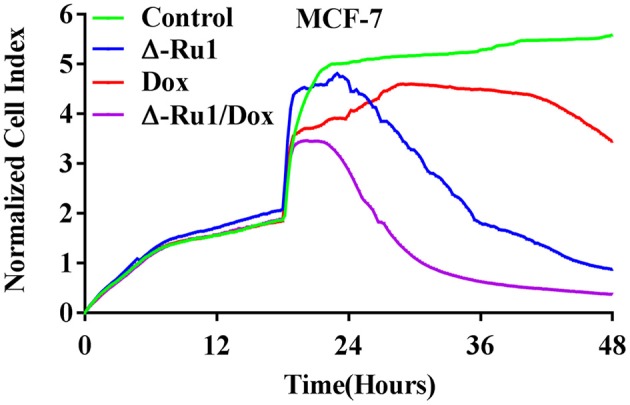
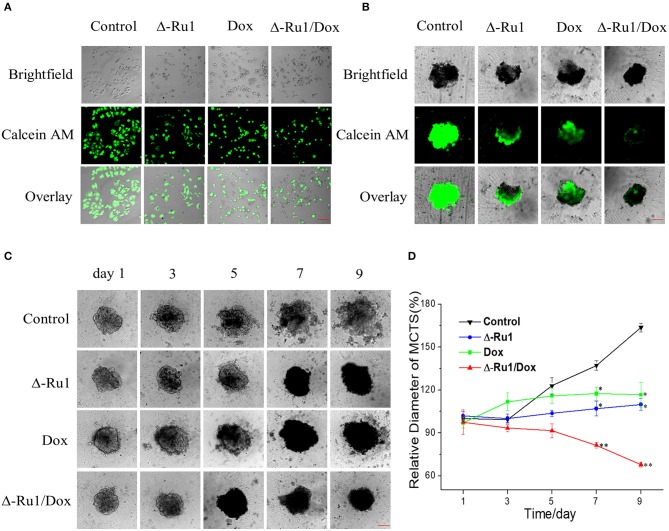
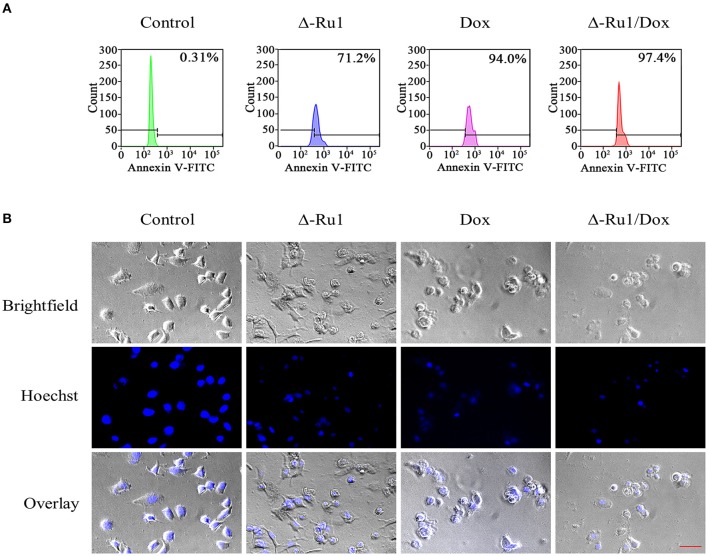
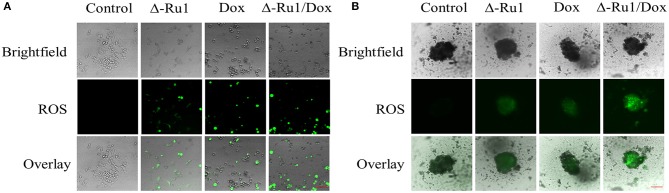
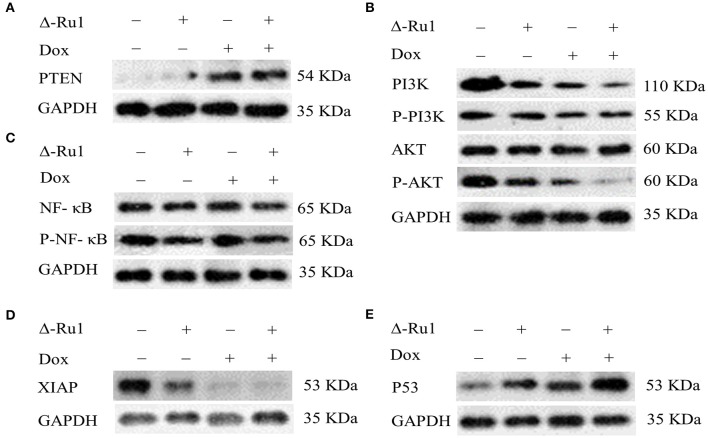
Combinational use of drugs has been a common strategy in cancer treatment because of synergistic advantages in reducing dose and toxicity, minimizing or delaying drug resistance. To improve the efficacy of chemotherapy, various potential combinations have been investigated. Ruthenium complex is considered a potential alternative of the platinum-based drugs due to its significant efficacy and safety. Previously, we reported that ruthenium(II) complex (Δ-Ru1) has great anticancer potential and minor toxicity toward normal tissues. However, the therapeutic efficacy and mechanism of action of ruthenium(II) complex combined with other anticancer drugs is still unknown. Here, we investigated the combinational effect of Δ-Ru1 and doxorubicin in different cancer cells. The data assessed by Chou-Talalay method showed significant synergism in MCF-7 cells. Furthermore, the results in antiproliferation efficacy indicated that the combination showed strong cytotoxicity and increasing apoptosis of MCF-7 cells in 2D and 3D multicellular tumor spheroids (MCTSs). Significant inhibition of MCF-7 cells accompanied with increased ROS generation was observed. Furthermore, the expression of PI3K/AKT was significantly down-regulated, while the expression of PTEN was strongly up-regulated in cells treated with combination of Δ-Ru1 and doxorubicin. The expression of NF-κB and XIAP decreased while the expression of P53 increased and associated with apoptosis. These findings suggest that the combination of ruthenium complex and doxorubicin has a significant synergistic effect by down-regulating the PI3K/AKT signaling pathway in MCF-7 cells. This study may trigger more research in ruthenium complex and combination therapy that will be able to provide opportunities for developing better therapeutics for cancer treatment.
由于联合使用药物在降低剂量和毒性、最小化或延缓耐药性方面具有协同优势,因此联合用药一直是癌症治疗中的常用策略。为了提高化疗效果,人们研究了各种潜在的联合用药方案。钌配合物因其显著的疗效和安全性,被认为是铂类药物的潜在替代品。此前,我们报道钌(II)配合物(Δ-Ru1)具有巨大的抗癌潜力,且对正常组织毒性较小。然而,钌(II)配合物与其他抗癌药物联合使用的治疗效果和作用机制仍不清楚。在此,我们研究了Δ-Ru1与阿霉素在不同癌细胞中的联合作用。采用Chou-Talalay法评估的数据显示,在MCF-7细胞中具有显著的协同作用。此外,抗增殖疗效结果表明,该联合用药在二维和三维多细胞肿瘤球体(MCTS)中对MCF-7细胞表现出强烈的细胞毒性并增加其凋亡。观察到MCF-7细胞受到显著抑制,同时活性氧生成增加。此外,在用Δ-Ru1和阿霉素联合处理的细胞中,PI3K/AKT的表达显著下调,而PTEN的表达强烈上调。NF-κB和XIAP的表达下降,而P53的表达增加并与凋亡相关。这些发现表明,钌配合物与阿霉素联合用药通过下调MCF-7细胞中的PI3K/AKT信号通路具有显著的协同作用。本研究可能会引发更多关于钌配合物和联合治疗的研究,这将为开发更好的癌症治疗药物提供机会。