Institution of Clinical Science, Pediatrics, Umeå University, Umeå, Sweden.
BMC Pediatr. 2020 Mar 6;20(1):107. doi: 10.1186/s12887-020-1959-8.
Syncope is a common and often benign disorder presenting at the pediatric emergency department. Long-QT syndrome may be presented with syncope, ventricular arrhythmias or sudden death and is vital to exclude as an underlying cause in children presented with syncope. Few studies have assessed QTc in relation to body posture in children. In this study, we assessed the QTc interval while laying down and during active standing in children with known long-QT syndrome compared to healthy controls.
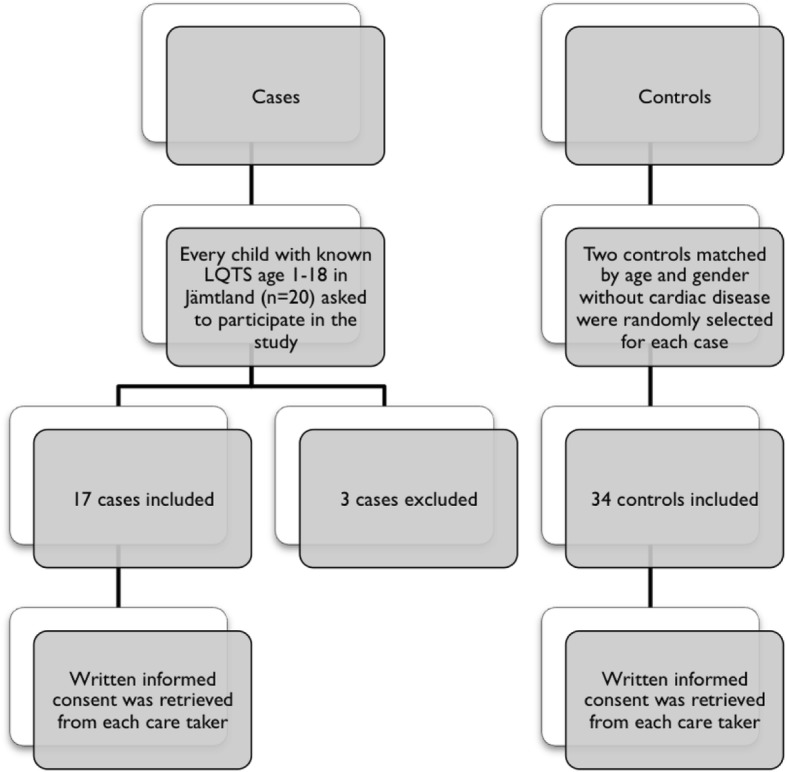
Children aged 1-18 years with long-QT syndrome (N = 17) matched to two healthy controls (N = 34) were included in this case-control study. The ECG standing was performed immediately after the ECG in the supine position. The QTc interval and QTc-difference by changing the body position were calculated.
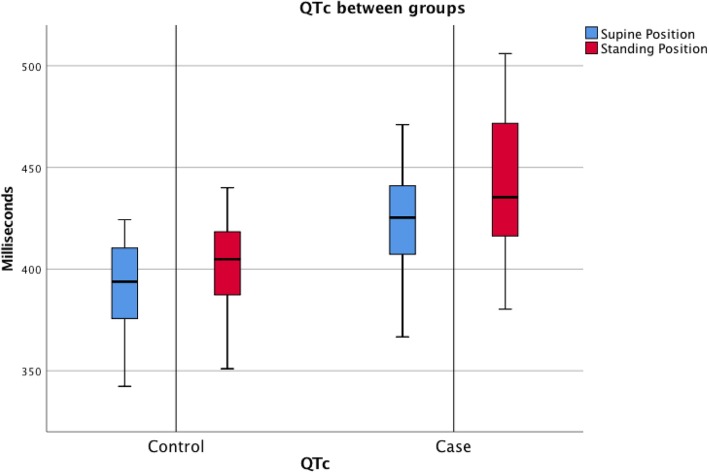
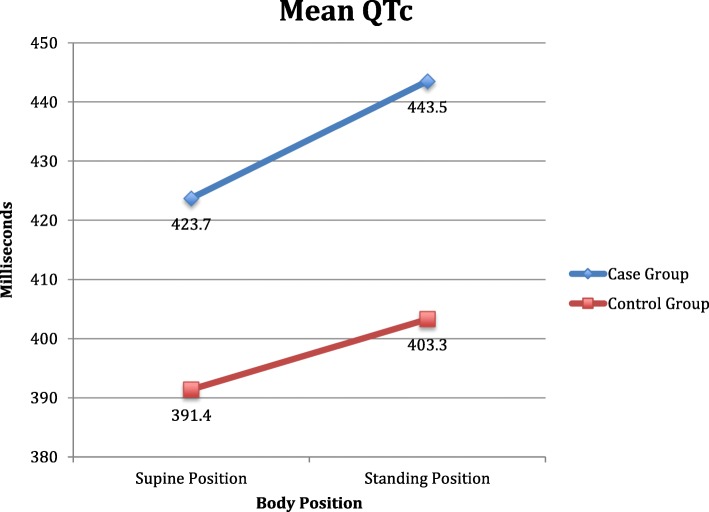
All children with long-QT syndrome were treated with propranolol. QTc was prolonged among long-QT syndrome children while lying down and when standing up, compared to controls. A prolongation of QTc appeared when standing up for both cases and controls. There was no significant difference in QTc increase between the groups. A QTc over 440 ms was observed among four cases lying down and in eight cases while standing, but not in any of the controls. The standing test with a cut-off of 440 ms showed a sensitivity of 47% and a specificity of 100% for case-status in our study.
QTc measured on ECG when rapidly rising up is prolonged in both healthy and LQTS children. More importantly, it prolongs more in children with LQTS and increases in pathological levels.
晕厥是儿科急诊常见且常为良性的病症。长 QT 综合征可表现为晕厥、室性心律失常或心源性猝死,因此必须排除其为晕厥患儿的潜在病因。少数研究评估过儿童体位变化与 QT 间期的关系。本研究比较了已知长 QT 综合征患儿与健康对照者在仰卧位和主动站立位时的 QT 间期。
本病例对照研究纳入了年龄 1-18 岁的长 QT 综合征患儿(n=17)和健康对照者(n=34)。心电图站立位在仰卧位后立即进行。计算体位变化时的 QT 间期和 QT 间期差值。
所有长 QT 综合征患儿均接受普萘洛尔治疗。与对照组相比,长 QT 综合征患儿在仰卧位和站立位时 QT 间期延长。两组病例和对照者在站立时 QT 间期均延长。两组间 QT 间期增加无显著差异。4 例患儿在仰卧位和 8 例患儿在站立位时出现 QT 间期>440ms,但对照组均无此现象。站立试验的截断值为 440ms,其在本研究中对病例状态的灵敏度为 47%,特异性为 100%。
在健康和长 QT 综合征患儿中,心电图快速直立位测量的 QT 间期延长。更重要的是,长 QT 综合征患儿延长更明显,且延长至病理性水平。