• 文献检索
  • 文档翻译
  • 深度研究
  • 学术资讯
  • Suppr Zotero 插件Zotero 插件
  • 邀请有礼
  • 套餐&价格
  • 历史记录
应用&插件
Suppr Zotero 插件Zotero 插件浏览器插件Mac 客户端Windows 客户端微信小程序
定价
高级版会员购买积分包购买API积分包
服务
文献检索文档翻译深度研究API 文档MCP 服务
关于我们
关于 Suppr公司介绍联系我们用户协议隐私条款
关注我们

Suppr 超能文献

核心技术专利:CN118964589B侵权必究
粤ICP备2023148730 号-1Suppr @ 2026

文献检索

告别复杂PubMed语法,用中文像聊天一样搜索,搜遍4000万医学文献。AI智能推荐,让科研检索更轻松。

立即免费搜索

文件翻译

保留排版,准确专业,支持PDF/Word/PPT等文件格式,支持 12+语言互译。

免费翻译文档

深度研究

AI帮你快速写综述,25分钟生成高质量综述,智能提取关键信息,辅助科研写作。

立即免费体验

影响穆斯林女性性与生殖健康的因素:一项系统综述

Factors influencing sexual and reproductive health of Muslim women: a systematic review.

作者信息

Alomair Noura, Alageel Samah, Davies Nathan, Bailey Julia V

机构信息

Research Department of Primary Care and Population Health, Institute of Epidemiology and Health Care, University College London, Upper 3rd Floor, Royal Free Campus, Rowland Hill Street, London, NW3 2PF, UK.

Community Health Sciences Department, College of Applied Medical Sciences, King Saud University, Riyadh, Kingdom of Saudi Arabia.

出版信息

Reprod Health. 2020 Mar 5;17(1):33. doi: 10.1186/s12978-020-0888-1.

DOI:10.1186/s12978-020-0888-1
PMID:32138744
原文链接:https://pmc.ncbi.nlm.nih.gov/articles/PMC7059374/
Abstract

BACKGROUND

In Islamic societies, issues related to sexual and reproductive health (SRH) are rarely discussed and considered sensitive subjects. This review aimed to identify any personal, religious, cultural, or structural barriers to SRH service and education among Muslim women worldwide.

METHODS

A search for qualitative and quantitative studies was conducted on seven electronic databases. A narrative synthesis using thematic analysis was conducted.

RESULTS

Fifty-nine studies were included from 22 countries: 19 qualitative, 38 quantitative and two mixed methods. Many Muslim women have poor SRH knowledge, and negative attitudes which influence their access to, and use of SRH services. Barriers to contraception use among Muslim women included a lack of basic reproductive knowledge, insufficient knowledge about contraception, misconceptions, and negative attitudes. Women had negative attitudes towards family planning for limiting the number of children but not for child spacing, which reflected religious views towards family planning. Religious and cultural beliefs were barriers to contraception use and access to SRH services and information. Family and the community have a significant impact on women's contraceptive use and access to SRH services. Husband and family opposition played a significant role in contraception access and use. Fear of stigmatization and being labelled as having pre-marital sexual relations among unmarried women acted as the main barrier to accessing contraception and seeking SRH information and services.

CONCLUSION

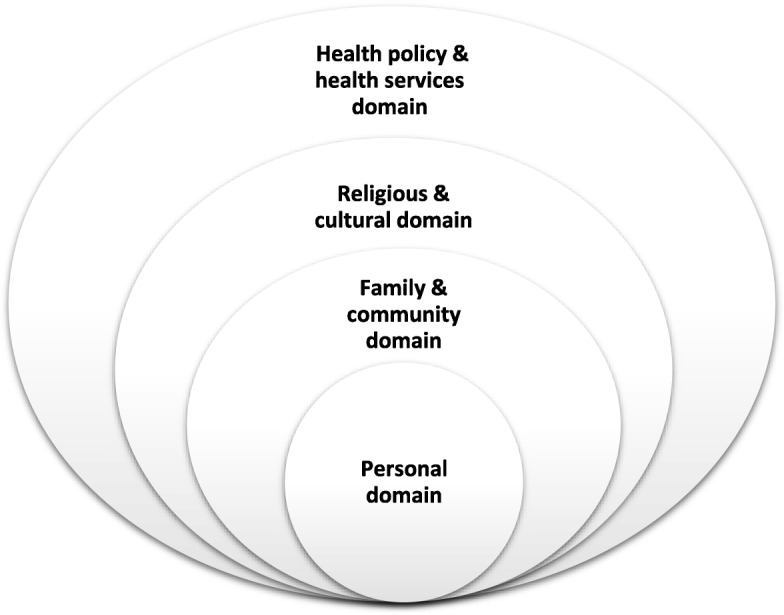
The findings reveal that there are multiple levels of factors that influence Muslim women's SRH. Poor SRH knowledge and practices among Muslim women is complex matter that is affected by personal, community, cultural, religious factors and existing policies and regulations. All these factors overlap and are affected by each other. There is an urgent need for interventions addressing modifiable barriers to SRH education and services to improve knowledge, informed choice and access to services to facilitate better sexual and reproductive wellbeing for Muslim women. It is important to note that while this review aimed to report findings on Muslim women, we acknowledge that significant variations exist within every culture and religion.

摘要

背景

在伊斯兰社会,与性健康和生殖健康(SRH)相关的问题很少被讨论,被视为敏感话题。本综述旨在确定全球穆斯林女性在获得SRH服务和教育方面存在的任何个人、宗教、文化或结构障碍。

方法

在七个电子数据库中搜索定性和定量研究。采用主题分析进行叙述性综合。

结果

纳入了来自22个国家的59项研究:19项定性研究、38项定量研究和两项混合方法研究。许多穆斯林女性性健康和生殖健康知识匮乏,态度消极,这影响了她们获得和使用SRH服务。穆斯林女性使用避孕措施的障碍包括缺乏基本生殖知识、对避孕的了解不足、误解和消极态度。女性对限制子女数量的计划生育持消极态度,但对生育间隔持积极态度,这反映了宗教对计划生育的看法。宗教和文化信仰是使用避孕措施以及获得SRH服务和信息的障碍。家庭和社区对女性使用避孕措施以及获得SRH服务有重大影响。丈夫和家庭的反对在避孕措施的获取和使用中起了重要作用。未婚女性担心被污名化和被贴上婚前性行为的标签,这是获取避孕措施以及寻求SRH信息和服务的主要障碍。

结论

研究结果表明,有多个层面的因素影响穆斯林女性的性健康和生殖健康。穆斯林女性性健康和生殖健康知识匮乏及行为不佳是一个复杂的问题,受到个人、社区、文化、宗教因素以及现有政策法规的影响。所有这些因素相互重叠且相互影响。迫切需要采取干预措施,解决SRH教育和服务中可改变的障碍,以提高知识水平、促进明智选择并增加获得服务的机会,从而促进穆斯林女性更好的性健康和生殖健康。需要注意的是,虽然本综述旨在报告关于穆斯林女性的研究结果,但我们承认每种文化和宗教内部都存在显著差异。
https://cdn.ncbi.nlm.nih.gov/pmc/blobs/99cb/7059374/377902146b87/12978_2020_888_Fig2_HTML.jpg
https://cdn.ncbi.nlm.nih.gov/pmc/blobs/99cb/7059374/2c3cab714ffc/12978_2020_888_Fig1_HTML.jpg
https://cdn.ncbi.nlm.nih.gov/pmc/blobs/99cb/7059374/377902146b87/12978_2020_888_Fig2_HTML.jpg
https://cdn.ncbi.nlm.nih.gov/pmc/blobs/99cb/7059374/2c3cab714ffc/12978_2020_888_Fig1_HTML.jpg
https://cdn.ncbi.nlm.nih.gov/pmc/blobs/99cb/7059374/377902146b87/12978_2020_888_Fig2_HTML.jpg

相似文献

1
Factors influencing sexual and reproductive health of Muslim women: a systematic review.影响穆斯林女性性与生殖健康的因素:一项系统综述
Reprod Health. 2020 Mar 5;17(1):33. doi: 10.1186/s12978-020-0888-1.
2
Sexually transmitted infection knowledge and attitudes among Muslim women worldwide: a systematic review.全球穆斯林女性的性传播感染知识和态度:系统评价。
Sex Reprod Health Matters. 2020 Dec;28(1):1731296. doi: 10.1080/26410397.2020.1731296.
3
Sexual and reproductive health of women living with HIV in Muslim-majority countries: a systematic mixed studies review.穆斯林占多数国家中 HIV 感染者的性与生殖健康:系统混合研究综述。
BMC Int Health Hum Rights. 2020 Mar 11;20(1):5. doi: 10.1186/s12914-020-00225-z.
4
"Children are a blessing from God" - a qualitative study exploring the socio-cultural factors influencing contraceptive use in two Muslim communities in Kenya.“孩子是上帝的恩赐”——一项探索影响肯尼亚两个穆斯林社区使用避孕措施的社会文化因素的定性研究。
Reprod Health. 2020 Apr 3;17(1):44. doi: 10.1186/s12978-020-0898-z.
5
Muslim women's views and experiences of family planning in Saudi Arabia: a qualitative study.沙特阿拉伯穆斯林妇女对计划生育的看法和经验:一项定性研究。
BMC Womens Health. 2023 Nov 25;23(1):625. doi: 10.1186/s12905-023-02786-2.
6
Sexual Health Knowledge and Needs: Young Muslim Women in Melbourne, Australia.性健康知识与需求:澳大利亚墨尔本的年轻穆斯林女性
Int J Health Serv. 2016;46(1):124-40. doi: 10.1177/0020731415615313. Epub 2015 Nov 3.
7
"In My Culture, We Don't Know Anything About That": Sexual and Reproductive Health of Migrant and Refugee Women.“在我们的文化中,我们对此一无所知”:移民和难民妇女的性与生殖健康
Int J Behav Med. 2017 Dec;24(6):836-845. doi: 10.1007/s12529-017-9662-3.
8
A qualitative exploration of the sexual and reproductive health knowledge of adolescent mothers from indigenous populations in Ratanak Kiri Province, Cambodia.柬埔寨腊塔纳基里省原住民青少年母亲性与生殖健康知识的定性探索。
Rural Remote Health. 2019 Oct;19(4):5240. doi: 10.22605/RRH5240. Epub 2019 Oct 28.
9
Sexual and reproductive health knowledge, perceptions and experiences of women in Saudi Arabia: a qualitative study.沙特阿拉伯女性的性与生殖健康知识、观念和体验:一项定性研究。
Ethn Health. 2022 Aug;27(6):1310-1328. doi: 10.1080/13557858.2021.1873251. Epub 2021 Feb 7.
10
A review of the literature on sexual and reproductive health of African migrant and refugee children.非洲移民和难民儿童性与生殖健康文献综述
Reprod Health. 2021 Apr 17;18(1):81. doi: 10.1186/s12978-021-01138-3.

引用本文的文献

1
Fertility Awareness and Parenthood Intentions Among Physicians in Jazan, Saudi Arabia: A Cross-Sectional Study.沙特阿拉伯吉赞地区医生的生育意识与生育意愿:一项横断面研究
Cureus. 2025 Jul 31;17(7):e89148. doi: 10.7759/cureus.89148. eCollection 2025 Jul.
2
The impact of healthcare provision on immigrant pregnancy behaviors: the case of Ramadan fasting in Germany.医疗保健服务对移民怀孕行为的影响:以德国斋月禁食为例。
J Migr Health. 2025 Jul 25;12:100349. doi: 10.1016/j.jmh.2025.100349. eCollection 2025.
3
Reproductive Health Literacy and Knowledge Among Female Refugees: A Scoping Review of Measurement Methodologies and Effect on Health Behavior.

本文引用的文献

1
Ethnic variations in sexual behaviours and sexual health markers: findings from the third British National Survey of Sexual Attitudes and Lifestyles (Natsal-3).性行为与性健康指标的种族差异:第三次英国全国性态度与生活方式调查(Natsal-3)的结果
Lancet Public Health. 2017 Oct 3;2(10):e458-e472. doi: 10.1016/S2468-2667(17)30159-7. eCollection 2017 Oct.
2
Public sexual health promotion interventions and strategies: A qualitative study.公共性健康促进干预措施与策略:一项定性研究。
Electron Physician. 2016 Jun 25;8(6):2489-96. doi: 10.19082/2489. eCollection 2016 Jun.
3
Designing Evidence-Based Family Planning Programs for the Marginalized Community: An Example of Muslim Community in Nepal.
女性难民的生殖健康素养与知识:测量方法及对健康行为影响的范围综述
Int J Environ Res Public Health. 2025 Jul 16;22(7):1121. doi: 10.3390/ijerph22071121.
4
Arabic speaking women's experience of postpartum contraceptive counselling in Sweden.瑞典讲阿拉伯语女性的产后避孕咨询经历。
Reprod Health. 2025 Jul 12;22(1):128. doi: 10.1186/s12978-025-02074-2.
5
Factors influencing family planning decisions in Saudi Arabia.影响沙特阿拉伯计划生育决策的因素。
BMC Womens Health. 2025 May 13;25(1):222. doi: 10.1186/s12905-025-03737-9.
6
Indonesian Translation and Cultural Adaptation of the BREAST-Q Reconstruction Module.《BREAST-Q乳房重建模块的印尼语翻译与文化调适》
Plast Reconstr Surg Glob Open. 2025 Apr 21;13(4):e6705. doi: 10.1097/GOX.0000000000006705. eCollection 2025 Apr.
7
'But Because I Don't Know About It, That's Why I Haven't Done It': Experiences of Access to Preventive Sexual and Reproductive Health Care for Refugee Women from Iraq and Syria Living in Melbourne, Australia-A Qualitative Study.“但因为我不知道,所以我没做”:澳大利亚墨尔本伊拉克和叙利亚难民妇女获得预防性性健康和生殖健康护理的经历——一项定性研究
Int J Environ Res Public Health. 2025 Jan 23;22(2):149. doi: 10.3390/ijerph22020149.
8
Evaluation of a pilot family planning educational seminar and subsequent attitudes towards family planning among Muslim communities in Tanzania.对坦桑尼亚穆斯林社区计划生育教育试点研讨会及后续对计划生育态度的评估。
PLoS One. 2025 Feb 7;20(2):e0315410. doi: 10.1371/journal.pone.0315410. eCollection 2025.
9
Beyond individual-level factors that influence family planning uptake among women with diabetes mellitus: a systematic literature review.影响糖尿病女性计划生育措施采用率的个体层面因素之外:一项系统文献综述
BMC Public Health. 2025 Jan 24;25(1):317. doi: 10.1186/s12889-024-20784-3.
10
Examination of adolescent and youth modern contraceptive users' perceptions on how religion influences contraceptive use and their rationale and circumstances of use: qualitative evidence from Burkina Faso, Kenya and Niger.对青少年及青年现代避孕用品使用者关于宗教如何影响避孕用品使用的看法及其使用理由和情况的调查:来自布基纳法索、肯尼亚和尼日尔的定性证据。
J Popul Res (Canberra). 2025;42(1):9. doi: 10.1007/s12546-025-09362-5. Epub 2025 Jan 17.
为边缘化社区设计基于证据的计划生育项目:尼泊尔穆斯林社区的一个例子。
Front Public Health. 2016 Jun 14;4:122. doi: 10.3389/fpubh.2016.00122. eCollection 2016.
4
The Stigma of Reproductive Health Services Utilization by Unmarried Women.未婚女性使用生殖健康服务的污名化
Iran Red Crescent Med J. 2016 Mar 20;18(3):e24231. doi: 10.5812/ircmj.24231. eCollection 2016 Mar.
5
Exploring the characteristics of public reproductive health services in the Islamic Republic of Iran from the perspectives of unmarried women: what needs to be changed?从未婚女性视角探索伊朗伊斯兰共和国公共生殖健康服务的特点:哪些方面需要改变?
East Mediterr Health J. 2016 Apr 28;22(2):116-23. doi: 10.26719/2016.22.2.116.
6
Sexual and Reproductive Health Knowledge Among Men and Women Aged 15 to 49 Years in Metropolitan Tehran.德黑兰大都市15至49岁男女的性与生殖健康知识
J Sex Res. 2016 Nov-Dec;53(9):1153-1164. doi: 10.1080/00224499.2016.1148110. Epub 2016 Apr 14.
7
Reproductive decisions in the lives of West Bank Palestinian women: Dimensions and contradictions.约旦河西岸巴勒斯坦妇女生活中的生殖决策:维度和矛盾。
Glob Public Health. 2017 Feb;12(2):135-155. doi: 10.1080/17441692.2016.1151541. Epub 2016 Mar 10.
8
Factors in use of family planning services by Syrian women in a refugee camp in Jordan.约旦某难民营中叙利亚妇女使用计划生育服务的相关因素。
J Fam Plann Reprod Health Care. 2016 Apr 11;73(2):96-102. doi: 10.1136/jfprhc-2014-101026.
9
Assessing Knowledge of, and Attitudes to, HIV/AIDS among University Students in the United Arab Emirates.阿联酋大学生对艾滋病毒/艾滋病的认知与态度评估
PLoS One. 2016 Feb 25;11(2):e0149920. doi: 10.1371/journal.pone.0149920. eCollection 2016.
10
Emergency contraception: Awareness, attitudes and barriers of Saudi Arabian Women.紧急避孕:沙特阿拉伯女性的认知、态度及障碍
Pak J Med Sci. 2015 Nov-Dec;31(6):1500-5. doi: 10.12669/pjms.316.8127.