Cheatham Scott W, Stull Kyle R, Batts Wendy N, Ambler-Wright Tony
California State University Dominguez Hills, Carson, CA USA.
National Academy of Sports Medicine, Chandler, AZ USA.
J Hum Kinet. 2020 Jan 31;71:119-129. doi: 10.2478/hukin-2019-0077. eCollection 2020 Jan.
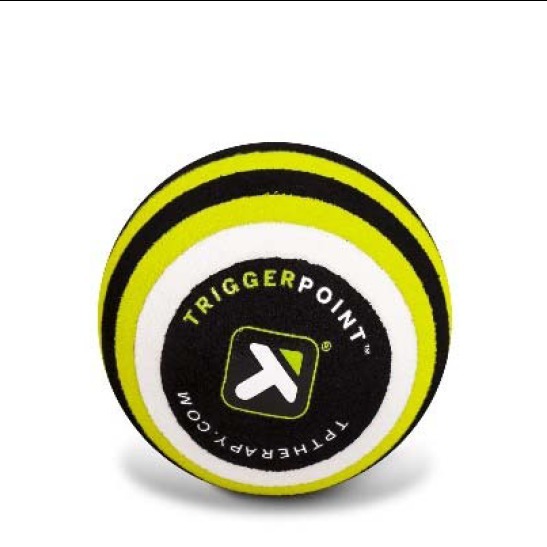
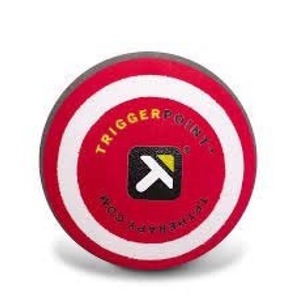
The aims of this study were to (1) compare the immediate post-treatment effects of an instructional video versus a self-preferred program on the hip range of motion and a pressure pain threshold using two different density roller balls, and (2) compare the effects of the two roller balls on those variables. Forty adults were randomly allocated into four groups: (1) MB1-video, (2) MB1-self-preferred, (3) MBX-video, and (4) MBX-self-preferred. Participants followed a video or a self-preferred program using either a moderate (MB1) or a hard (MBX) density ball. Main outcomes were passive hip internal rotation, external rotation, and a pressure pain threshold. For MB1, the video produced greater outcomes than the self-program for external rotation (10◦ versus 2◦), internal rotation (7◦ versus 2◦), and the pain threshold (210 kPa versus 44 kPa). For MBX, the video produced greater outcomes than the self-program for external rotation (8◦ versus 1◦), internal rotation (5◦ versus 1◦), and the pain threshold (184 kPa versus 30 kPa). When comparing roller balls, the MB1 produced greater outcomes than the MBX for external rotation (10◦ versus 8◦), internal rotation (7◦ versus 5◦), and the pain threshold (210 kPa versus 184 kPa) with the video. For the self-preferred program, the MB1 produced greater outcomes for external rotation (2◦ versus 1◦), internal rotation (2◦ versus 1◦), and the pain threshold (44 kPa versus 30 kPa). The instructional video and a moderate density ball produced greater immediate post-treatment outcomes than the self-program and a hard density ball. Professionals should consider using the video to teach technique and match clients to a specific density-type roller ball.
(1)使用两种不同密度的滚球,比较教学视频与自我选择的训练方案对髋关节活动范围和压力疼痛阈值的即时治疗后效果;(2)比较两种滚球对这些变量的影响。40名成年人被随机分为四组:(1)MB1-视频组,(2)MB1-自我选择组,(3)MBX-视频组,(4)MBX-自我选择组。参与者使用中等密度(MB1)或高密度(MBX)的球,按照视频或自我选择的训练方案进行训练。主要观察指标为髋关节被动内旋、外旋和压力疼痛阈值。对于MB1,视频训练方案在髋关节外旋(10°对2°)、内旋(7°对2°)和疼痛阈值(210 kPa对44 kPa)方面比自我训练方案产生了更好的效果。对于MBX,视频训练方案在髋关节外旋(8°对1°)、内旋(5°对1°)和疼痛阈值(184 kPa对30 kPa)方面比自我训练方案产生了更好的效果。在比较滚球时,使用视频训练时,MB1在髋关节外旋(10°对8°)、内旋(7°对5°)和疼痛阈值(210 kPa对184 kPa)方面比MBX产生了更好的效果。对于自我选择的训练方案,MB1在髋关节外旋(2°对1°)、内旋(2°对1°)和疼痛阈值(44 kPa对30 kPa)方面产生了更好的效果。教学视频和中等密度的球比自我训练方案和高密度的球产生了更好的即时治疗后效果。专业人员应考虑使用视频来教授技术,并根据客户情况匹配特定密度类型的滚球。