Section of Biology and Environmental Science, Department of Chemistry and Bioscience, Aalborg University, Fredrik Bajers Vej 7H, 9220 Aalborg East, Denmark.
Centre d'Etude et de Découverte des Tortues Marines (CEDTM), 6 Chemin Dubuisson, Appt. 5, 97436 Saint-Leu, La Réunion, France.
Genes (Basel). 2020 Mar 5;11(3):278. doi: 10.3390/genes11030278.
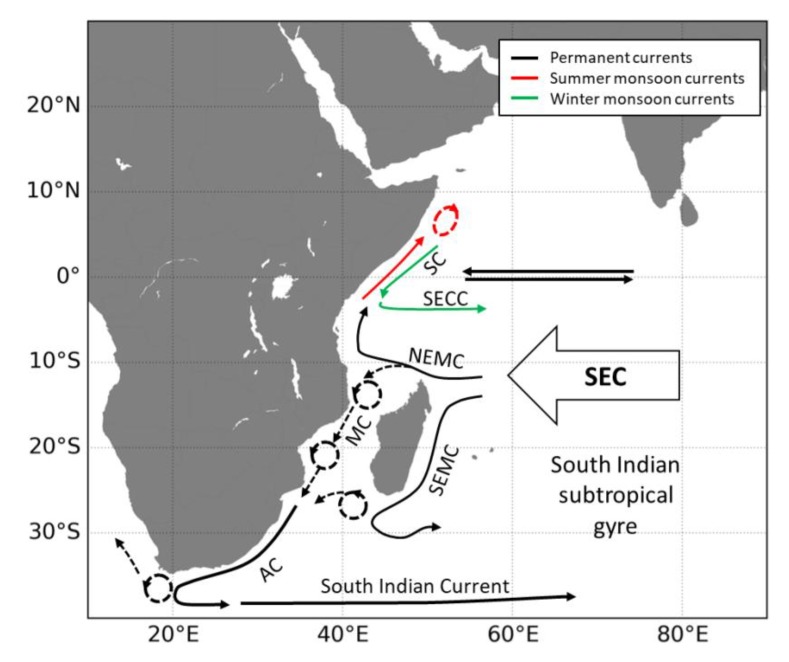
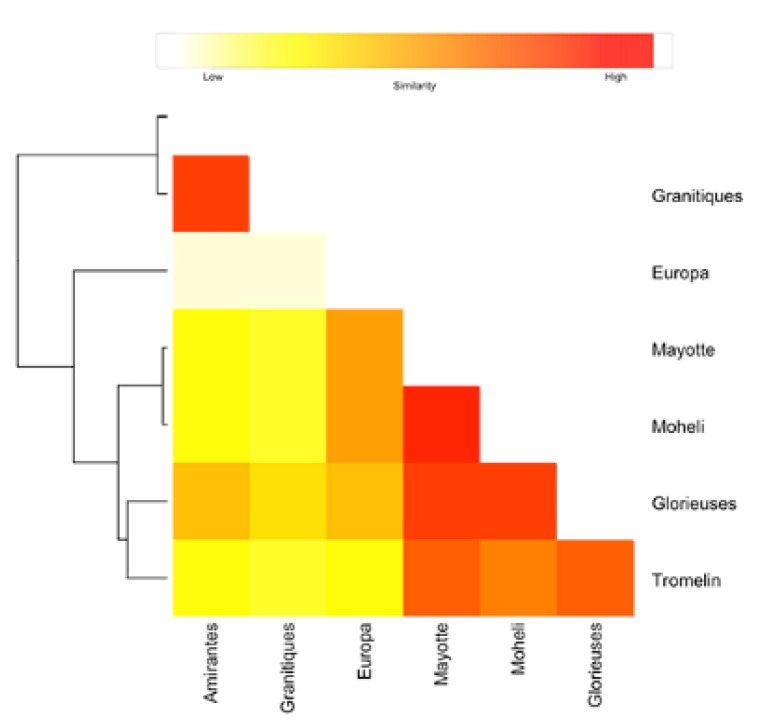
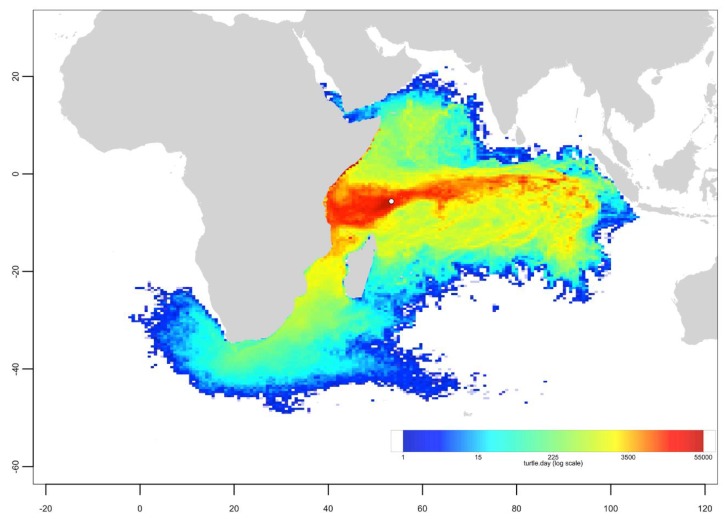
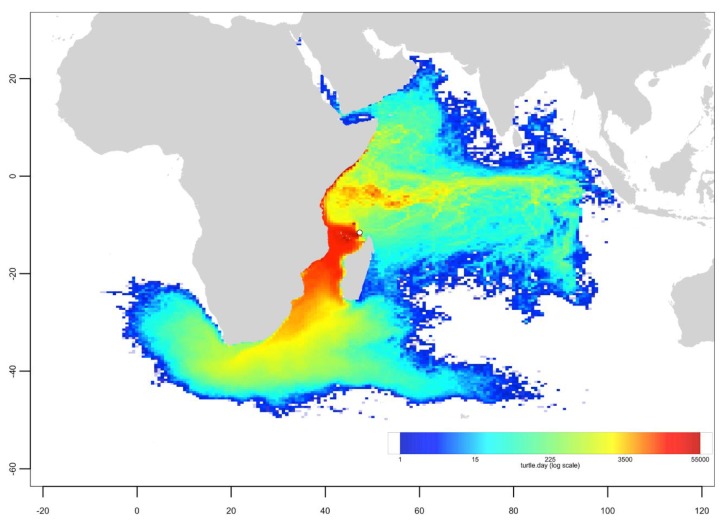
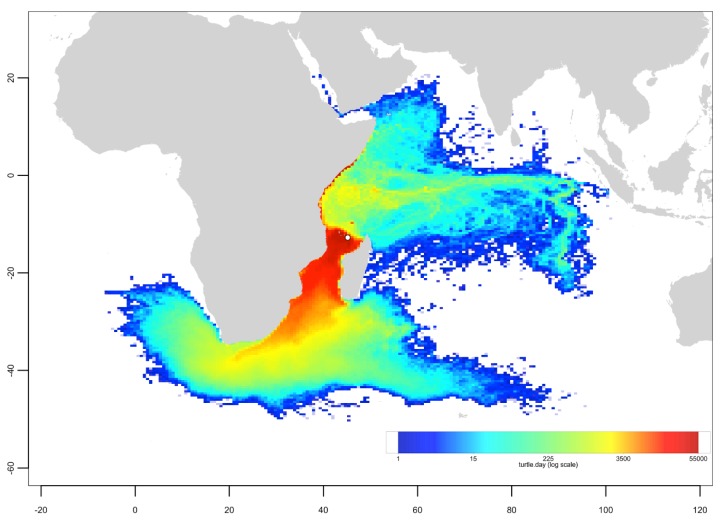
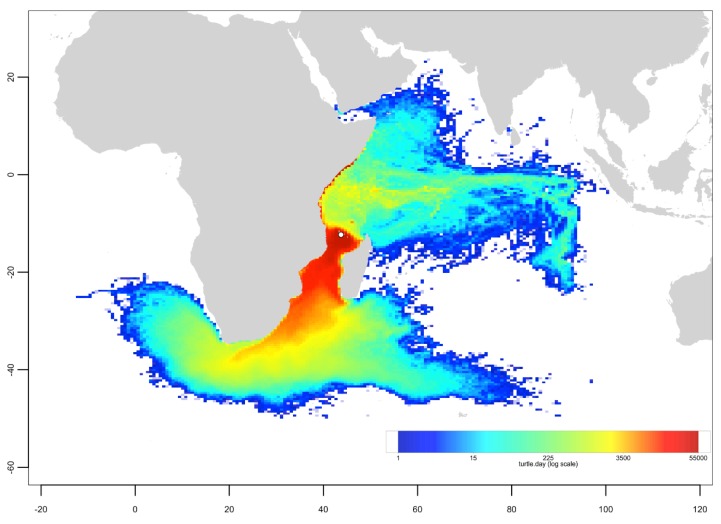
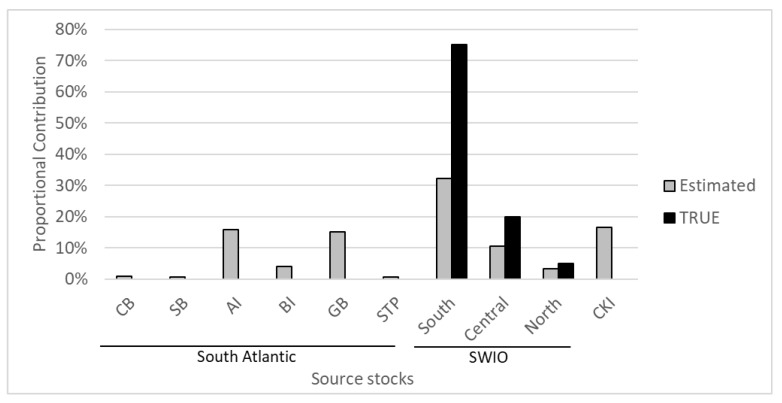
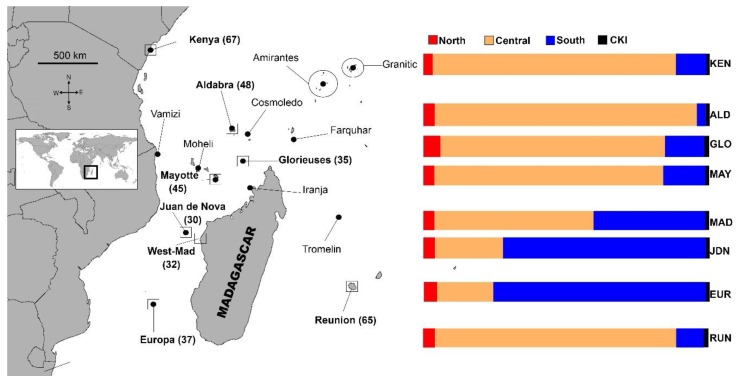
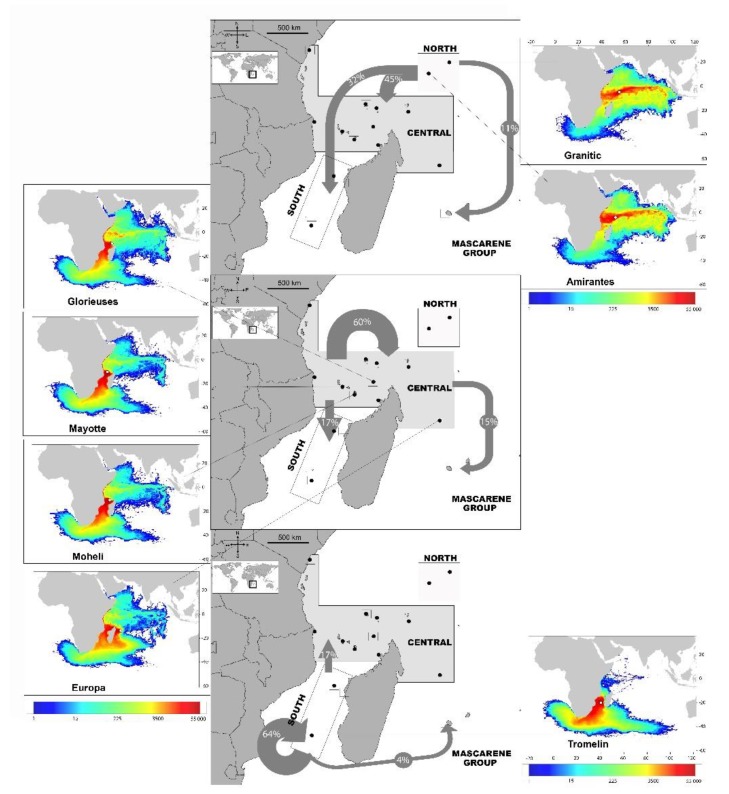
Understanding how ocean currents impact the distribution and connectivity of marine species, provides vital information for the effective conservation management of migratory marine animals. Here, we used a combination of molecular genetics and ocean drift simulations to investigate the spatial ecology of juvenile green turtle () developmental habitats, and assess the role of ocean currents in driving the dispersal of green turtle hatchlings. We analyzed mitochondrial (mt)DNA sequenced from 358 juvenile green turtles, and from eight developmental areas located throughout the Southwest Indian Ocean (SWIO). A mixed stock analysis (MSA) was applied to estimate the level of connectivity between developmental sites and published genetic data from 38 known genetic stocks. The MSA showed that the juvenile turtles at all sites originated almost exclusively from the three known SWIO stocks, with a clear shift in stock contributions between sites in the South and Central Areas. The results from the genetic analysis could largely be explained by regional current patterns, as shown by the results of passive numerical drift simulations linking breeding sites to developmental areas utilized by juvenile green turtles. Integrating genetic and oceanographic data helps researchers to better understand how marine species interact with ocean currents at different stages of their lifecycle, and provides the scientific basis for effective conservation management.
了解洋流如何影响海洋物种的分布和连通性,为迁徙海洋动物的有效保护管理提供了重要信息。在这里,我们结合分子遗传学和海洋漂流模拟,研究了幼年绿海龟()发育栖息地的空间生态,并评估了洋流在推动绿海龟幼体扩散中的作用。我们分析了从 358 只幼年绿海龟和分布在整个西南印度洋(SWIO)的八个发育区采集的线粒体(mt)DNA 序列。混合种群分析(MSA)用于估计发育区之间的连通性水平,并与 38 个已知遗传种群的已发表遗传数据进行比较。MSA 表明,所有地点的幼龟几乎完全来自已知的三个 SWIO 种群,而南、中区之间的种群贡献明显发生了变化。遗传分析的结果在很大程度上可以用区域海流模式来解释,这从将繁殖地与幼年绿海龟利用的发育区联系起来的被动数值漂流模拟的结果中可以看出。整合遗传和海洋学数据有助于研究人员更好地了解海洋物种在其生命周期的不同阶段如何与洋流相互作用,并为有效保护管理提供科学依据。